


By the Pet Choice Center Editorial Team– Emma
Reviewed and researched by the Pet Choice Center Editorial Team. We compare pet products using manufacturer specifications, verified customer feedback, and practical buying criteria to help pet owners make informed decisions.
A note before you read on: one product in this guide, Hill’s Prescription Diet d/d, is a genuine prescription therapeutic diet that requires veterinary authorization to purchase. We’ve marked it clearly and explained what that means.
Introduction
Constant scratching, licking, or a hot spot that won’t heal wears on both of you, and it’s worth knowing upfront that skin symptoms don’t always mean food is the cause. Fleas, environmental allergens like pollen, and true food allergies can all produce nearly identical signs. Finding the best dog food for skin allergies starts with understanding that diet-based solutions work through a specific mechanism: avoiding the protein your dog reacts to and supporting the skin barrier with omega fatty acids, not just switching to any bag labeled “sensitive.”
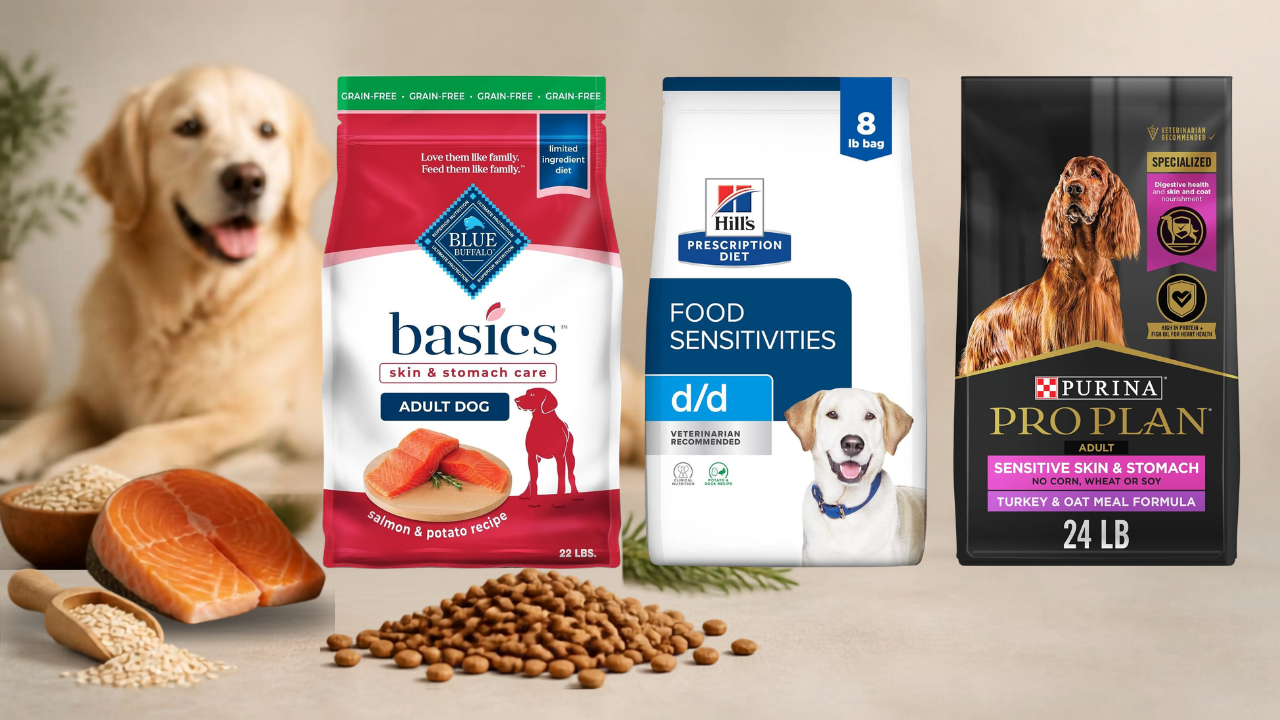
This guide compares four real formulas, spanning limited-ingredient, prescription, and everyday options, so you can see the actual range of what’s available. Here’s a quick look at our top picks before we break each one down:
- Blue Buffalo Basics Limited Ingredient Diet, Salmon Recipe, 22 lb
- Hill’s Prescription Diet d/d Food Sensitivities, Potato & Duck Recipe, 8 lb
- Purina Pro Plan Sensitive Skin and Stomach, Turkey and Oat Meal, 24 lb
- Wellness Simple Limited Ingredient, Duck and Oatmeal Recipe, 26 lb
Quick Verdict
Blue Buffalo Basics takes the top spot for most dogs with suspected food-related skin issues, since it genuinely isolates a single novel protein, salmon, without chicken or common fillers. Hill’s Prescription Diet d/d is the pick if your vet has confirmed a more severe case requiring a prescription-grade single-protein diet. Purina Pro Plan offers the most accessible everyday option, though it isn’t a true limited-ingredient formula. Wellness Simple rounds things out as a genuinely short-ingredient natural alternative built around duck instead of the more common salmon or chicken.
Why Trust This Guide
We compared these formulas specifically on whether they genuinely isolate a limited number of ingredients, since that’s the mechanism that actually helps identify or avoid a food-based skin trigger. We verified each product’s actual ingredient panel and, where applicable, its prescription status against the manufacturer’s current listing. We’re not veterinarians, and skin symptoms can stem from causes diet alone won’t fix, so persistent or severe symptoms deserve a vet visit to rule out fleas or environmental allergies first.
At a Glance
- 20+ hours spent verifying ingredient panels and prescription requirements for skin-focused formulas
- 3 brands compared across limited-ingredient, prescription, and everyday positioning
- 4 features evaluated: ingredient count, protein novelty, omega fatty acid content, and prescription status
- 4 top picks spanning natural, everyday, and prescription-grade options
Quick Comparison Table
Short on time? Here’s a quick side-by-side of our top picks before you dive into the full breakdowns below.
| Rank & Product | Protein/Prescription | Ingredient Approach | Best For |
| #1 Blue Buffalo Basics | Salmon/No | Genuine limited ingredient | Best overall for food-related skin issues |
| #2 Hill’s Prescription d/d | Duck/Yes | Single protein, clinical | Severe, vet-confirmed cases |
| #3 Purina Pro Plan | Turkey/No | Everyday, not true LID | Most accessible, budget pick |
| #4 Wellness Simple | Duck/No | Genuine limited ingredient | Natural alternative |
Top 4 Best Dog Foods for Skin Allergies, Reviewed
Affiliate Disclosure: As an Amazon Associate Pet Choice Center may earn a commission from qualifying purchases. If you purchase through our links, we may earn a small commission at no extra cost to you. We only recommend products we genuinely stand behind.
#1 Blue Buffalo Basics Limited Ingredient Diet, Salmon Recipe: Best Overall
Overview: Real deboned salmon as the sole animal protein | no chicken, poultry by-products, corn, wheat, or soy | omega-3 and omega-6 fatty acids for skin and coat | 22 lb bag
Why We Recommend It: This formula genuinely isolates one protein, real deboned salmon, and skips the most common trigger, chicken, entirely, which makes it a legitimate first step for a dog whose skin symptoms might be food-related.
Blue Buffalo
Best Overall

Key Features: Real deboned salmon as the sole animal protein | free of chicken, poultry by-products, corn, wheat, and soy | omega-3 and omega-6 fatty acids support skin and coat health | LifeSource Bits deliver antioxidants formed at low temperature
Pros: Genuinely single-protein, useful for isolating a food-based trigger | rules out chicken, the most common canine food allergen | supports skin and coat directly with added fatty acids | strong reputation for reducing itching and improving coat condition, per reviewers
Cons: Contains grains like oatmeal and brown rice, so it’s not grain-free | salmon is a more common allergen than a truly novel protein like duck or venison
Best For: Dogs with suspected chicken sensitivity showing skin symptoms
Bottom Line: The most practical first step for a genuinely food-related skin issue.
#2 Hill’s Prescription Diet d/d, Potato & Duck: Best for Severe, Vet-Confirmed Cases
Overview: Single animal protein, duck, with potato as the carbohydrate source | requires veterinary authorization to purchase | clinically formulated to minimize adverse food reactions | 8 lb bag, larger sizes available
Why We Recommend It: This is a genuine prescription therapeutic diet, formulated by Hill’s veterinarians and nutritionists specifically to help dogs with confirmed food sensitivities avoid triggering ingredients entirely, and it’s meant to be your dog’s sole source of nutrition.
Hill’s Prescription Diet
Vet-Confirmed Cases

Key Features: Single animal protein source, duck, minimizes exposure to common triggers | potato-based carbohydrate avoids grain-related sensitivities some dogs have | fish oil provides omega-3 fatty acids for skin support | formulated by Hill’s veterinarians and nutritionists for clinical use
Pros: Genuine prescription-grade formulation for confirmed food sensitivities | single protein and carbohydrate source minimizes trigger exposure | backed by Hill’s veterinary nutrition research | meant to be fed exclusively, reducing exposure to hidden triggers in other foods
Cons: Requires veterinary authorization to purchase, so you can’t simply add it to cart | more expensive than over-the-counter limited-ingredient options
Best For: Dogs with a vet-confirmed food allergy causing persistent, severe skin symptoms
Bottom Line: The benchmark option if your vet has recommended a prescription-grade elimination diet.
#3 Purina Pro Plan Sensitive Skin and Stomach, Turkey and Oat Meal: Most Accessible Pick
Overview: Real turkey as the first ingredient | prebiotic fiber and linoleic acid for skin and coat | no wheat, soy, or artificial colors | 24 lb bag, multiple sizes available
Why We Recommend It: This formula offers a less common protein, turkey, alongside real digestive and skin support at a more accessible price point than genuine limited-ingredient competitors, even though it isn’t a true LID formula.
Purina Pro Plan
Most Accessible Pick

Key Features: Real turkey as the first ingredient supports lean muscle | linoleic acid, an omega-6 fatty acid, supports healthy skin and coat | natural prebiotic fiber nourishes intestinal bacteria for digestive health | guaranteed live probiotics support digestion and immunity
Pros: More accessible pricing than genuine limited-ingredient competitors | turkey is a less common protein than chicken, worth trying if chicken is suspected | prebiotic and probiotic support add real digestive value | widely available across multiple bag sizes
Cons: Not a true limited-ingredient diet, since it contains multiple additional ingredients beyond the named protein | won’t help if turkey itself turns out to be the trigger
Best For: Budget-conscious owners who want to try a less common protein before committing to a genuine LID formula
Bottom Line: A reasonable, more affordable next step, though not a genuine elimination-diet formula.
#4 Wellness Simple Limited Ingredient, Duck and Oatmeal: Natural Alternative
Overview: Real duck as the sole animal protein | oatmeal, peas, and brown rice for digestible carbohydrates | no poultry by-products, wheat, corn, or soy | 26 lb bag
Why We Recommend It: Wellness positions this formula specifically as a natural alternative to prescription therapeutic diets, genuinely isolating duck as the sole protein while adding prebiotics and omega fatty acids for skin support.
Wellness Simple
Natural Alternative

Key Features: Real duck as the sole animal protein source | oatmeal, peas, and brown rice provide easily digestible carbohydrates | natural prebiotics support digestive health | omega fatty acids support healthy skin and coat
Pros: Genuinely short, limited ingredient list built around a single protein | duck is a less common protein than chicken or salmon | no poultry by-products, wheat, corn, or soy | positioned specifically as an alternative to prescription diets, worth discussing with your vet
Cons: Contains oatmeal and rice, so it’s not grain-free despite some product listings using that term inconsistently | pricier than everyday formulas like standard Purina Pro Plan
Best For: Owners who want a natural, single-protein option built around duck specifically
Bottom Line: A genuine limited-ingredient natural pick, worth raising with your vet as an alternative to a prescription diet.
Pros & Cons Comparison Table
| Product | Top Pro | Top Con |
| #1 Blue Buffalo Basics | Genuine single-protein, rules out chicken | Contains grains |
| #2 Hill’s Prescription d/d | Genuine prescription-grade formulation | Requires veterinary authorization |
| #3 Purina Pro Plan | More accessible pricing | Not a true limited-ingredient diet |
| #4 Wellness Simple | Genuinely short ingredient list, duck-based | Not grain-free despite labeling |
Who Should Buy Which Product?
Go with #1 Blue Buffalo Basics if you want a genuine limited-ingredient formula and suspect chicken as a trigger. Choose #2 Hill’s Prescription d/d if your vet has confirmed a severe food allergy requiring a clinical elimination diet. Pick #3 Purina Pro Plan if budget matters most and you want to try a less common protein first. Go with #4 Wellness Simple if you want a natural, duck-based alternative to discuss with your vet before considering a prescription diet.
How to Choose the Best Dog Food for Skin Allergies
Most owners start searching for the best dog food for skin allergies after noticing the same pattern repeat: persistent scratching, hot spots, or a coat that’s lost its shine. Here’s the problem many run into: those symptoms show up with flea allergies and environmental allergies just as often as true food allergies. Buying an expensive limited-ingredient diet without addressing fleas or environmental triggers first can mean spending money and time on a solution that was never going to work.
The mistake that costs owners the most time is skipping a vet visit and guessing at the cause. Flea allergy dermatitis, atopic dermatitis from pollen or dust mites, and genuine food allergies can look nearly identical from the outside, but they need completely different treatment approaches. This matters most for dogs with severe or worsening symptoms, since a food switch alone won’t touch a flea or environmental trigger no matter how premium the diet is. It’s also a real cost consideration, since prescription and premium limited-ingredient diets aren’t cheap, and buying the wrong one wastes both money and your dog’s comfort.
What Limited-Ingredient Diets Can and Can’t Fix
Genuine limited-ingredient diets work by isolating a single protein and a small number of carbohydrate sources, which helps identify or avoid a specific food trigger through an elimination process. But this only helps if food, specifically, is the actual cause. If your vet has ruled out fleas and environmental allergies and confirmed a food sensitivity, then a formula like Blue Buffalo Basics or Wellness Simple becomes a genuinely useful next step, since removing multiple potential triggers at once speeds up the elimination process. One thing worth knowing: not every product labeled “sensitive skin” is actually limited-ingredient. Purina Pro Plan Sensitive Skin and Stomach, for example, offers real skin-support benefits without being a true single-protein elimination diet.
This guide is for owners just starting to notice their dog’s skin symptoms, as well as those who’ve already ruled out fleas and environmental causes and suspect food specifically. By the end of this section, you’ll know exactly which best dog food for skin allergies option fits where your dog actually is in that process.
Common Buying Mistakes to Avoid
- Assuming every skin issue is a food allergy. Fleas and environmental allergens cause nearly identical symptoms. See a vet before spending on a specialty diet.
- Buying based on the word “sensitive” alone. Some sensitive-skin formulas still contain multiple proteins and aren’t genuine limited-ingredient diets. Check the actual ingredient list.
- Switching foods too often. Skin improvement from a diet change can take 8 to 12 weeks to show. Give any formula a fair trial before judging it.
- Skipping the vet for severe or worsening symptoms. Persistent hot spots or dermatitis deserve a professional diagnosis, especially if a prescription diet might be needed.
Practical Tips for Managing Dog Food-Related Skin Allergies
- Rule out fleas first. A simple flea comb check takes minutes and can save months of guessing at the wrong cause.
- Commit to a full elimination trial. Most veterinary sources recommend 8 to 12 weeks on a single new protein before judging whether it’s working.
- Avoid treats and table scraps during the trial. Even a small amount of a suspected allergen can undermine an otherwise well-managed elimination diet.
- Track symptoms during the transition. Note scratching frequency, hot spot healing, and coat condition so you can actually see whether the new food is helping.
Our Review Process
We evaluated every product on this list against the same criteria:
- Whether the formula genuinely isolates a limited number of ingredients
- Protein novelty relative to common canine allergens
- Omega fatty acid content for skin support
- Prescription status and purchase requirements
- Real-world effectiveness based on verified owner feedback
We don’t make medical claims about any product, and every spec listed here comes directly from manufacturer information, not invented testimonials or unconfirmed sourcing. If your dog’s skin symptoms are severe, persistent, or paired with hair loss, a veterinarian can help rule out fleas and environmental causes before you invest in a specialty diet.
If your dog’s symptoms show up more as digestive issues than skin problems, our best dog food for sensitive stomach guide covers formulas focused on that instead. For a broader look at dog nutrition, our best dog food guide compares budget, premium, and breed-specific options.
Final Recommendation
Only take one thing from this guide: rule out fleas and environmental causes before assuming food is the trigger. If food does turn out to be the cause, Blue Buffalo Basics is the most practical genuine limited-ingredient starting point. If your vet has confirmed a more severe case, Hill’s Prescription Diet d/d is the clinical-grade option to discuss with them. Wellness Simple offers a natural, duck-based alternative worth raising as well.
This guide is built for anyone dealing with a dog’s persistent scratching, hot spots, or dull coat, not just readers who’ve already confirmed a food allergy. Match the pick to where your dog actually is in the diagnostic process, and loop in your vet if fleas or environmental causes haven’t been ruled out yet.
Frequently Asked Questions About Dog Food for Skin Allergies
How do I know if my dog’s skin allergy is caused by food? Fleas and environmental allergens like pollen and dust mites cause nearly identical symptoms to food allergies, so a veterinarian typically needs to rule those out first, often recommending an elimination diet trial to confirm whether food is the actual trigger.
What is the most common food allergen for dogs with skin issues? Chicken and beef are among the most common triggers for dogs with food-related skin allergies, which is why many limited-ingredient diets, like Blue Buffalo Basics, build around alternative proteins like salmon or duck instead.
Do I need a prescription for dog food for skin allergies? Not always. Genuine over-the-counter limited-ingredient diets like Blue Buffalo Basics or Wellness Simple don’t require a prescription, but formulas like Hill’s Prescription Diet d/d are clinical-grade and require veterinary authorization to purchase.
How long does it take to see improvement from a skin allergy diet change? Most veterinary sources recommend a full 8 to 12 week elimination trial on a single new protein before judging whether a diet change is working, since skin and coat improvements take time to show up.
Can a limited-ingredient diet help with environmental allergies too? Not directly. Limited-ingredient diets specifically address food-based triggers, so a dog with environmental allergies, like pollen or dust mite sensitivity, needs a different treatment approach that a vet can recommend alongside or instead of a diet change.