


Gas, loose stools, or a dog that throws up after nearly every meal wears on both of you. Before assuming it’s just how your dog is, it’s worth knowing that most sensitive-stomach formulas work through the same core mechanisms: highly digestible protein, prebiotic fiber, and ingredients chosen specifically to go easy on a reactive gut. Finding the best dog food for sensitive stomach issues means checking whether a formula actually addresses those mechanisms, not just whether the bag uses the word “sensitive.”
This guide compares five real formulas across dry and fresh formats, each solving digestive sensitivity a genuinely different way. It’s built for adult dogs, and we’ll flag anywhere a formula is size-specific. Here’s a quick look at our top picks before we break each one down:
- Purina Pro Plan Sensitive Skin and Stomach, Salmon & Rice Formula, 30 lb
- Hill’s Science Diet Sensitive Stomach & Skin, Chicken Recipe, 15.5 lb
- Just Food For Dogs Frozen Fresh, Fish & Sweet Potato Recipe, 18 oz, 7-Pack
- Open Farm Ancient Grains, Wild Caught Salmon Recipe, 22 lb
- Royal Canin Medium Digestive Care, 17 lb
Quick Verdict
Royal Canin Digestive Care takes the top spot for its published internal study showing 91% of dogs achieved optimal stool quality on the formula, the strongest verified result in this comparison. Purina Pro Plan is a close everyday runner-up with real salmon and prebiotic fiber. Hill’s Science Diet offers the broadest veterinary trust. JustFoodForDogs stands apart as the fresh, human-grade option for dogs that need a genuine dietary reset. Open Farm rounds things out with ancient grains specifically chosen to be gentler on sensitive digestion.
Why Trust This Guide
We compared these formulas specifically on the mechanisms that actually help digestive sensitivity: protein digestibility, prebiotic and probiotic content, and any published stool-quality or digestion research. We checked each formula’s actual ingredient panel against its manufacturer or Amazon listing. We’re not veterinarians, and persistent vomiting, diarrhea, or weight loss deserves a vet visit to rule out an underlying condition, not just a food switch.
At a Glance
- 20+ hours spent comparing digestibility claims and verified research behind sensitive-stomach formulas
- 4 brands compared across dry, fresh, and vet-style positioning
- 5 features evaluated: protein digestibility, prebiotic and probiotic content, published research, format, and allergen exclusions
- 5 top picks spanning everyday, fresh, and clinically studied approaches
Quick Comparison Table
Short on time? Here’s a quick side-by-side of our top picks before you dive into the full breakdowns below.
| Rank & Product | Protein & Type | Digestive Support | Best For |
| #1 Royal Canin Digestive Care | Chicken by-product, size-specific | 91% optimal stool quality, per study | Strongest published result |
| #2 Purina Pro Plan | Salmon, everyday | Prebiotic fiber, no corn/wheat/soy | Best everyday pick |
| #3 Hill’s Sensitive Stomach & Skin | Chicken, everyday | Prebiotic fiber, clinically studied brand | Broadest veterinary trust |
| #4 JustFoodForDogs | Fish, fresh/human-grade | 40% more digestible than kibble, per brand | Best fresh option |
| #5 Open Farm | Salmon, ancient grains | Free of peas, potatoes, legumes | Best natural/traceable pick |
Top 5 Best Dog Foods for Sensitive Stomach, Reviewed
#1 Royal Canin Medium Digestive Care: Strongest Published Result
Overview: Formulated for medium dogs 12 months and older, 23 to 55 lb | highly digestible proteins, prebiotics, and dietary fibers | 17 lb bag, small and large variants also available
Why We Recommend It: Royal Canin backs this formula with a real internal study showing 91% of medium dogs fed Digestive Care achieved optimal stool quality, the most concrete published result in this comparison.
Royal Canin Medium
Strongest Published Result

Key Features: Highly digestible proteins selected specifically for digestibility | blend of prebiotics and dietary fibers promotes balanced intestinal flora | supports optimal stool quality, per a 2017 Royal Canin internal study | pairs with Royal Canin Digestive Care wet food for mixed feeding
Pros: Backed by a specific, published stool-quality result | precisely sized for small, medium, and large dogs separately | widely recommended by veterinarians | mixes well with wet food for picky eaters
Cons: Contains chicken by-product meal and wheat gluten | requires selecting the correct size variant for your dog
Best For: Owners who want a formula with concrete, published evidence behind the claim
Bottom Line: The pick with the most convincing published proof that it actually works.
#2 Purina Pro Plan Sensitive Skin and Stomach, Salmon & Rice: Best Everyday Pick
Overview: Real salmon as the first ingredient | prebiotic fiber for digestive health | no corn, wheat, or soy | 30 lb bag, multiple sizes available
Why We Recommend It: This formula pairs a genuine novel protein, salmon, with prebiotic fiber that nourishes beneficial gut bacteria, and it does that without corn, wheat, or soy in the recipe.
Purina Pro Plan
Best Everyday Pick

Key Features: Salmon as the first ingredient provides high-quality protein | prebiotic fiber nourishes specific intestinal bacteria for digestive health | rice and oatmeal offer easily digestible carbohydrates | omega-6 fatty acids and vitamin A support skin and coat
Pros: Real salmon, not just meal, as the first ingredient | prebiotic fiber genuinely supports gut bacteria balance | free of the three most common grain irritants | widely available across multiple bag sizes and breed variants
Cons: Contains fish meal and canola meal further down the ingredient list | premium pricing relative to standard adult formulas
Best For: Dogs with everyday digestive sensitivity who also benefit from a fish-based protein
Bottom Line: A dependable, widely available everyday pick for ongoing digestive support.
#3 Hill’s Science Diet Sensitive Stomach & Skin: Broadest Veterinary Trust
Overview: Chicken-based formula with prebiotic fiber | highly digestible, formulated for occasional digestive upset | clinically proven antioxidants | 15.5 lb bag, multiple sizes available
Why We Recommend It: This formula carries the broadest veterinary trust of any brand here, and it targets digestive upset and skin sensitivity together with a highly digestible chicken-based recipe.
Hill’s Science
Broadest Veterinary Trust

Key Features: Prebiotic fiber fuels gut bacteria and supports a balanced microbiome | vitamin E and omega-6 fatty acids nourish skin and a shiny coat | clinically proven antioxidants, vitamins C and E, support immune health | decades of research behind the formulation
Pros: Most widely recommended senior brand among veterinarians for digestive issues | addresses skin sensitivity alongside stomach issues | consistent, well-established formula | widely available at most retailers
Cons: Contains corn gluten meal and soybean oil | doesn’t publish the same specific stool-quality study data as Royal Canin
Best For: Owners who want the most established, broadly trusted digestive-support formula
Bottom Line: The safest default pick if you want broad veterinary trust behind the formula.
#4 Just Food For Dogs Frozen Fresh, Fish & Sweet Potato: Best Fresh Option
Overview: Human-grade white fish and sweet potato recipe | gently cooked fresh, not extruded like kibble | 40% more digestible than kibble, per the brand | 18 oz, 7-pack
Why We Recommend It: For a dog whose sensitivity hasn’t responded to standard kibble, JustFoodForDogs offers a genuinely different format, fresh, human-grade ingredients cooked gently rather than extruded, which some dogs digest more easily.
Just Food For Dogs
Best Fresh Option
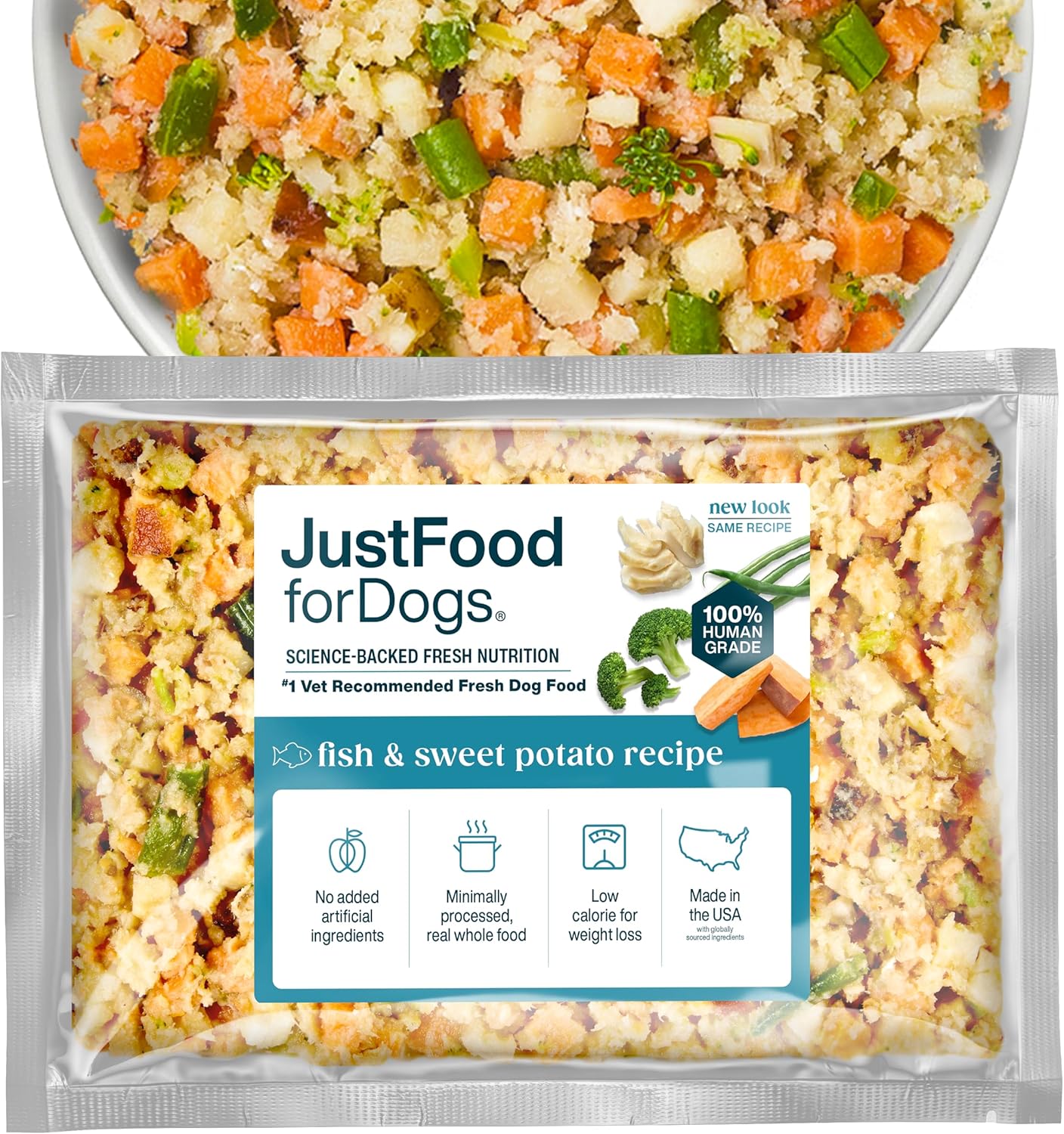
Key Features: Wild-caught white fish provides a novel protein option for dogs sensitive to chicken or beef | sweet potatoes offer digestible fiber and vitamin A | formulated to AAFCO nutrient profiles for complete and balanced feeding | shelf-stable frozen format with no artificial preservatives
Pros: Genuinely different format from kibble, worth trying if standard formulas haven’t helped | novel fish protein avoids the most common trigger proteins | human-grade ingredient standard | can serve as a full meal or a topper for picky eaters
Cons: Requires freezer space and costs more per pound than dry kibble | some owners report the brand has changed specific recipes over time without much notice
Best For: Dogs whose sensitivity hasn’t improved on standard kibble formulas
Bottom Line: The pick if you want to rule out format itself as part of the digestive problem.
#5 Open Farm Ancient Grains, Wild Caught Salmon: Best Natural, Traceable Pick
Overview: Wild-caught salmon as the first ingredient | unrefined ancient grains, free of peas, potatoes, and legumes | 100% traceable ingredients | 22 lb bag, multiple sizes available
Why We Recommend It: Open Farm specifically recommends this formula for sensitive stomachs, since unrefined ancient grains are gentler than legume-heavy grain-free recipes, and every ingredient traces back to its specific source.
Open Farm Ancient Grains
Best Natural, Traceable Pick
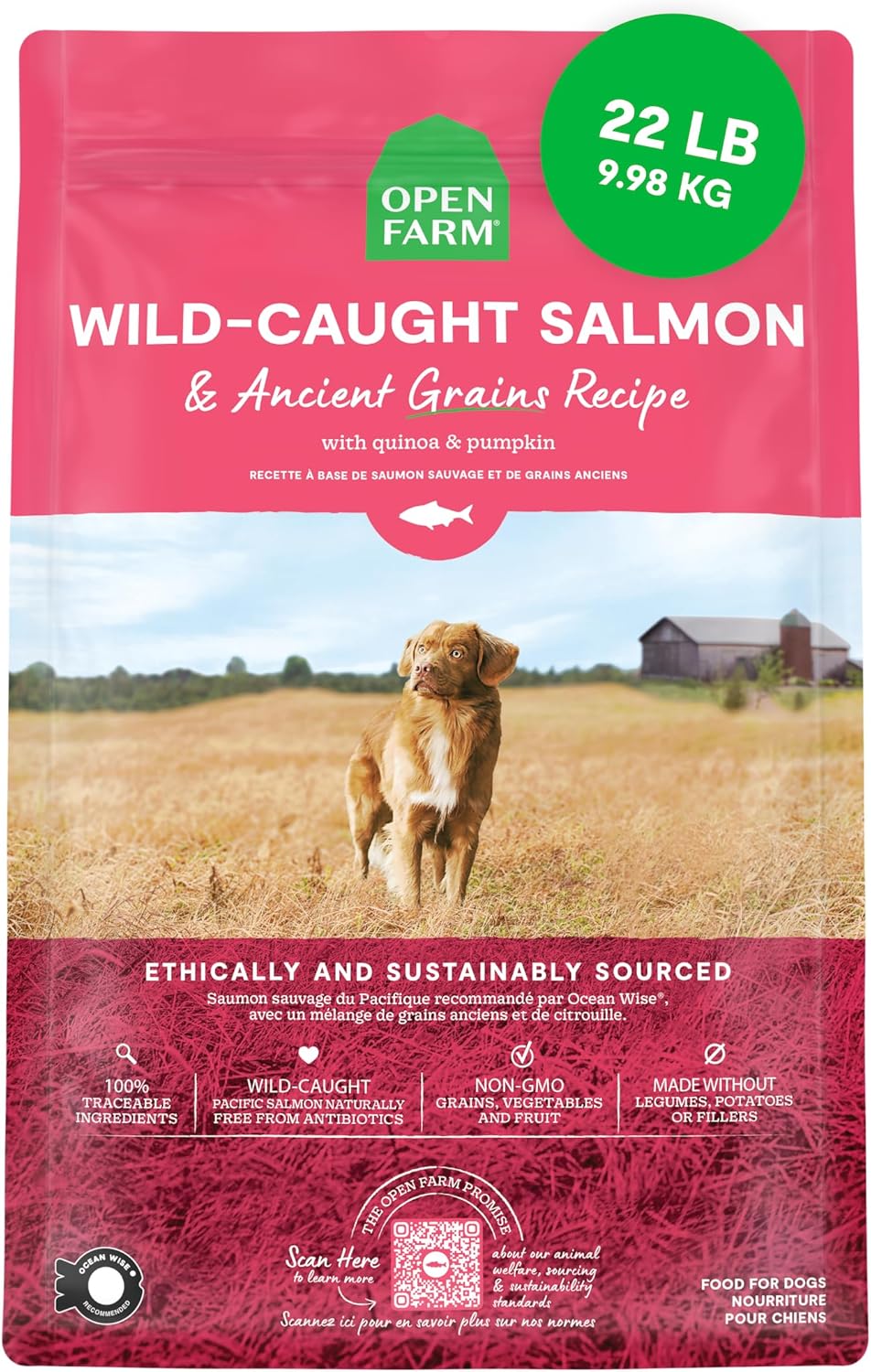
Key Features: Wild-caught salmon as the first ingredient | unrefined ancient grains like oats and quinoa are easier on sensitive digestion than legumes | free of peas, potatoes, and legumes, common triggers for some dogs | non-GMO fruits, vegetables, and superfoods with no artificial additives
Pros: Specifically positioned and recommended for sensitive stomachs, not a generic claim | radically transparent, traceable ingredient sourcing | avoids legume-heavy grain-free recipes some dogs react to | strong appeal for owners who want natural, ethical sourcing
Cons: Premium pricing reflects the sourcing standards | contains grains, so it’s not an option for a strict grain-free need
Best For: Owners who want a natural, traceable formula specifically positioned around digestive sensitivity
Bottom Line: The pick if legume sensitivity, not just general digestion, is part of the picture.
Pros & Cons Comparison Table
| Product | Top Pro | Top Con |
| #1 Royal Canin Digestive Care | Published 91% stool-quality result | Contains by-product meal and wheat gluten |
| #2 Purina Pro Plan | Real salmon, no corn/wheat/soy | Fish meal further down the ingredient list |
| #3 Hill’s Sensitive Stomach & Skin | Broadest veterinary trust | No published stool-quality study |
| #4 JustFoodForDogs | Genuinely different, more digestible format | Requires freezer space, costs more per pound |
| #5 Open Farm | Specifically formulated for sensitive stomachs | Contains grains, premium pricing |
Who Should Buy Which Product?
Go with #1 Royal Canin Digestive Care if you want the strongest published evidence behind the claim. Choose #2 Purina Pro Plan for a dependable everyday formula with real salmon. Pick #3 Hill’s Sensitive Stomach & Skin if you want the most broadly trusted veterinary option. Go with #4 JustFoodForDogs if standard kibble hasn’t solved the problem and you want to try a genuinely different format. Choose #5 Open Farm if legume sensitivity or ingredient traceability matters to you specifically.
How to Choose the Best Dog Food for Sensitive Stomach Issues
The number one reason people search for the best dog food for sensitive stomach relief is a pattern that’s stopped feeling random: gas, loose stools, or vomiting that shows up consistently enough to notice. What “not working” looks like day-to-day is dreading the next walk because of an upset stomach, or cleaning up after your dog more often than feels normal. Most owners don’t consider that the food itself might be the trigger until they’ve already tried a couple of unrelated fixes.
The complaints that come up most in reviews center on formulas that claim to be gentle but still contain common trigger ingredients, corn, wheat, soy, or a vague “meat by-product” instead of a named protein. This is a real quality-of-life issue for the dog, not just an inconvenience, and multi-dog households face an added wrinkle, since one dog’s trigger ingredient might be perfectly fine for another. Over time, guessing at the wrong formula repeatedly costs owners money and prolongs a dog’s discomfort.
What Actually Makes a Formula Gentle on Digestion
Formulas that genuinely help sensitive stomachs work through a few real mechanisms: highly digestible, named protein sources that are easier to break down, prebiotic fiber that feeds beneficial gut bacteria, and simplified carbohydrate sources like rice or oatmeal instead of harder-to-digest legumes. Compared on price per feeding, everyday sensitive-stomach formulas are considerably more affordable than fresh or human-grade options, and they work well for many dogs without needing a full dietary overhaul. One thing worth knowing: a published stool-quality or digestibility study, like Royal Canin’s internal research, gives you something concrete to compare, rather than trusting a vague “gentle on digestion” claim with no data behind it.
This guide is for owners of dogs showing signs of digestive sensitivity, multi-dog households managing different triggers, and anyone whose current formula hasn’t solved the problem despite claiming to. By the end of this section, you’ll know exactly which best dog food for sensitive stomach option fits your dog’s specific situation.
Common Buying Mistakes to Avoid
- Trusting the word “sensitive” without checking the ingredient list. A bag can say sensitive stomach and still contain corn, wheat, soy, or vague by-product meal. Check the actual first few ingredients.
- Switching formulas too quickly. Digestive symptoms can take one to two weeks to fully resolve on a new formula, so switching again too soon makes it hard to judge what’s working.
- Assuming grain-free automatically means gentler. Some grain-free formulas lean heavily on legumes like peas and lentils, which can be just as hard on digestion as grains for some dogs.
- Skipping the vet for persistent or severe symptoms. Ongoing vomiting, diarrhea, or weight loss can signal an underlying condition that diet alone won’t fix.
Practical Tips for Feeding Dogs with Sensitive Stomachs
- Transition gradually over 7 to 10 days. A sudden switch can itself cause digestive upset, even with a genuinely gentler formula.
- Feed smaller, more frequent meals if gas or bloating is an issue. This can ease the digestive load compared to one or two large meals.
- Keep a simple log of symptoms during the transition. Track stool quality, gas, and appetite so you can tell whether the new formula is actually helping.
- Ask your vet about adding a probiotic if symptoms persist. A targeted probiotic supplement can complement a sensitive-stomach formula for dogs with ongoing issues.
Our Review Process
We evaluated every product on this list against the same criteria:
- Protein digestibility and whether the source is clearly named
- Prebiotic and probiotic content
- Any published research or stool-quality data behind the formula
- Format and suitability for dogs that haven’t responded to standard kibble
- Real-world value per pound
We don’t make medical claims about any product, and every figure in this guide came from verified manufacturer or Amazon listing data. Persistent or severe digestive symptoms deserve veterinary attention to rule out an underlying condition before addressing them through diet alone.
For a broader look at dog nutrition beyond sensitive-stomach needs, our best dog food guide compares budget, premium, and breed-specific options.
Final Recommendation
If you only take one thing from this guide: look for a formula with real evidence behind the claim, not just the word “sensitive” on the bag. Royal Canin Digestive Care has the strongest published result in this comparison, with 91% of dogs achieving optimal stool quality. Purina Pro Plan is a dependable everyday alternative with real salmon and prebiotic fiber. If standard kibble hasn’t worked, JustFoodForDogs offers a genuinely different, more digestible format worth trying.
This guide is built for anyone tired of cleaning up after a dog whose stomach just won’t settle. Pick the option that matches your dog’s specific triggers, transition gradually, and loop in your vet if symptoms persist or worsen.
Frequently Asked Questions About Dog Food for Sensitive Stomach
What ingredients should I avoid in dog food for a sensitive stomach? Common triggers include corn, wheat, soy, and vague “meat by-product” ingredients without a named source, so formulas with a clearly identified protein like salmon or chicken and simplified carbohydrates tend to work better for sensitive digestion.
How long does it take for a new dog food to fix a sensitive stomach? Most dogs need one to two weeks on a consistent new formula before digestive symptoms fully resolve, so switching again too soon makes it difficult to judge whether the food is actually helping.
Is grain-free dog food better for a sensitive stomach? Not necessarily. Some grain-free formulas rely heavily on legumes like peas and lentils, which can be just as hard on digestion as grains for certain dogs, so the specific ingredients matter more than the grain-free label itself.
Should I add probiotics to my dog’s food for a sensitive stomach? Many sensitive-stomach formulas already include prebiotic fiber or probiotics, but your vet can recommend a targeted probiotic supplement if symptoms persist despite a formula change.
When should I see a vet about my dog’s sensitive stomach instead of just changing food? Persistent vomiting, diarrhea, blood in the stool, or unexplained weight loss warrant a veterinary visit to rule out an underlying condition, rather than continuing to try different foods on your own.

By the Pet Choice Center Editorial Team– Emma
Reviewed and researched by the Pet Choice Center Editorial Team. We compare pet products using manufacturer specifications, verified customer feedback, and practical buying criteria to help pet owners make informed decisions.