

- “Adult” food is not always suitable for puppies. Large breed puppies need a label that says so.
- “Senior” is not an official life stage, so read the statement behind the word.
- One cup of the richest food here holds about 30 percent more calories than one cup of Hill’s Adult.
Start With the Small Print on the Bag
Most dog food advice starts with the ingredient list. We would start somewhere else. AAFCO, the group that writes the model rules for pet food labels, calls the nutritional adequacy statement perhaps the most important part of a label. It is usually in small print on the back or side of the bag, and it tells you which life stage the food was made for.
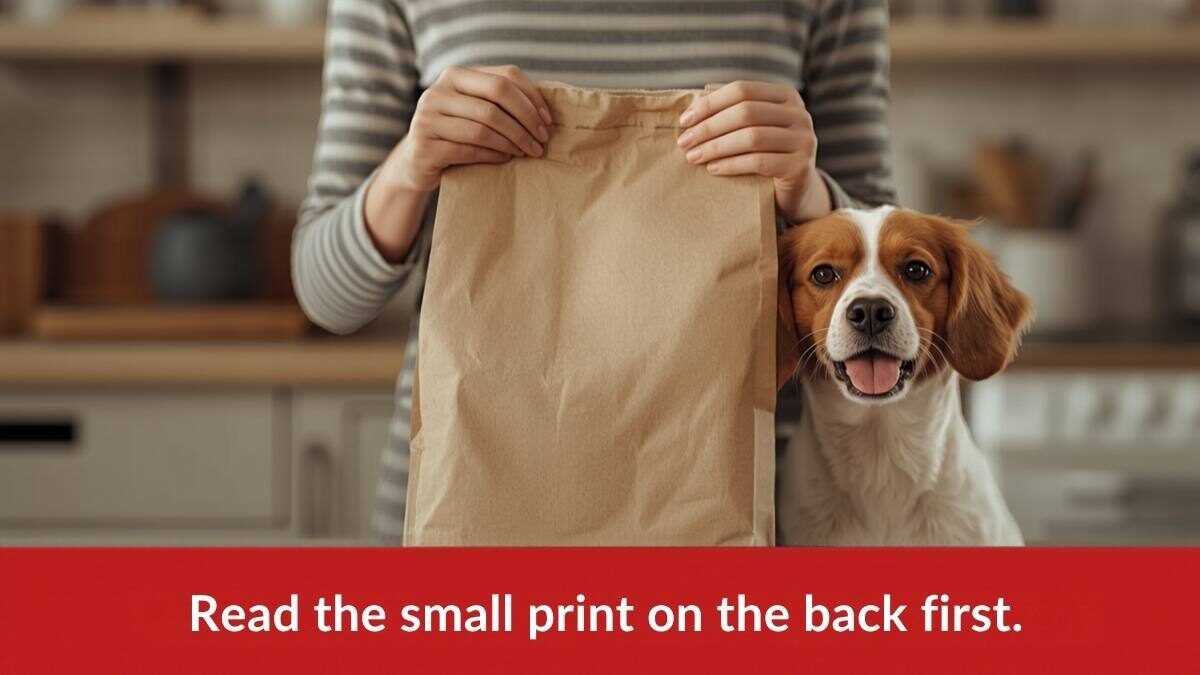
AAFCO recognizes four life stages: growth, maintenance, gestation/lactation, and all life stages. So a statement ending in “for maintenance” means an adult food. Look at how the claim is made too. Some brands say feeding tests were run using AAFCO procedures. Others say the food is formulated to meet AAFCO nutrient levels, which means it was built to the numbers without a feeding test behind that statement.
Match the Food to Your Dog’s Age and Size
Once you can read that statement, the choice gets much smaller. Use this table to find your dog, then check the bag.
| Your dog | What to look for | From our five, or where to go next |
|---|---|---|
| Puppy, small or medium adult size | A statement for growth or all life stages | ORIJEN Original covers all life stages. Hill’s Adult is not recommended for puppies. |
| Puppy, 70 lb or more as an adult | A statement that names growth of large size dogs | ORIJEN Original names it. AAFCO sets a lower calcium limit for these foods, so a plain puppy label is not enough. |
| Small adult | A maintenance statement and a kibble your dog can chew | Hill’s and Purina both sell small breed versions of the adult recipes below. |
| Medium adult | A maintenance statement | Hill’s Adult or Purina Pro Plan Shredded Blend |
| Large adult | A maintenance statement and a calorie count you can portion | Royal Canin Labrador if your dog is a purebred Lab. Otherwise, compare calories below. |
| Older dog | A maintenance statement, then the age-based extras | Read our senior dog food guide. |
That last row catches many people out. Senior is not one of the life stages on AAFCO’s list, so a bag marked “senior” will still carry a maintenance or all life stages statement. Brands use their own age lines too. Purina’s version starts at 7+, while Royal Canin’s Labrador version starts at 5+. Treat those numbers as the brand’s own guide. Your vet can tell you when your dog’s needs have changed.
How to Compare Protein Fairly
Here is a mistake that is easy to make. Hill’s publishes its nutrients on a dry matter basis, with the water taken out. The other four brands here publish guaranteed minimums on the bag, with the water left in. Put those side by side and Hill’s looks lower than it should.
The fix takes one line of math: divide the percentage by the dry part of the food. Taste of the Wild lists 32% protein and 10% moisture, so 32 divided by 0.90 gives about 35.6%. We ran that sum for each food below. These are estimates from label minimums and maximums, so use them to compare, not as exact amounts.
| Food | Protein (dry matter) | Fat (dry matter) | Calories per cup |
|---|---|---|---|
| Hill’s Science Diet Adult | 23.8% | 15% | 365 |
| Purina Pro Plan Shredded Blend | about 29.5% | about 18% | 369 |
| Royal Canin Labrador Adult | about 31% | about 12% | 306 |
| Taste of the Wild High Prairie | about 35.5% | about 20% | 422 |
| ORIJEN Original | about 43% | about 20.5% | 473 |
Look at the last column before you buy. A cup is not a fixed amount of food. If you switch from Hill’s to ORIJEN and keep the same scoop, your dog gets about 30 percent more calories at every meal. More protein is also not automatically better for every dog, and your vet may advise against it for some health conditions.
Five Foods and the Dogs They Fit
We don’t rank these from first to fifth, because they don’t compete for the same dog. Each one is here for a reason you can check on the label.

Hill’s Science Diet Adult Chicken & Barley
Choose this if you have a healthy adult dog and want a plain, moderate recipe. Hill’s says animal feeding tests using AAFCO procedures back its claim for adult maintenance, which means the food was fed to dogs and not only built to the numbers.

Purina Pro Plan Complete Essentials Shredded Blend Chicken & Rice
Choose this if your adult dog likes more than one texture in the bowl. Purina mixes hard kibble with softer shredded pieces, and adds live probiotics and prebiotic fiber. Its adult maintenance claim also rests on AAFCO feeding tests.

Royal Canin Labrador Retriever Adult
Choose this if you have a purebred Lab that eats too fast. Royal Canin shapes the kibble like a donut to slow fast eaters down and make them chew. It has the fewest calories per cup of these five, and the label guarantees at least 968 mg/kg of glucosamine.

ORIJEN Original
Choose this if you have a puppy and want one food to carry through to adulthood, or if you want the highest protein here. ORIJEN says 85% of the recipe is animal ingredients. Read the footnote on that figure: it is approximate and based on the ingredients before processing.

Taste of the Wild High Prairie
Choose this if you want an adult food with less common meats high on the list. One thing the front of the bag won’t tell you: roasted bison and venison are in the name, but water buffalo is the first ingredient, and lamb meal and chicken meal come next. If you are avoiding chicken or beef, this recipe does not do that.
Should You Choose Grain-Free?
Only if you have a reason to. A few years back, the FDA began looking into reports of a heart condition called dilated cardiomyopathy in dogs eating certain foods, many labeled grain-free, with peas, lentils, other legumes or potatoes high on the ingredient list. The FDA has not established that these foods cause the condition, and it says it won’t release more updates until there is meaningful new science. It asks owners to talk with their vet before changing diets, and that is sensible advice here too. Two of the foods above are grain-free, so we flag this for you instead of leaving it out.
Real-World Checks Before You Buy
- Measure your scoop. Fill it, level it, and pour it into a real measuring cup. Scoops vary, and the feeding guide on the bag assumes a standard cup.
- Work out the new portion. Moving to a richer or lighter food means changing how much you pour.
- Buy the small bag first. A dog that refuses the food costs you more than a higher price per pound.
- Allow for treats. They count toward your dog’s calories for the day.
- Watch for three things over a few weeks: stool quality, weight, and coat.
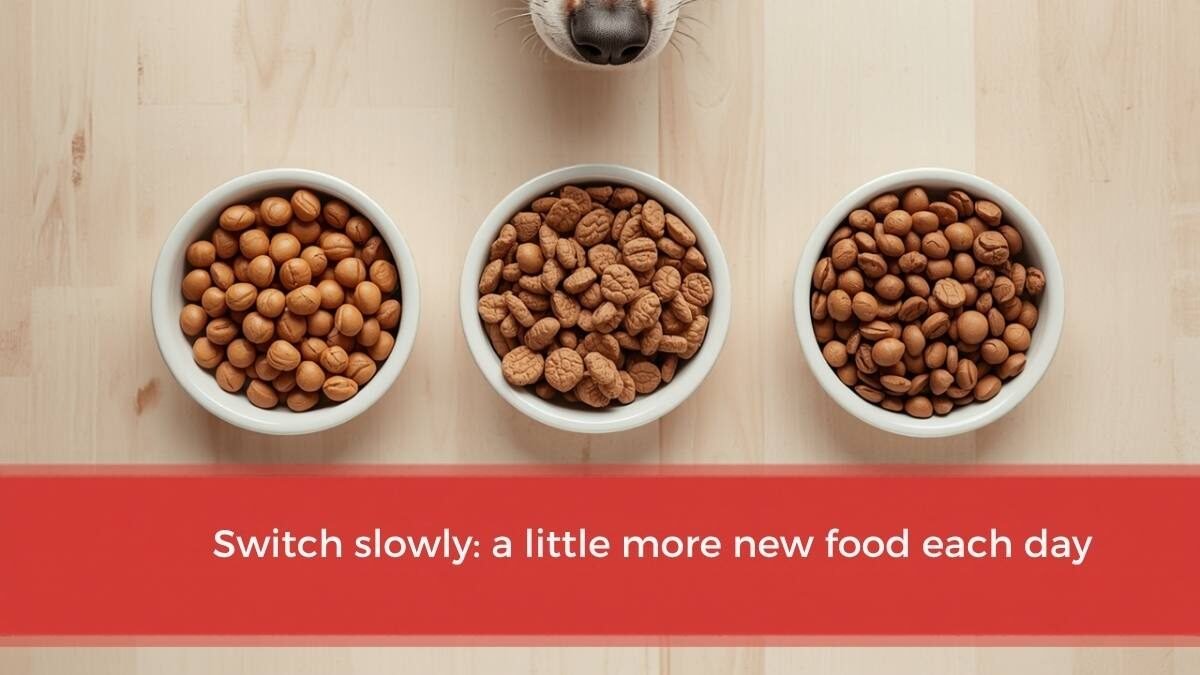
When you do change foods, go slowly. Mix a little of the new food into the old, and raise the share each day over about a week.
When to Ask Your Vet First
A guide like this can’t see your dog. Talk to your vet before choosing if your dog has a diagnosed health condition, is pregnant or nursing, has gained or lost weight without a clear reason, or is a large breed puppy. For a touchy stomach, start with our guide to dog food for sensitive stomachs.
Frequently Asked Questions
What is the healthiest dog food?
There isn’t one answer for every dog. Look for a complete and balanced statement for your dog’s life stage, from a brand that publishes its nutrition details, in an amount that keeps your dog at a healthy weight. Your vet can narrow it down from there.
Does expensive dog food mean better food?
Not by itself. Every food here makes a complete and balanced claim for the life stage on its label. Higher prices can pay for different ingredients, but they do not tell you the food suits your dog. For lower-cost options, see our budget dog food guide.
Do large breed puppies need special food?
They need a label that covers them. Look for a growth or all life stages statement that says it includes growth of large size dogs, which means 70 lb or more as an adult. AAFCO sets a lower calcium limit for these foods.
What does “formulated to meet” mean on a dog food label?
It means the recipe was built to match AAFCO nutrient levels. A statement that mentions animal feeding tests means the brand also fed the food to dogs under AAFCO procedures. Both are allowed, and the statement tells you which one applies.
Is by-product meal bad for dogs?
The word alone does not tell you much about the quality of a food. If you prefer to avoid it, the ingredient list will show you. Two of the foods above list a by-product meal.
Our Verdict
Start with your dog, not the brand. For a healthy adult, Hill’s Science Diet Adult is a plain place to begin, and Purina Pro Plan Shredded Blend suits a dog that likes mixed textures. A purebred Lab that gulps its food fits Royal Canin’s breed formula, and a puppy you want on one food through adulthood fits ORIJEN Original. Whichever you choose, read the statement on the back, work out the calories in your scoop, and change over slowly.
Want a narrower list? Try our guides to dry dog food and dog food brands.
- Hill’s Science Diet Adult Chicken & Barley
- Purina Pro Plan Complete Essentials Shredded Blend
- Royal Canin Labrador Retriever Adult
- ORIJEN Original
- Taste of the Wild High Prairie
- AAFCO: reading pet food labels
- FDA: diets and canine dilated cardiomyopathy
Product facts come from each brand’s own page and can change, so the bag in your hand has the final word. We don’t test products ourselves.