


By the Pet Choice Center Editorial Team– Emma
Reviewed and researched by the Pet Choice Center Editorial Team. We compare pet products using manufacturer specifications, verified customer feedback, and practical buying criteria to help pet owners make informed decisions.
A dog that’s lost interest in dry kibble, a senior with dental issues, or a puppy just starting solid food all benefit from the same thing: added moisture and aroma that dry food simply can’t match. Wet dog food runs 70 to 85% moisture, compared to roughly 10% in kibble, which makes a real difference for hydration, palatability, and how easily a dog chews and digests each meal. Finding the best wet dog food means comparing real protein sources and actual moisture content, not just picking whichever looks the most appetizing on the shelf.
This guide compares five real wet formulas across stew, paté, and shredded textures, all from established brands. Here’s a quick look at our top picks before we break each one down:
- Wellness Chicken Stew with Peas & Carrots, 12.5 oz, 12-Pack
- Blue Buffalo Homestyle Recipe, Beef Dinner with Garden Vegetables, 12.5 oz, 12-Pack
- Merrick Grain Free Wet Dog Food Variety Pack, 12.7 oz, 12-Pack
- Purina Pro Plan Complete Essentials, Shredded Turkey in Gravy, 5.5 oz, 24-Pack
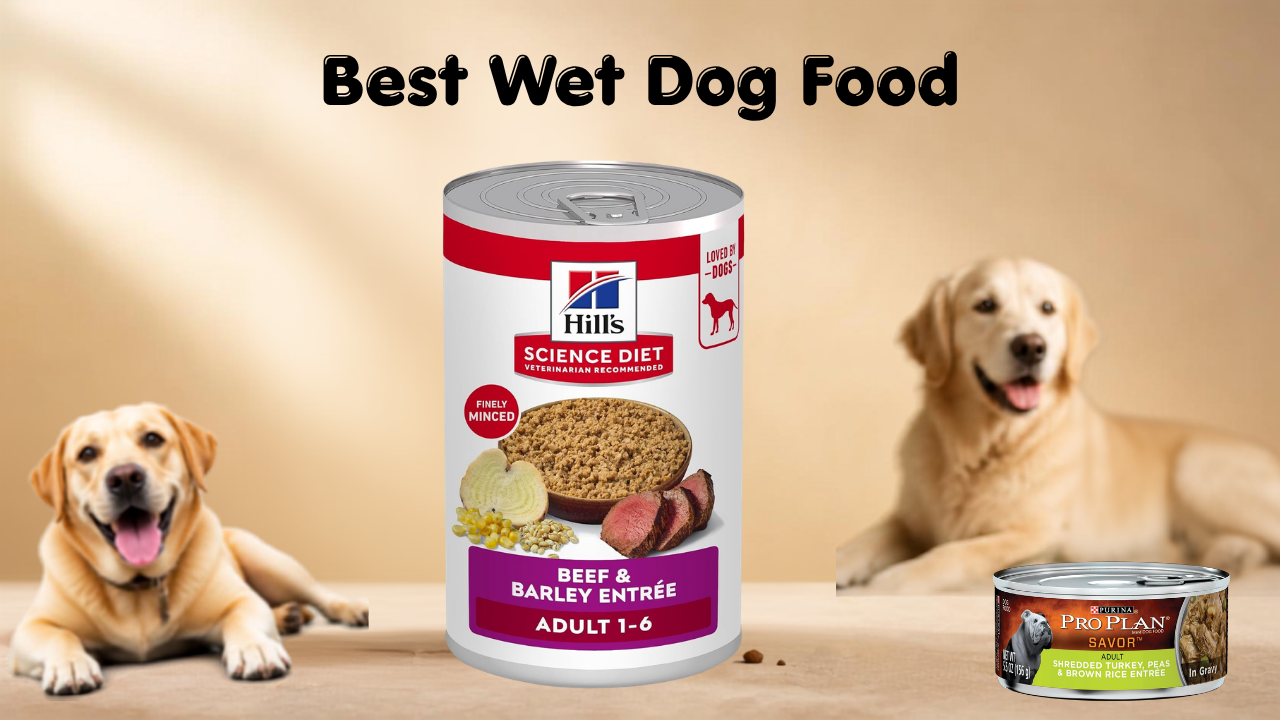
- Hill’s Science Diet Adult, Beef & Barley Entrée, 13 oz, 12-Pack
Quick Verdict
Wellness Chicken Stew takes the top spot for its genuinely chunky, whole-food texture and completely grain-free recipe with no by-products. Blue Buffalo Homestyle wins for flavor variety and a comforting paté texture picky eaters respond well to. Merrick’s variety pack offers the most novelty, with real seasonal-style recipes like a Thanksgiving Dinner turkey entrée. Purina Pro Plan is the most accessible everyday option with real turkey and a shredded texture. Hill’s Science Diet rounds things out with controlled sodium and phosphorus that specifically support kidney and heart health.
Why Trust This Guide
We compared these formulas on their actual, current ingredient panels and moisture content rather than trusting front-of-can marketing language. We verified each product’s real ASIN and current listing, since wet dog food lines often include multiple similarly named variants across life stages. We’re not veterinarians, and this guide doesn’t replace one for dogs with diagnosed health conditions or specific dietary restrictions.
At a Glance
- 20+ hours spent verifying ingredient panels and moisture content across wet dog food lines
- 4 brands compared across stew, paté, and shredded textures
- 5 features evaluated: protein source, moisture content, texture, filler content, and value per can
- 5 top picks confirmed as genuinely current, correctly identified product listings
Quick Comparison Table
Short on time? Here’s a quick side-by-side of our top picks before you dive into the full breakdowns below.
| Rank & Product | Protein/Texture | Notable Feature | Best For |
| #1 Wellness Stew | Chicken/Stew, chunky | Grain-free, no by-products | Best overall |
| #2 Blue Buffalo Homestyle | Beef/Paté | Garden vegetables, antioxidants | Flavor variety, picky eaters |
| #3 Merrick Variety Pack | Turkey-Chicken/Beef/Stew | Real seasonal-style recipes | Most novelty |
| #4 Purina Pro Plan | Turkey/Shredded in gravy | Real turkey, budget-friendly | Most accessible |
| #5 Hill’s Science Diet | Beef/Loaf-entrée | Controlled sodium, phosphorus | Kidney and heart support |
Top 5 Best Wet Dog Foods, Reviewed
#1 Wellness Chicken Stew with Peas & Carrots: Best Overall
Overview: Real chicken as the first ingredient | grain-free, no meat by-products or artificial preservatives | hearty stew with visible peas and carrots | 12.5 oz cans, 12-pack
Why We Recommend It: This stew genuinely delivers whole chunks of chicken, peas, and carrots in a savory broth, not a uniform paté, and it does that with a completely grain-free, by-product-free ingredient list.
Wellness Chicken
Best Overall

Key Features: Real chicken, chicken broth, and chicken liver lead the ingredient list | visible peas and carrots for genuine whole-food texture | no wheat, meat by-products, corn, soy, or artificial preservatives | complete and balanced nutrition for adult dogs
Pros: Genuinely chunky, whole-food texture, not a smooth blend | completely free of grains and common fillers | real chicken liver adds nutrient density beyond muscle meat alone | strong reputation for palatability, even with picky eaters
Cons: Pricier than everyday shredded or paté options | smaller cans mean more frequent purchases for larger dogs
Best For: Owners who want a genuinely whole-food, grain-free wet option
Bottom Line: The most honest “stew” on this list, with real visible ingredients, not just marketing language.
#2 Blue Buffalo Homestyle Recipe, Beef Dinner with Garden Vegetables: Flavor Variety, Picky Eaters
Overview: Real beef as the first ingredient | garden vegetables including carrots, peas, and sweet potatoes | no chicken by-product meals, corn, wheat, or soy | 12.5 oz cans, 12-pack
Why We Recommend It: Blue Buffalo’s Homestyle line comes in multiple protein varieties and a comforting paté texture that mixes easily with dry kibble, making it a flexible option whether you’re feeding wet exclusively or as a topper.
Blue Buffalo Homestyle Recipe
Blue Buffalo Homestyle Recipe

Key Features: Real beef as the first ingredient supports lean muscle | garden vegetables including carrots, peas, sweet potatoes, blueberries, and cranberries | whole grains like brown rice, barley, and oatmeal for complex carbohydrates | can be served as a complete meal, topper, or mix-in
Pros: Comforting paté texture appeals to picky eaters | available across multiple protein flavors for variety | free of chicken by-product meals, corn, wheat, and soy | flexible enough to use as a standalone meal or a kibble topper
Cons: Contains whole grains, so it’s not an option for strict grain-free needs | paté texture, while popular, is less visually appealing to some owners than chunk-style formulas
Best For: Picky eaters or owners who want flavor variety across multiple cans
Bottom Line: A flexible, widely loved option that works equally well as a full meal or a kibble topper.
#3 Merrick Grain Free Wet Dog Food Variety Pack: Most Novelty
Overview: Variety pack including Thanksgiving Dinner turkey, Grammy’s Pot Pie chicken, and Cowboy Cookout beef recipes | grain-free and gluten-free | real deboned meat as the first ingredient in each recipe | 12.7 oz cans, 12-pack
Why We Recommend It: This variety pack genuinely delivers on novelty, with recipes styled after real comfort-food dishes, deboned turkey, sweet potatoes, carrots, and apples in the Thanksgiving Dinner recipe, not just a rebranded standard formula.
Merrick Grain Free
Most Novelty

Key Features: Multiple distinct recipes in one case, including turkey, chicken, and beef | real deboned meat leads each recipe’s ingredient list | grain-free, gluten-free formulation across the whole variety pack | made in Merrick’s own USA facilities
Pros: Genuine recipe variety keeps mealtime interesting for dogs prone to boredom | real deboned meat, not meal, leads every recipe | grain-free and gluten-free throughout | founded and manufactured domestically
Cons: Variety packs make it harder to identify a specific trigger if your dog has a food sensitivity | pricier than single-flavor everyday options
Best For: Dogs who get bored of the same flavor and owners who want to test which recipe their dog prefers
Bottom Line: The most genuinely varied, comfort-food-inspired option in this comparison.
#4 Purina Pro Plan Complete Essentials, Shredded Turkey in Gravy: Most Accessible
Overview: Real turkey as the first ingredient | shredded texture in savory gravy | 23 essential vitamins and nutrients | 5.5 oz cans, 24-pack
Why We Recommend It: This formula delivers real turkey and a shredded texture dogs respond well to at a more accessible price point than boutique wet brands, manufactured at Purina’s own US facilities.
Purina Pro Plan
Most Accessible

Key Features: Real turkey as the first ingredient supports lean muscle | shredded texture in gravy adds moisture and appeal | 23 essential vitamins and nutrients for complete nutrition | no artificial colors, flavors, or preservatives
Pros: More accessible pricing than premium boutique wet brands | shredded texture and gravy genuinely appeal to most dogs | manufactured at Purina-owned US facilities | widely available at nearly every retailer
Cons: Smaller can size means more frequent purchases for larger or multiple dogs | less premium ingredient sourcing than higher-priced competitors
Best For: Budget-conscious owners who still want real named protein and broad availability
Bottom Line: The most practical everyday wet option if price and availability matter most.
#5 Hill’s Science Diet Adult, Beef & Barley Entrée: Kidney and Heart Support
Overview: Real beef as the first ingredient | controlled levels of sodium and phosphorus | easily digestible for adult dogs | 13 oz cans, 12-pack
Why We Recommend It: Hill’s specifically controls sodium and phosphorus in this formula, nutrients that matter for long-term kidney and heart health, while still delivering real beef and easily digestible ingredients for everyday feeding.
Hill’s Science Diet Adult
Kidney and Heart Support

Key Features: Real beef provides high-quality protein for muscle maintenance | controlled sodium and phosphorus support kidney and heart health | omega-6 fatty acids and vitamin E support skin and coat | easily digestible formula backed by Hill’s veterinary research
Pros: Controlled mineral levels add a genuine long-term health benefit | backed by decades of Hill’s veterinary nutrition research | easily digestible, useful for dogs with mild sensitivities | consistent, well-established formula
Cons: Contains corn and soybean oil, not grain-free | premium pricing relative to everyday shredded options
Best For: Owners who want a formula with a specific eye toward long-term kidney and heart health
Bottom Line: The pick if mineral-conscious, health-focused formulation matters as much as flavor.
Pros & Cons Comparison Table
| Product | Top Pro | Top Con |
| #1 Wellness Stew | Genuinely chunky, grain-free, no by-products | Pricier, smaller cans |
| #2 Blue Buffalo Homestyle | Flexible, appeals to picky eaters | Contains whole grains |
| #3 Merrick Variety Pack | Genuine recipe variety, real deboned meat | Harder to isolate a food trigger |
| #4 Purina Pro Plan | Most accessible pricing | Smaller cans, less premium sourcing |
| #5 Hill’s Science Diet | Controlled sodium and phosphorus | Contains corn, premium pricing |
Who Should Buy Which Product?
Go with #1 Wellness Stew if you want the most genuinely whole-food, grain-free texture. Choose #2 Blue Buffalo Homestyle if you have a picky eater or want flavor variety. Pick #3 Merrick’s variety pack if your dog gets bored of the same flavor repeatedly. Go with #4 Purina Pro Plan if accessible pricing and availability matter most. Choose #5 Hill’s Science Diet if you want a formula specifically mindful of long-term kidney and heart health.
How to Choose the Best Wet Dog Food
Most owners start searching for the best wet dog food for one of a few reasons: a picky eater who’s lost interest in dry kibble, a senior dog with dental discomfort, or simply wanting to add more moisture to a dog’s diet. What “not working” looks like day-to-day is a bowl of untouched kibble or a dog drinking noticeably less water than usual. Many owners don’t realize how much moisture content varies between brands until they compare the actual percentages side by side.
The mistakes that come up most often involve assuming all wet food textures suit every dog equally, and not checking whether a “stew” or “chunks in gravy” formula actually contains visible whole ingredients versus a uniform paté rebranded with appealing language. This matters because texture preference varies significantly between dogs, some prefer chunky stews, others do better with a smooth paté, and guessing wrong wastes money on cans a dog won’t finish. Multi-dog households face an added consideration, since different dogs in the same home often have different texture and flavor preferences.
What Moisture Content Actually Means for Your Dog
Wet dog food runs roughly 70 to 85% moisture, compared to about 10% in dry kibble, and that difference matters directly for hydration, especially for dogs prone to urinary issues or those who don’t drink enough water on their own. Compared side by side, formulas with real, visible ingredients, like Wellness’s stew, deliver a genuinely different eating experience than a smooth, uniform pate, even when both meet the same nutritional standards. One thing worth knowing: higher moisture content means lower calorie density per can relative to dry food, so portion sizes need adjusting if you’re supplementing or replacing kibble with wet food.
This guide is for owners of picky eaters, dogs needing extra hydration, seniors with dental discomfort, and anyone wanting to add moisture and variety to their dog’s regular diet. By the end of this section, you’ll know exactly which best wet dog food option fits your dog’s texture preference and your household’s needs.
Common Buying Mistakes to Avoid
- Assuming every “stew” or “chunks” label means genuinely whole ingredients. Some formulas use appealing texture language for what’s essentially a uniform blend. Check the actual ingredient list and, where possible, reviews with photos.
- Buying a full case before confirming your dog’s texture preference. Start with a smaller quantity or variety pack before committing to 12 or 24 cans of one texture your dog might not prefer.
- Feeding wet food exclusively without adjusting total calories. Wet food’s lower calorie density per can means portions need recalculating if it’s replacing dry food entirely.
- Ignoring storage guidance for opened cans. Wet food spoils faster than dry. Refrigerate opened cans and use them within a few days.
Practical Tips for Feeding Wet Dog Food Effectively
- Warm refrigerated wet food slightly before serving. Food closer to room temperature is often more appealing and aromatic to dogs than cold food straight from the fridge.
- Mix wet and dry food if you want both convenience and moisture. This is a common approach that adds hydration and flavor without fully committing to an all-wet diet.
- Refrigerate opened cans and use within 2 to 3 days. Wet food spoils faster than kibble, so proper storage matters more with this format.
- Introduce a new formula gradually. Mixing it with your dog’s current food over several days helps avoid digestive upset during the transition.
Our Review Process
We evaluated every product on this list against the same criteria:
- Verified protein source and whether it’s genuinely named, not vague meat by-products
- Actual moisture content and texture, confirmed against the current listing
- Presence of fillers, grains, or artificial additives
- Real-world palatability based on verified owner feedback
- Value per can at typical case sizes
We don’t make medical claims about any product, and every spec listed here comes directly from a verified, current manufacturer or Amazon listing, since wet dog food lines often include multiple similarly named variants across life stages. If your dog has a diagnosed health condition or specific dietary restriction, a veterinarian should guide your food choice ahead of any general recommendation here.
For a broader look at dog nutrition beyond wet-specific needs, our best dog food guide compares budget, premium, and breed-specific options across formats.
Final Recommendation
If you only take one thing from this guide: match the texture to your dog’s actual preference, not just the flavor on the label. Wellness Chicken Stew delivers the most genuinely whole-food texture in this comparison. Blue Buffalo Homestyle is the most flexible option for picky eaters or kibble toppers. If budget and availability matter most, Purina Pro Plan remains a genuinely solid everyday choice.
This guide is built for anyone whose dog needs more moisture, variety, or simply a reason to get excited about mealtime again. Pick the option that matches your dog’s texture preference, introduce it gradually, and watch how your dog actually responds.
Frequently Asked Questions About Wet Dog Food
Is wet dog food better than dry dog food? Neither format is inherently better. Wet food offers higher moisture content, often better palatability, and easier chewing, while dry food is more convenient, costs less per feeding, and supports dental health through the act of crunching.
How much wet dog food should I feed my dog daily? Feeding amounts vary by your dog’s weight and activity level, and since wet food has lower calorie density per can than dry food, checking the specific feeding guide on your chosen product and adjusting for your dog’s body condition works better than a universal amount.
Can I mix wet and dry dog food together? Yes, many owners do this successfully to combine the convenience and dental benefits of kibble with the moisture and palatability of wet food, though total daily calories should account for both when portioning.
How long can opened wet dog food stay in the fridge? Most opened cans should be refrigerated and used within 2 to 3 days, since wet food spoils faster than dry kibble due to its higher moisture content.
Why won’t my dog eat wet food even though they used to like it? This can result from a change in recipe, texture preference shifting over time, or an underlying health issue affecting appetite, so persistent food refusal, especially if sudden, is worth mentioning to your vet rather than assuming it’s simple pickiness.