

Introduction
A food trial only works if your cat actually eats the food, and a lot of cats who’ll happily crunch through their favorite kibble will sniff a new bag of limited-ingredient dry food and walk away. If that’s happened at your house, the problem might not be the diet itself, it might be the format. This guide covers the best food for cats with allergies specifically in wet and canned form, since a cat that refuses dry food during an elimination trial can often be coaxed into the exact same protein and ingredient profile in a pate or entrée they’ll actually finish.
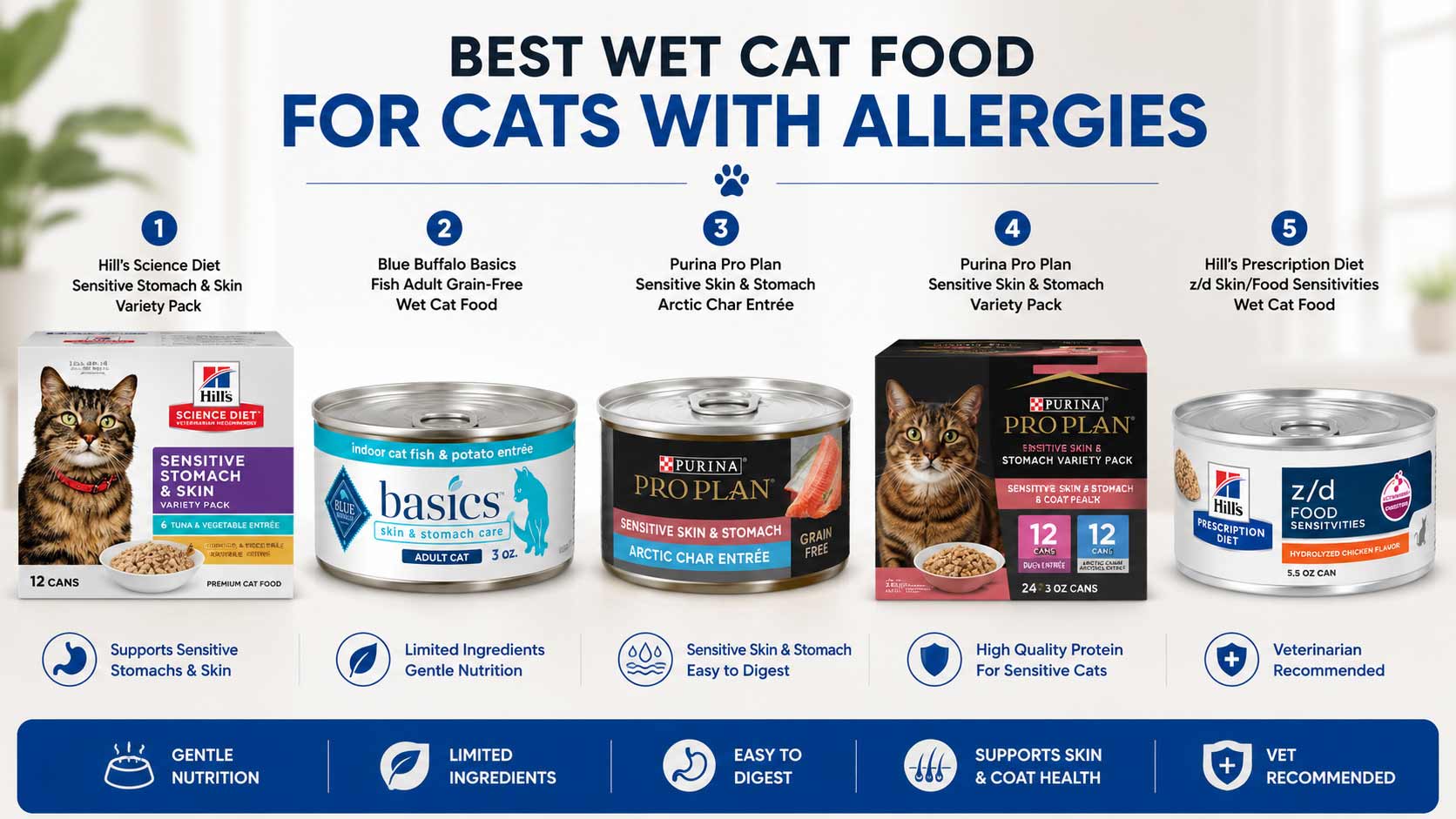
This guide is built for cats already on, or about to start, a food-sensitivity trial who need a wet option, whether that’s because they’re picky, need extra hydration, have dental issues that make kibble uncomfortable, or are simply more food-motivated by texture and aroma than dry kibble can offer. It covers adult formulas across three tiers: prescription, everyday sensitive, and single-protein limited ingredient. Here’s a quick look at our top picks before we break each one down:
- Hill’s Prescription Diet z/d Skin/Food Sensitivities Wet Cat Food, 24-pack
- Blue Buffalo Basics Grain-Free Wet Cat Food, Fish Recipe, 24-pack
- Purina Pro Plan Sensitive Skin and Stomach Wet Pate, Arctic Char Entrée, 24-pack
- Purina Pro Plan Sensitive Skin and Stomach Wet Variety Pack, Duck and Arctic Char, 24-pack
- Hill’s Science Diet Sensitive Stomach & Skin Wet Cat Food Variety Pack, Tuna & Chicken, 12-pack
Quick Verdict
Hill’s Prescription Diet z/d wet is our top pick if your vet has already recommended the hydrolyzed formula but your cat won’t eat the dry version. For cats without a prescription diagnosis, Blue Buffalo Basics Fish gives you a genuine single-protein wet option, Purina Pro Plan Arctic Char is the strongest single-flavor everyday pick, the Duck and Arctic Char variety pack solves the “will my cat even like this” problem with two flavors in one box, and Hill’s Science Diet’s variety pack rounds things out for cats who do better with some flavor rotation.
Why Trust This Guide
We sourced these five specifically because they’re available in wet or canned form, since dry-food comparisons don’t help owners whose cats simply won’t eat kibble during a trial. We checked each product’s actual ingredient panel, not just the front-of-can description, to confirm protein source and whether a formula genuinely qualifies as a limited ingredient versus a standard multi-protein sensitive recipe. Every spec here came from the manufacturer’s own listing, and we flagged the one prescription item clearly rather than blending it in with the over-the-counter options.
At a Glance
- 15+ hours spent comparing wet and canned allergy-focused formulas specifically
- 3 brands represented across prescription and over-the-counter tiers
- 5 features compared: protein source, prescription status, moisture content, palatability signals, and value per can
- 5 top picks covering single-flavor, variety-pack, and prescription wet options
Quick Comparison Table
Short on time? Here’s a quick side-by-side of our top picks before you dive into the full breakdowns below.
| Rank & Product | Protein | Purchase Type | Format | Best For |
| #1 Hill’s Prescription Diet z/d | Hydrolyzed chicken | Prescription required | 24-pack cans | Vet-confirmed allergy, kibble refusal |
| #2 Blue Buffalo Basics Fish | Fish, single protein | Over the counter | 24-pack cans | Genuine limited-ingredient wet |
| #3 Purina Pro Plan Arctic Char | Fish, single flavor | Over the counter | 24-pack cans | Everyday single-protein pick |
| #4 Purina Pro Plan Duck & Arctic Char | Duck and fish | Over the counter | 24-pack, 2 flavors | Picky eaters, flavor testing |
| #5 Hill’s Science Diet Variety | Tuna and chicken | Over the counter | 12-pack, 2 flavors | Flavor rotation for fussy cats |
Top 5 Wet Food Picks for Cats with Allergies, Reviewed
Affiliate Disclosure: As an Amazon Associate Pet Choice Center may earn a commission from qualifying purchases. If you purchase through our links, we may earn a small commission at no extra cost to you. We only recommend products we genuinely stand behind.
#1 Hill’s Prescription Diet z/d Skin/Food Sensitivities Wet Cat Food: Best for Vet-Confirmed Allergies
Overview: Hydrolyzed chicken protein in wet | requires veterinary authorization to purchase | 5.5 oz cans, 24-pack
Why We Recommend It: If your vet has already recommended z/d but your cat turned its nose up at the dry version, this canned formula delivers the identical hydrolyzed protein in a texture many cats find far more appealing than kibble.
Vet-Confirmed Allergies
Hill’s Prescription Diet

Key Features: Same highly hydrolyzed chicken protein as the dry formula | pate texture and higher moisture content than kibble | rich in omega-3 and omega-6 fatty acids for skin healing | formulated to reduce scratching, itching, and digestive symptoms
Pros: Identical therapeutic formula to the dry version, so no compromise on the hydrolyzed protein your vet recommended | pate texture is often more palatable to cats refusing dry food | added moisture benefits cats prone to dehydration or urinary issues | consistent, well-established prescription line
Cons: Requires veterinary authorization to purchase, same as the dry version | more expensive per feeding than dry kibble, and canned formats generally cost more than dry pound-for-pound
Best For: Cats with a vet-diagnosed allergy who’ve refused the dry hydrolyzed formula
Bottom Line: The wet answer to a real problem, a cat that needs hydrolyzed protein but won’t eat it as kibble.
#2 Blue Buffalo Basics Grain-Free Wet Cat Food, Fish Recipe: Genuine Limited-Ingredient Wet Pick
Overview: Single novel protein, real fish as the first ingredient | grain-free, limited ingredient pate | free of chicken, beef, corn, wheat, and soy | 3 oz cans, 24-pack
Why We Recommend It: This is a genuinely single-protein wet formula, not just a “sensitive” label slapped on a multi-ingredient recipe, which makes it useful as an actual elimination step rather than a general digestive-support food.
Limited-Ingredient Wet Pick
Blue Buffalo Basics Grain-Free

Key Features: Real fish as the sole animal protein | free of chicken, poultry by-products, corn, wheat, and soy | LifeSource Bits for immune support | omega-3 and omega-6 fatty acids for skin and coat health
Pros: Genuinely single-protein, easy to use in an actual elimination trial | rules out poultry entirely, a common trigger | pate texture and higher moisture appeal to picky eaters | free of grains and glutens some cats react to
Cons: Smaller 3 oz cans mean more cans per feeding for larger cats | fish is a more common allergen than a truly novel protein like rabbit
Best For: Cats who need a real single-protein elimination diet but won’t eat the dry version
Bottom Line: The most genuinely limited-ingredient wet option on this list, and a strong step if chicken-based formulas haven’t worked.
#3 Purina Pro Plan Sensitive Skin and Stomach Wet Pate, Arctic Char Entree: Everyday Single-Protein Pick
Overview: Grain-free wet pate with Arctic char as the primary protein | formulated for sensitive skin and stomach | prebiotic fiber for digestive support | 3 oz cans, 24-pack
Why We Recommend It: This gives you a single, consistent flavor across the whole case, which matters if you’ve found the one protein your cat tolerates and don’t want a variety pack introducing new proteins into the mix.
Single-Protein Pick
Purina Pro Plan Sensitive Skin

Key Features: Grain-free Arctic char pate formula | natural prebiotic fiber supports digestive health | 25 essential vitamins and minerals plus taurine | no artificial colors or preservatives
Pros: Consistent single flavor throughout the case, ideal once you’ve found what works | high moisture content supports hydration and digestion | backed by Purina’s veterinary nutrition research | pate texture is easy for most cats to eat
Cons: Arctic char and fish generally are a fairly common allergen, not a truly novel protein | 24-pack of small cans means more frequent reordering for larger or multi-cat households
Best For: Cats who’ve already tolerated fish-based formulas and need a steady, single-flavor supply
Bottom Line: The pick once you’ve identified a protein that works and just need a reliable, consistent case of it.
#4 Purina Pro Plan Sensitive Skin and Stomach Wet Variety Pack, Duck and Arctic Char: Best for Picky Eaters
Overview: Grain-free wet pate variety pack with duck and Arctic char entrées | formulated for sensitive skin and stomach | prebiotic fiber for digestion | 3 oz cans, 24-pack, two flavors
Why We Recommend It: If you’re not yet sure which protein your cat will actually eat, this variety pack lets you test duck and fish in the same case instead of committing to a full case of a single flavor that might get refused.
Best for Picky Eaters
Purina Pro Plan Sensitive Skin

Key Features: Two entrées in one case, duck and Arctic char | grain-free pate formula for both flavors | natural prebiotic fiber for digestive support | 25 essential vitamins and minerals plus taurine
Pros: Lets you test two proteins without buying two separate cases | still grain-free and formulated for sensitive skin and stomach | reduces the risk of buying 24 cans of a flavor your cat rejects | good starting point before committing to a single-flavor case
Cons: Testing two proteins at once makes it harder to isolate which one, if either, causes a reaction | neither duck nor fish is a truly novel protein for cats with extensive dietary histories
Best For: Owners who aren’t sure yet which protein their cat will tolerate or enjoy
Bottom Line: The lower-risk way to find out what your cat will actually eat before buying a full case of one flavor.
#5 Hill’s Science Diet Sensitive Stomach & Skin Wet Cat Food Variety Pack, Tuna & Chicken: Best for Flavor Rotation
Overview: Wet cat food variety pack with tuna and chicken vegetable entrées | grain-free, formulated for digestive and skin health | prebiotic fiber and omega-6 fatty acids | 2.9 oz cans, 12-pack, two flavors
Why We Recommend It: Some cats simply do better with variety, and this pack rotates between two proteins so you’re not asking a fussy eater to accept the same exact meal every single day.
Flavor Rotation
Hill’s Science Sensitive Skin

Key Features: Two flavors in one pack, tuna and vegetable, and chicken and vegetable | grain-free formula with natural fibers for easy stool pickup | omega-6 fatty acids and vitamin E for skin and coat | made in the USA with globally sourced ingredients
Pros: Flavor rotation helps with cats who get bored of or refuse a single repeated meal | backed by Hill’s veterinary nutrition research, the most vet-recommended brand overall | smaller can size makes portion control easier | grain-free formula supports digestive health
Cons: Chicken is one of the most common feline allergens, so this isn’t ideal if chicken is a suspected trigger | contains multiple proteins across the pack, so it’s not suited to isolating a single allergen
Best For: Cats without a suspected chicken allergy who need variety to stay interested in their food
Bottom Line: A solid everyday variety option, as long as chicken isn’t the ingredient you’re trying to rule out.
Pros & Cons Comparison Table
| Product | Top Pro | Top Con |
| #1 Hill’s Prescription Diet z/d Wet | Identical therapeutic formula to the dry version | Requires veterinary authorization to purchase |
| #2 Blue Buffalo Basics Fish | Genuinely single-protein, rules out poultry | Fish is a fairly common allergen too |
| #3 Purina Pro Plan Arctic Char | Consistent single flavor throughout the case | Small cans mean frequent reordering |
| #4 Purina Pro Plan Duck & Arctic Char | Lets you test two proteins at once | Harder to isolate which protein is the trigger |
| #5 Hill’s Science Diet Variety | Flavor rotation keeps fussy eaters interested | Contains chicken, a common allergen |
Who Should Buy Which Product?
- If your vet has already recommended a hydrolyzed diet and your cat refused the dry version, go with #1 Hill’s Prescription Diet z/d Wet.
- If you need a genuine single-protein wet diet without a prescription, go with #2 Blue Buffalo Basics Fish.
- If you’ve already found a protein your cat tolerates, go with #3 Purina Pro Plan Arctic Char for a consistent supply.
- If you’re not sure which protein your cat will accept yet, go with #4 Purina Pro Plan Duck and Arctic Char.
- If your cat needs variety and chicken isn’t a suspected trigger, go with #5 Hill’s Science Diet Variety Pack.
How to Choose the Best Wet Food for Cats with Allergies
The number one reason people end up searching specifically for wet food for cats with allergies is a failed dry-food trial, not because the diet was wrong, but because the cat simply wouldn’t eat it consistently enough to judge whether it worked. What “not working” looks like day-to-day is a bowl of untouched kibble, a cat that’s lost interest in eating altogether, or one who’s willing to eat just enough to avoid starving but not enough to call it a real trial. Most owners don’t realize format is the actual problem until they’ve already blamed the ingredients for a diet that never really got a fair test.
The complaints that come up most with wet allergy formulas center on cost and case size, since 24-can cases of premium wet food add up faster than a comparable bag of dry kibble, and some multi-cat households find themselves burning through cases faster than expected. This matters for the trial itself, since giving up early because of cost defeats the purpose of switching formats in the first place, and it’s worth budgeting for a full trial period rather than testing half a case and calling it inconclusive. Variety packs add a specific wrinkle too, since testing two proteins at once makes it genuinely harder to isolate which one, if either, is actually causing a reaction.
Why Format Matters as Much as Ingredients
Wet food solves the refusal problem through aroma, texture, and moisture content that dry kibble simply can’t replicate, which is exactly why the same hydrolyzed or limited-ingredient formula often gets accepted in canned form when the dry version was rejected outright. Compared side by side, a wet formula costs more per feeding than dry, but that added cost is worth it if it’s the difference between a trial that actually happens and one that never gets a fair shot because the food sits untouched. One underappreciated bonus: the added moisture in wet food genuinely benefits cats prone to urinary issues or mild dehydration, on top of solving the palatability problem.
This guide is for owners whose cat has already rejected a dry elimination diet, cats with dental issues that make kibble uncomfortable, and anyone managing a senior or multi-cat household where wet food is already part of the routine. By the end of this section, you’ll know exactly which best food for cats with allergies option, in wet form specifically, actually gets eaten instead of ignored.
Common Buying Mistakes to Avoid
- Buying a full case before confirming your cat will eat it. If you’re not sure about the flavor, start with a variety pack or a small trial quantity rather than committing to 24 cans of a single protein your cat might refuse.
- Testing a variety pack when you need to isolate one specific allergen. If your goal is a true elimination trial, a single-flavor case gives you a cleaner read than a pack rotating between two proteins.
- Underestimating the cost of a full wet-food trial. Premium wet cases cost noticeably more than dry kibble over the same period, so budget for a full trial rather than stopping halfway due to cost.
- Assuming a prescription wet diet is optional if the dry version was prescribed. If your vet recommended a specific hydrolyzed formula, the wet version still typically requires the same authorization, it isn’t a workaround.
Practical Tips for Feeding Wet Food to Cats with Allergies
- Warm the food slightly before serving. Many cats respond better to food closer to body temperature, which can help with acceptance during a trial.
- Introduce gradually if switching from dry. Mixing a small amount of the new wet food into the current diet over several days smooths the transition.
- Refrigerate opened cans and use them within a few days. Wet food spoils faster than dry, so proper storage matters more with canned formulas.
- Track which single-flavor cans your cat accepts. If you started with a variety pack, note which flavor got eaten and which got left, so you know what to buy as a full case next.
Our Review Process
We evaluated every product on this list against the same criteria:
- Real-world palatability and likelihood of consistent acceptance
- Whether the formula genuinely qualifies as single-protein or limited ingredient
- Prescription status and purchase requirements
- Moisture content and format-specific benefits
- Long-term cost and case-size practicality
We don’t make medical claims about any product, and every spec listed here comes directly from manufacturer information and verified product listings, not outside estimates or fabricated numbers. If your cat’s allergy is severe or unconfirmed, a veterinarian can help guide which formula, wet or dry, is the right fit. Your cat handles dry kibble just fine and you’d rather compare protein sources directly, our best cat food for allergies guide covers that ground in depth. If you’re earlier in the process and not sure whether you need a specialty diet at all yet, our food for cats with allergies guide walks through everyday versus premium options first. And if a hydrolyzed prescription diet is on the table, our cat food for cats with allergies guide explains what that process involves.

Final Recommendation
If you only take one thing from this guide: format matters as much as ingredients when a cat refuses to eat, or your vet has already recommended a hydrolyzed diet, Hill’s Prescription Diet z/d Wet gets you the same therapeutic formula in a texture many cats accept far more readily than kibble. If you’re working without a prescription, Blue Buffalo Basics Fish is the most genuinely single-protein wet option here, and the Purina Pro Plan variety pack is the safer starting point if you’re still figuring out what your cat will actually eat.
This guide is built for anyone whose elimination diet stalled out because the food sat in the bowl untouched. Pick the option that matches where you are in that process, give it a fair trial, and loop in your vet if a prescription formula is part of the plan.
Frequently Asked Questions About Wet Food for Cats with Allergies
Is wet food better than dry food for cats with food allergies? Neither format is inherently better for managing an allergy, since the ingredient and protein source matter more than whether the food is wet or dry, but wet food often solves a real practical problem when a cat refuses to eat the dry version of an otherwise appropriate diet.
Can I switch my cat’s prescription diet from dry to wet? Often yes, since many prescription lines like Hill’s z/d offer both dry and wet versions of the same hydrolyzed formula, but you should confirm with your vet that the wet version is appropriate and still requires the same prescription authorization.
Why won’t my cat eat the limited-ingredient wet food I bought? Some cats are simply particular about texture or protein source even within a limited-ingredient line, so trying a different protein or a variety pack first can help identify what your cat will actually accept before committing to a full case.
Is wet food more expensive than dry food for allergy diets? Generally yes, wet and canned formulas cost more per feeding than an equivalent amount of dry kibble, though that added cost can be worth it if it means an elimination trial actually gets a fair, consistent test.
How do I do an elimination diet trial with wet food? Feed a single-protein wet formula exclusively, without treats or table scraps, for at least 8 to 12 weeks, and avoid variety packs during the trial itself so you can clearly identify whether that one protein is causing symptoms.

By the Pet Choice Center Editorial Team– Emma
Reviewed and researched by the Pet Choice Center Editorial Team. We compare pet products using manufacturer specifications, verified customer feedback, and practical buying criteria to help pet owners make informed decisions.