


By the Pet Choice Center Editorial Team– Emma
Reviewed and researched by the Pet Choice Center Editorial Team. We compare pet products using manufacturer specifications, verified customer feedback, and practical buying criteria to help pet owners make informed decisions.
Introduction
A cat with skin trouble tells you fast. You’ll see excessive scratching, small scabs, patchy fur, or a coat that’s gone dull and greasy. Here’s the part most owners miss: skin symptoms don’t always mean a food allergy. Fleas, environmental allergens like pollen and dust mites, and true food sensitivities can all produce the exact same signs. That’s why finding the best cat food for skin allergies starts with understanding what diet can and can’t actually fix, before you spend money on a specialty bag that was never going to solve the problem.
This guide focuses on formulas built around skin-supportive nutrition, omega-3 and omega-6 fatty acids, vitamin E, and skin-barrier ingredients, rather than treating every skin issue as a food allergy by default. It works for adult cats, and we’ll flag anywhere a formula isn’t right for kittens. Here’s a quick look at our top picks before we break each one down:
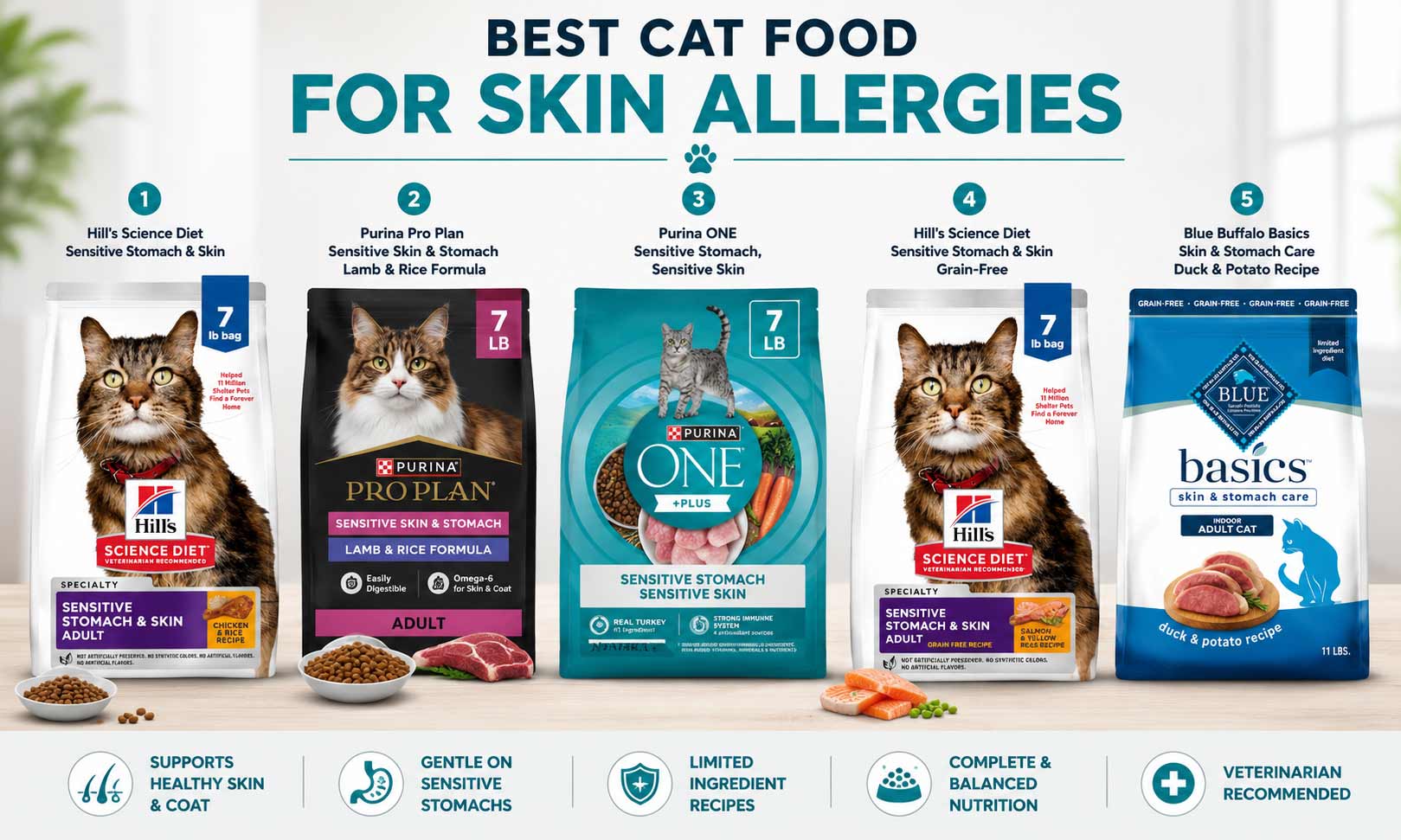
- Hill’s Science Diet Adult Sensitive Stomach & Skin Dry Cat Food, Chicken & Rice, 7 lb
- Hill’s Science Diet Adult Sensitive Stomach & Skin Grain-Free, Salmon & Yellow Pea, 13 lb
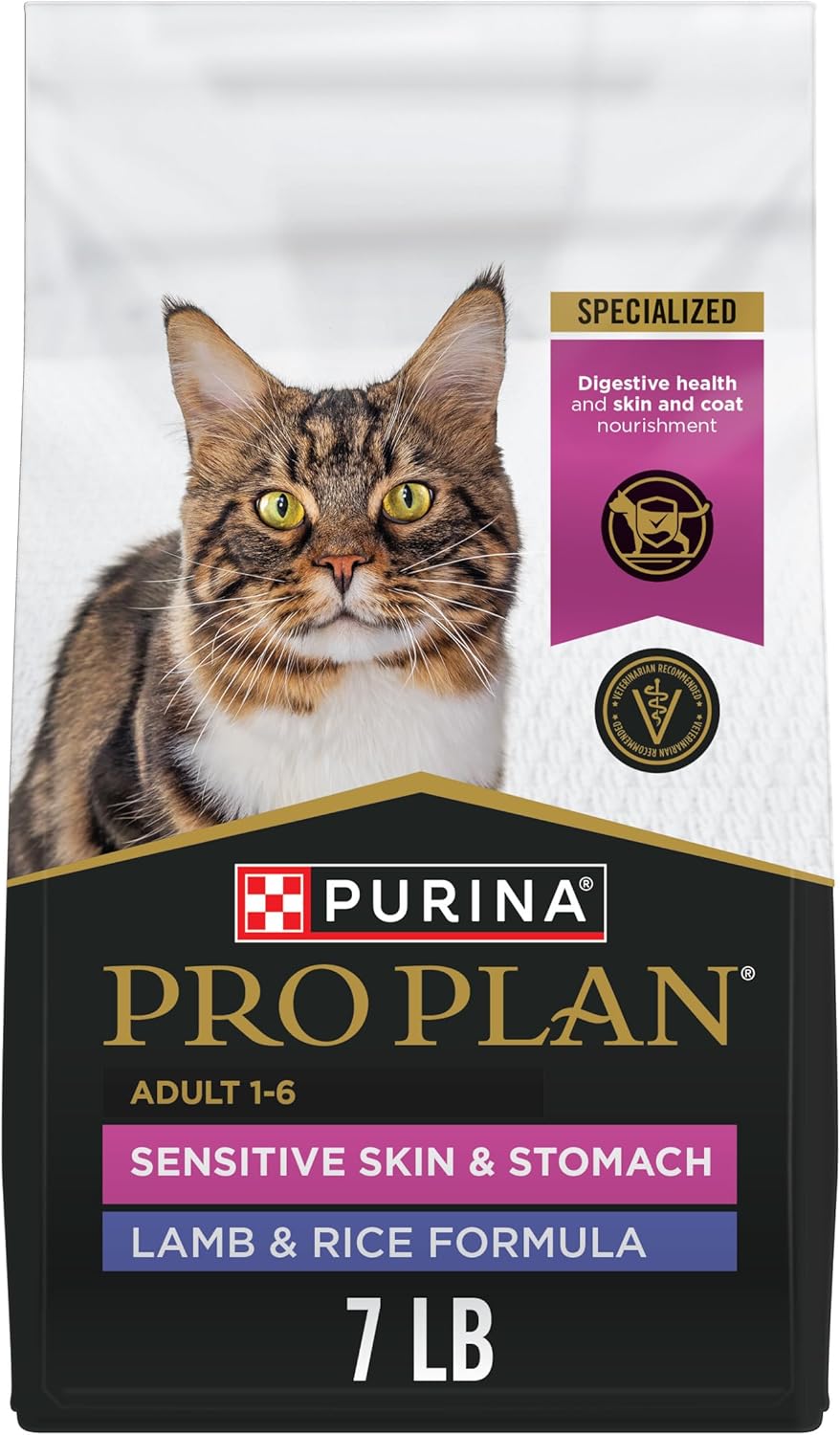
- Purina Pro Plan Sensitive Skin and Stomach, Lamb and Rice Formula, 7 lb
- Purina ONE Sensitive Stomach, Sensitive Skin Dry Cat Food, 7 lb
- Blue Buffalo Basics Grain-Free Limited Ingredient Diet, Duck & Potato, 11 lb
Quick Verdict
Hill’s Science Diet Salmon & Yellow Pea takes the top spot here. It packs measurably more omega-6 and vitamin E than the chicken version, and that combination targets skin health directly. The chicken version of Hill’s Science Diet is our runner-up and easier to find. Purina Pro Plan Lamb & Rice offers a less common protein for cats already sensitive to chicken. Purina ONE wins on price. Blue Buffalo Basics rounds things out as the genuine single-protein pick, if you suspect food is the actual trigger.
Why Trust This Guide
Sensitive skin label on every bag and checked the actual omega-3, omega-6, and vitamin E content instead, since those nutrients do the real work for skin health. We cross-referenced each formula’s ingredient panel against its manufacturer listing to confirm protein source and skin-support claims. We’re not veterinarians, and we don’t diagnose skin conditions. We simply compared what’s verifiably in each bag.
At a Glance
- 15+ hours spent researching skin-focused formulas and their actual nutrient profiles
- 3 brands compared side by side on omega fatty acid and vitamin E content
- 5 features evaluated: protein source, omega-6 level, vitamin E, digestibility, and price per pound
- 5 top picks spanning everyday and limited-ingredient options
Quick Comparison Table
Short on time? Here’s a quick side-by-side of our top picks before you dive into the full breakdowns below.
| Rank & Product | Protein | Skin Support | Life Stage | Best For |
| #1 Hill’s Salmon & Yellow Pea | Salmon | Omega-6 4.14% dry matter | Adult | Highest verified skin-support level |
| #2 Hill’s Chicken & Rice | Chicken | Omega-3, omega-6, vitamin E | Adult | Widely available runner-up |
| #3 Purina Pro Plan Lamb | Lamb, multi-source | Omega-6, vitamin A | Adult | Less common protein |
| #4 Purina ONE Turkey | Turkey, multi-source | Antioxidants, prebiotics | Adult | Most budget-friendly |
| #5 Blue Buffalo Duck | Duck, single protein | Omega-3, omega-6 | Adult | Suspected food allergy |
Top 5 Cat Foods for Skin Allergies, Reviewed
Affiliate Disclosure: As an Amazon Associate Pet Choice Center may earn a commission from qualifying purchases. If you purchase through our links, we may earn a small commission at no extra cost to you. We only recommend products we genuinely stand behind.
#1 Hill’s Science Diet Adult Sensitive Stomach & Skin, Salmon & Yellow Pea: Highest Verified Skin Support
Overview: Salmon-based grain-free formula | vitamin E and omega-6 fatty acids at 4.14% dry matter | triple support for stomach, skin, and immune health | 13 lb bag
Why We Recommend It: This formula publishes an actual omega-6 percentage, not just a vague “supports skin” claim, and that transparency matters when you’re trying to compare skin-focused foods honestly.
Skin Support
Hill’s Science Sensitive Skin

Key Features: Salmon as the first ingredient | omega-6 fatty acids and vitamin E at a stated 4.14% dry matter | prebiotic fiber for gut health | grain-free recipe using yellow peas and potatoes
Pros: One of the few formulas that states its actual omega-6 percentage | grain-free, which helps cats sensitive to common grains | backed by decades of Hill’s veterinary research | noticeably improves coat condition within a few weeks, per reviewers
Cons: Salmon is a more common allergen than a truly novel protein | pricier than the standard chicken version
Best For: Owners who want measurable, stated skin-support nutrition, not just marketing language
Bottom Line: The most transparent skin-focused formula on this list, backed by an actual number.
#2 Hill’s Science Diet Adult Sensitive Stomach & Skin, Chicken & Rice: Widely Available Runner-Up
Overview: Chicken-based formula with prebiotic fiber | omega-3, omega-6 fatty acids, and vitamin E for skin | clinically proven antioxidants for immune support | 7 lb bag
Why We Recommend It: This is often the first food a vet suggests, and it’s stocked in nearly every pet store, so you can start supporting your cat’s skin today without waiting on shipping.
Widely Available Runner-Up
Hill’s Science Diet Adult
Key Features: Prebiotic fiber supports gut health | vitamin E and omega-3/6 fatty acids nourish skin and coat | clinically proven antioxidants for immune support | 29 key nutrients for complete adult nutrition
Pros: Available almost everywhere, no specialty shopping required | decades of veterinary research behind the formula | many owners report visibly shinier coats within weeks | consistent, reliable recipe
Cons: Chicken is the most common feline allergen, so skip this if you suspect a chicken sensitivity | doesn’t publish exact omega-6 percentages the way the salmon version does
Best For: Owners who want an accessible first step before trying a specialty formula
Bottom Line: The easiest formula to grab today if chicken isn’t your cat’s suspected trigger.
#3 Purina Pro Plan Sensitive Skin and Stomach, Lamb and Rice: Less Common Protein
Overview: Lamb as the first ingredient | omega-6 fatty acids and vitamin A for skin and coat | live probiotics for digestive health | 7 lb bag
Why We Recommend It: Lamb shows up in fewer everyday cat foods than chicken or fish, which makes this a reasonable next step if your cat’s skin hasn’t improved on a chicken-based diet.
Common Protein
Purina Pro Plan Sensitive Skin

Key Features: Real lamb as the first ingredient | omega-6 fatty acids and vitamin A nourish skin and coat | guaranteed live probiotics support digestion and immunity | easily digestible rice and oat meal
Pros: Lamb is a less common everyday protein, useful if chicken hasn’t worked | live probiotics add digestive support beyond skin health | widely available through major retailers | high-protein formula with real meat first
Cons: Not a true limited-ingredient diet, since it also contains chicken meal, fish meal, and soy | won’t help if lamb itself turns out to be the trigger
Best For: Cats who haven’t improved on chicken-based formulas and need a different protein to try
Bottom Line: A reasonable next step up from chicken, though not a fully isolated protein source.
#4 Purina ONE Sensitive Stomach, Sensitive Skin: Most Budget-Friendly Pick
Overview: Turkey-based everyday formula | prebiotic fiber and four antioxidant sources | 38 grams of protein per cup | 7 lb bag
Why We Recommend It: If cost matters before you commit to a longer trial, this formula gives you the same “sensitive skin” positioning as pricier options at a noticeably lower shelf price.
Budget-Friendly Pick
Purina ONE Sensitive Stomach

Key Features: Real turkey as the first ingredient | added prebiotic fiber for digestion | four antioxidant sources for immune health | crunchy kibble texture supports dental health
Pros: One of the most affordable sensitive-skin options on shelves | easy to find at most grocery and big-box stores | solid protein content for the price | works well as an everyday formula, not just a short trial
Cons: Contains multiple protein and grain sources, so it won’t isolate a single allergen | adult cats only, not suitable for kittens or pregnant cats
Best For: Budget-conscious owners who want to try an accessible skin-support formula first
Bottom Line: The most wallet-friendly place to start if your cat’s skin symptoms are mild.
#5 Blue Buffalo Basics Grain-Free Limited Ingredient Diet, Duck & Potato: Best for Suspected Food Allergy
Overview: Single novel protein, duck as the first ingredient | grain-free, limited ingredient formula | free of chicken, beef, corn, wheat, and soy | 11 lb bag
Why We Recommend It: If your vet suspects the skin symptoms actually trace back to food, this formula isolates one protein completely, which the everyday options above simply can’t do.
Suspected Food Allergy
Blue Buffalo Basics

Key Features: Real duck as the sole animal protein | omega-3 and omega-6 fatty acids for skin and coat | free of chicken, beef, corn, wheat, and soy | no poultry by-product meals
Pros: Genuinely single-protein, useful for pinpointing a food-based trigger | rules out the most common allergens entirely | supports skin and coat with added fatty acids | no artificial flavors or preservatives
Cons: Costs more than the everyday formulas above | grain-free recipes run higher in carbohydrates than some owners prefer
Best For: Cats whose skin symptoms haven’t improved on everyday sensitive formulas
Bottom Line: The right choice once food, specifically, looks like the actual cause.
Pros & Cons Comparison Table
| Product | Top Pro | Top Con |
| #1 Hill’s Salmon & Yellow Pea | Publishes actual omega-6 percentage | Salmon is a fairly common allergen |
| #2 Hill’s Chicken & Rice | Available almost everywhere | Chicken is the most common feline allergen |
| #3 Purina Pro Plan Lamb | Less common everyday protein | Not truly limited-ingredient |
| #4 Purina ONE Turkey | Most affordable option here | Multiple protein and grain sources |
| #5 Blue Buffalo Duck | Genuinely single-protein | Pricier than everyday formulas |
Who Should Buy Which Product?
Start with #2 Hill’s Chicken & Rice if your cat’s symptoms are new and mild, and chicken isn’t a suspected trigger. Move to #1 Hill’s Salmon & Yellow Pea if you want the most nutrient-transparent option available. Try #3 Purina Pro Plan Lamb if chicken-based food hasn’t helped. Choose #4 Purina ONE if budget matters more than brand name right now. Reach for #5 Blue Buffalo Duck, once a food allergy, not just general sensitivity, looks like the real cause.
How to Choose the Best Cat Food for Skin Allergies
Most owners start searching for the best cat food for skin allergies after noticing the same handful of signs: excessive scratching, small scabs, thinning fur, or a coat that’s lost its shine. Here’s the problem: those symptoms show up with flea allergies and environmental allergies just as often as food allergies. A lot of owners buy an expensive specialty diet, see no improvement, and never realize the actual cause was never food to begin with.
The mistake that costs people the most time is skipping a vet visit and guessing at the cause. Flea allergy dermatitis, atopic dermatitis from pollen or dust mites, and true food allergies can look nearly identical on the outside, but they need completely different treatments. This matters most for cats with severe or worsening symptoms, since a food switch won’t touch a flea or environmental trigger no matter how premium the bag is. It’s also a real cost issue: premium skin-focused diets aren’t cheap, and buying the wrong one wastes both money and time your cat spends uncomfortable.
What Skin-Focused Nutrition Can and Can’t Fix
Diet genuinely helps skin health through omega-3 and omega-6 fatty acids, which support the skin’s barrier function and reduce inflammation, plus vitamin E, which protects skin cells from damage. But nutrition alone can’t undo a flea infestation or an environmental allergy. If your vet has ruled those out and food genuinely looks like the trigger, then a single-protein, limited-ingredient diet like Blue Buffalo’s duck formula becomes the useful next step, since it removes guesswork by eliminating multiple potential triggers at once. One thing worth knowing: even everyday “sensitive skin” formulas that aren’t limited-ingredient often still improve coat condition, simply because they contain more omega fatty acids than a standard maintenance diet.
This guide serves owners just starting to notice skin symptoms, as well as those who’ve already ruled out fleas and environmental causes and suspect food specifically. By the end of this section, you’ll know exactly which best cat food for skin allergies option fits where your cat actually is in that process.
Common Buying Mistakes to Avoid
- Assuming every skin issue is a food allergy. Fleas and environmental allergens cause identical symptoms. See a vet before spending on a specialty diet.
- Buying based on the word “sensitive” alone. Some sensitive-skin formulas still contain multiple proteins and grains. Check the actual ingredient list.
- Switching foods too often. Skin improvement takes several weeks to show. Give any formula a fair trial before judging it.
- Ignoring the omega-6 and vitamin E content. These nutrients do the real work for skin health. A formula that doesn’t mention them may not help much.
Practical Tips for Choosing Cat Food for Skin Allergies
- Rule out fleas first. A simple flea comb check takes two minutes and can save you months of guessing.
- Ask your vet about environmental allergies. Seasonal patterns in symptoms often point to pollen or dust mites, not food.
- Give any new formula at least 6 to 8 weeks. Skin and coat changes take time to show up, even with the right diet.
- Track symptoms alongside the food switch. Note scratching frequency, coat texture, and any new scabs, so you can actually see whether it’s working.
Our Review Process
We evaluated every product on this list against the same criteria:
- Verified omega-3, omega-6, and vitamin E content
- Protein source and whether it’s truly single-source
- Real-world availability and price per pound
- Digestibility and skin-support claims as stated by the manufacturer
- Owner-reported coat and skin improvements
We don’t make medical claims about any product, and we didn’t invent any ingredient or nutrient figures, every number here came from a verified manufacturer listing. Your cat’s skin symptoms are severe, persistent, or paired with hair loss, a veterinarian can rule out fleas and environmental causes before you spend money on food.
If your cat’s symptoms actually stem from a broader food allergy, not just skin, our best cat food for allergies guide covers protein-source science in more depth. If your vet has recommended a prescription diet, our cat food for cats with allergies guide explains what that process involves. And if you’re not sure yet whether you need premium food at all, our food for cats with allergies guide walks through everyday versus premium options first.

Final Recommendation
Start simple. Hill’s Chicken & Rice works for most cats with new, mild skin symptoms, and you can find it almost anywhere. If you want the most nutrient-transparent option, Hill’s Salmon & Yellow Pea publishes its actual omega-6 content instead of vague marketing language. If a vet has confirmed food is the trigger, Blue Buffalo Duck isolates a single protein completely.
This guide serves anyone dealing with a cat’s scratching, scabs, or dull coat, not just readers who’ve already diagnosed a food allergy. Match the pick to where your cat actually is, and see your vet if fleas or environmental causes haven’t been ruled out yet.
Frequently Asked Questions About Cat Food for Skin Allergies
What food helps with cat skin allergies? Formulas rich in omega-3 and omega-6 fatty acids and vitamin E, like Hill’s Science Diet Salmon & Yellow Pea, support skin barrier function and reduce inflammation, though food only helps if diet is the actual trigger behind the symptoms.
How do I know if my cat’s skin problem is from food or something else? Fleas and environmental allergens like pollen and dust mites cause nearly identical symptoms to food allergies. A veterinarian can rule out fleas with a simple check and may recommend allergy testing or an elimination diet to confirm the cause.
Can changing cat food really improve skin and coat condition? Yes, if the underlying cause is nutritional or food-related. Omega fatty acids and vitamin E genuinely support skin health, and many owners see visible coat improvement within a few weeks of switching to a skin-focused formula.
How long does it take for a new food to improve cat skin allergies? Most cats need 6 to 8 weeks on a consistent diet before skin and coat changes become clear, so switching foods again too quickly makes it hard to judge whether a formula is actually working.
Is grain-free food better for cats with skin allergies? Not automatically. Grain-free simply removes grains, which are a less common allergen in cats than proteins like chicken or beef. The protein source and omega fatty acid content matter more than whether a formula contains grain.