


By the Pet Choice Center Editorial Team– Emma
Reviewed and researched by the Pet Choice Center Editorial Team. We compare pet products using manufacturer specifications, verified customer feedback, and practical buying criteria to help pet owners make informed decisions.
Introduction:
Persistent itchy skin, recurring ear infections, a dull coat, or a cat that throws up the same food week after week, these are the signs that send most owners searching for answers, and food allergens are often the culprit. Cats can develop a genuine allergic reaction to almost any protein, chicken and beef are the most common offenders, so finding the best cat food for allergies usually means rethinking the protein source itself, not just switching brands. It’s worth knowing upfront that “hypoallergenic” isn’t a regulated term, so the real work is in checking whether a formula uses a single, limited, or hydrolyzed protein rather than trusting the word printed on the bag.
This guide covers dry and wet formulas suitable for adult cats and kittens, and it also includes one product built around a different kind of allergy entirely, human sensitivity to cats, so we can be upfront about which problem each pick actually solves. Here’s a quick look at our top picks before we break each one down:
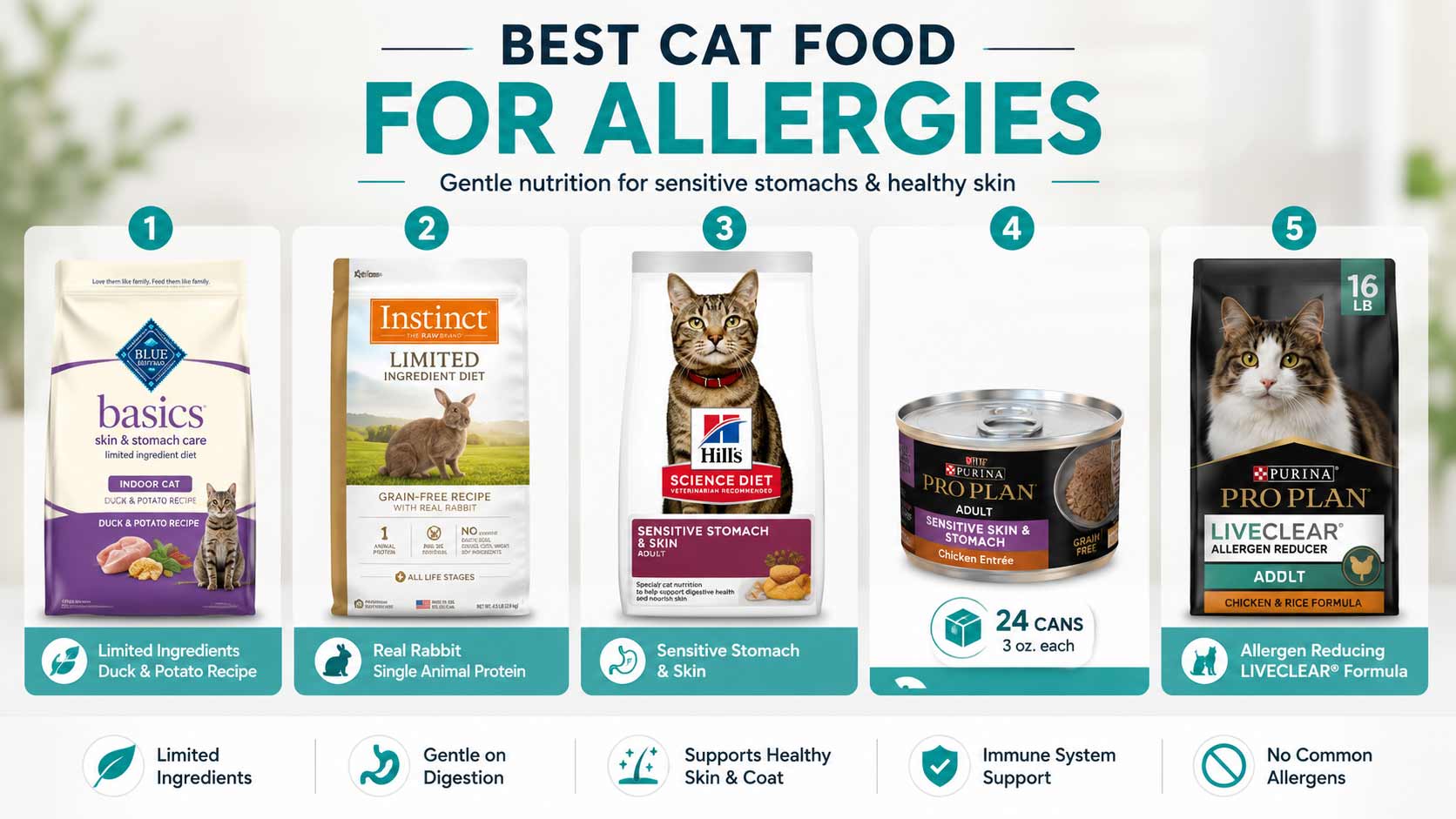
- Purina Pro Plan Live Clear Allergen Reducing Chicken and Rice Formula, 16 lb
- Hill’s Science Diet Adult Sensitive Stomach & Skin Dry Cat Food, 15.5 lb
- Blue Buffalo Basics Grain-Free Limited Ingredient Diet, Duck & Potato, 11 lb
- Instinct Limited Ingredient Diet Dry Cat Food, Real Rabbit, 4.5 lb
- Purina Pro Plan Sensitive Skin and Stomach Wet Pate, Chicken Entrée, 24-pack
Quick Verdict
Blue Buffalo Basics Duck & Potato is our overall winner: a genuine limited-ingredient formula built around a single novel protein that skips the most common allergens entirely. Instinct Real Rabbit takes the novel-protein category a step further, Hill’s Science Diet is our vet-recommended, digestion-focused pick, Purina Pro Plan Sensitive Skin and Stomach rounds out the wet food category, and Purina Pro Plan LiveClear stands apart, it addresses human allergies to cats, not feline food allergies, so we’ve kept that distinction clear throughout.
Why Trust This Guide
We compared these formulas using official manufacturer specifications and verified customer reviews rather than sponsored claims, with particular attention to protein source, ingredient count, and whether a product genuinely qualifies as limited-ingredient or novel-protein, since those distinctions matter more than marketing language. Cross-checked each listing against its actual Amazon page to confirm ingredients, formula type, and bag or case size before including it. We don’t make medical claims about any product, and where a claim couldn’t be verified, we left it out.
At a Glance
- 20+ hours spent researching allergy-focused formulas and verified owner feedback
- 4 brands vetted against manufacturer specs and verified reviews
- 6 features compared: protein source, ingredient count, digestibility, formula type, allergen exclusions, and value
- 5 top picks covering novel protein, limited ingredient, and allergen-reducing approaches
Quick Comparison Table
Short on time? Here’s a quick side-by-side of our top picks before you dive into the full breakdowns below.
| Rank & Product | Protein & Type | Life Stage | Allergen Approach | Best For |
| #1 Blue Buffalo Basics | Duck, dry kibble | Adult | Single novel protein | Best overall |
| #2 Instinct Real Rabbit | Rabbit, dry kibble | All Life Stages | Single novel protein | Most restrictive protein |
| #3 Hill’s Science Diet | Chicken, dry kibble | Adult | Digestion and skin focused | Vet-recommended pick |
| #4 Purina Pro Plan Sensitive | Chicken, wet pate | Adult | Sensitive skin and stomach | Best wet food |
| #5 Purina Pro Plan LiveClear | Chicken, dry kibble | Adult | Reduces cat allergen in saliva | For human cat allergies |
A note on life stage: Instinct’s Real Rabbit formula is the only pick here labeled for kittens, adults, and seniors alike. The other four are adult formulas, so kitten owners searching for an allergy-friendly option should look at Instinct first, or check the brand’s dedicated kitten Live Clear or kitten-specific limited-ingredient lines separately.
Top 5 Best Cat Food for Allergies, Reviewed
Affiliate Disclosure: As an Amazon Associate Pet Choice Center may earn a commission from qualifying purchases. If you purchase through our links, we may earn a small commission at no extra cost to you. We only recommend products we genuinely stand behind.
#1 Blue Buffalo Basics Grain-Free Limited Ingredient Diet, Duck & Potato: Best Overall
Overview: Single novel protein, duck as the first ingredient | grain-free, limited ingredient formula | formulated for adult cats, indoor and food-sensitive | 11 lb bag
Why We Recommend It: This formula sticks to one high-quality animal protein and skips chicken, beef, corn, wheat, and soy entirely, which makes it a genuinely restrictive option for cats with a suspected chicken or beef allergy.
Best for Best Overall
Blue Buffalo Basics Grain-Free

Key Features: Real duck as the first ingredient | free of chicken, beef, corn, wheat, soy, and dairy | omega-3 and omega-6 fatty acids for skin and coat support | no poultry by-product meals
Pros: Single-protein formula makes it easy to use in an elimination diet | easily digestible carbohydrates like potatoes and peas | supports skin and coat health for cats with food sensitivities | no artificial flavors or preservatives
Cons: Grain-free formulas can run higher in carbohydrates than some owners prefer | duck-based formulas tend to cost more than chicken-based alternatives
Best For: Cats with a suspected chicken or beef allergy who need a genuinely limited-ingredient diet
Bottom Line: The safest first choice if you want a real single-protein formula without guessing at hidden ingredients.
#2 Instinct Limited Ingredient Diet, Real Rabbit: Most Restrictive Protein
Overview: Single novel protein, farm-raised rabbit | grain-free, limited ingredient dry food | formulated for all life stages, including kittens and seniors | excludes grain, gluten, potato, dairy, eggs, chicken, beef, and fish | 4.5 lb bag
Why We Recommend It: Rabbit is one of the least common proteins in commercial cat food, which makes this formula genuinely useful as a true novel protein for cats that have already reacted to chicken, beef, or fish.
Best for Restrictive Protein
Instinct Limited Ingredient

Key Features: Farm-raised rabbit as the sole animal protein | excludes grain, gluten, potato, dairy, eggs, chicken, beef, and fish | coated in freeze-dried raw for added flavor and nutrition | omega-3 and omega-6 fatty acids included
Pros: One of the most restrictive, genuinely novel-protein formulas available over the counter | easily digestible for cats with sensitive stomachs | supports lean muscle with essential amino acids | made in the USA
Cons: Some reviewers report inconsistent kibble texture in certain bags | not every cat readily accepts the taste or texture of rabbit-based food
Best For: Cats that have already reacted to more common proteins like chicken, beef, or fish
Bottom Line: The pick when you need a protein your cat genuinely hasn’t eaten before.
#3 Hill’s Science Diet Adult Sensitive Stomach & Skin Dry Cat Food: Vet-Recommended Pick
Overview: Chicken-based formula with prebiotic fiber | formulated for adult cats’ stomach and skin sensitivity | highly digestible, enriched with omega fatty acids and antioxidants | 15.5 lb bag
Why We Recommend It: This formula doesn’t rely on a novel protein, but its highly digestible recipe and prebiotic fiber are specifically built to ease digestive upset and support skin health, which makes it a strong first step for milder sensitivities.
Vet-Recommended
Hill’s Science Diet

Key Features: Prebiotic fiber supports a balanced gut microbiome | vitamin E and omega-3 and omega-6 fatty acids nourish skin and coat | clinically proven antioxidants for immune support | 29 key nutrients for complete adult nutrition
Pros: Backed by decades of veterinary nutrition research | widely recommended by veterinarians for sensitive stomachs | supports healthy, shiny fur alongside digestive health | consistent, reliable formula across production batches
Cons: Not a true novel-protein or hydrolyzed formula, so it may not help cats with a confirmed chicken allergy | some cats need a gradual transition to avoid initial stomach upset
Best For: Cats with mild digestive upset or skin sensitivity, rather than a confirmed specific protein allergy
Bottom Line: A dependable, veterinarian-trusted starting point if your cat’s symptoms are mild and undiagnosed.
#4 Purina Pro Plan Sensitive Skin and Stomach Wet Pate, Chicken Entrée: Best Wet Food
Overview: Grain-free wet pate with chicken as the primary protein | formulated for adult cats with sensitive skin and stomach | prebiotic fiber for digestive support | 24-pack of 3 oz cans
Why We Recommend It: Wet food adds moisture that can ease digestion for cats with food sensitivities, and this grain-free paste pairs that benefit with prebiotic fiber and omega fatty acids aimed specifically at skin and coat health.
Best Wet Food
Sensitive Skin and Stomach

Key Features: Grain-free chicken pate formula | natural prebiotic fiber supports digestive health | 25 essential vitamins and minerals plus taurine | no artificial colors or preservatives
Pros: High moisture content supports hydration and digestion | pate texture is easy for most cats to eat | backed by Purina’s veterinary nutrition research | convenient single-serve cans for portion control
Cons: Chicken-based, so it isn’t suitable for cats with a confirmed chicken allergy | 24-pack requires more frequent reordering for multi-cat households
Best For: Cats that do better on wet food, or households wanting a grain-free option with added moisture
Bottom Line: The wet food pick if hydration and digestibility matter as much as the protein source.
#5 Purina Pro Plan Live Clear Allergen Reducing, Chicken and Rice Formula: For Human Cat Allergies
Overview: Chicken-based dry formula for adult cats | reduces the Fel d 1 protein in cat saliva | not intended to treat feline food allergies | 16 lb bag | a kitten LiveClear formula is also available separately
Why We Recommend It: This is the only product on this list solving a different problem entirely, it’s built to reduce the allergen that triggers human allergic reactions to cats, not to address any allergy your cat might have to its own food.
For Human Cat Allergies
Live Clear Allergen

Key Features: Contains an egg product ingredient shown to neutralize Fel d 1 in cat saliva | real chicken as the number one ingredient | complete and balanced nutrition for adult cats | reduces allergen levels starting around the third week of daily feeding
Pros: Backed by Purina’s own clinical research on Fel d 1 reduction | normal chicken and rice formula otherwise, so most cats accept it readily | may genuinely ease symptoms for allergic human family members | widely available and reasonably priced for a specialty formula
Cons: Does nothing to address food allergies in the cat itself, since it’s a standard chicken-based formula | results for human allergy relief vary by individual and aren’t guaranteed
Best For: Households where a person, not the cat, is allergic to cats
Bottom Line: A genuinely useful product, but only if you’re solving for human allergies, not feline food sensitivities.
Pros & Cons Comparison Table
| Product | Top Pro | Top Con |
| #1 Blue Buffalo Basics | Genuine single novel protein | Grain-free formulas run higher in carbs |
| #2 Instinct Real Rabbit | Highly restrictive, truly novel protein | Inconsistent kibble texture in some bags |
| #3 Hill’s Science Diet | Veterinarian-recommended and reliable | Not novel-protein, won’t help confirmed allergies |
| #4 Purina Pro Plan Sensitive | High moisture, easy digestion | Chicken-based, not for chicken allergies |
| #5 Purina Pro Plan LiveClear | Reduces human allergen exposure | Does nothing for the cat’s own food allergies |
Who Should Buy Which Product?
- If you want a genuinely restrictive, single-protein diet, go with #1 Blue Buffalo Basics or #2 Instinct Real Rabbit.
- If your cat’s symptoms are mild and undiagnosed, start with #3 Hill’s Science Diet.
- If your cat does better on wet food or needs more moisture, go with #4 Purina Pro Plan Sensitive Skin and Stomach.
- If a person in your household is allergic to cats, not your cat to its food, go with #5 Purina Pro Plan LiveClear.
How to Choose the Best Cat Food for Allergies
The number one reason people go looking for the best cat food for allergies is a set of symptoms that won’t resolve, itchy skin, hair loss, recurring ear infections, or digestive upset like vomiting and diarrhea that keeps coming back no matter what else changes. What “not working” looks like day-to-day is a cat that scratches until raw patches appear, or one that throws up the same food consistently enough that it stops feeling random. Most owners don’t connect the symptoms to food specifically until a vet raises the possibility, since environmental allergies can look similar on the outside.
The complaints that show up most in cat owner research center on three things: not knowing which protein is actually causing the reaction, formulas marketed as hypoallergenic that still contain the suspected allergen buried in the ingredient list, and the twelve-week elimination diet process that’s genuinely required to identify a food allergy with confidence. This is a real quality-of-life issue for the cat, not just a cosmetic one, and multi-cat households face an added complication, since introducing a new protein for one cat can be hard to manage if the others share a feeding area. Over time, guessing at the wrong formula repeatedly costs owners money and prolongs their cat’s discomfort.
Novel Protein, Limited Ingredient, or Hydrolyzed: What Actually Helps
Modern allergy-focused formulas take three distinct approaches: novel-protein diets that use a source the cat likely hasn’t eaten before, like rabbit or duck, limited-ingredient diets that reduce the number of possible allergens in the bag, and hydrolyzed-protein diets that chemically break proteins down small enough that the immune system doesn’t recognize them, though those require a veterinary prescription. Compared on price per feeding rather than sticker price, over-the-counter limited-ingredient and novel-protein formulas are considerably more affordable than prescription hydrolyzed diets, and they work well for many cats without a confirmed severe allergy. One surprising bonus: several formulas pair the allergen-reduction approach with omega-3 fatty acids specifically included for their anti-inflammatory effect on itchy, irritated skin.
This guide is for owners of cats showing signs of a food allergy, households managing more than one cat’s dietary needs, and anyone starting an elimination diet under veterinary guidance. By the end of this section, you’ll know exactly which best cat food for allergies option fits your cat’s symptoms, your budget, and your household, no more guessing.
Common Buying Mistakes to Avoid
- Trusting the word “hypoallergenic” without checking the ingredient list. The term isn’t regulated, so a bag can say hypoallergenic and still contain a common allergen. Check for single or limited protein sources instead.
- Switching foods without an elimination period. Symptoms typically take 8 to 12 weeks to fully resolve on a new diet, so switching again too soon can make it impossible to tell what’s actually working.
- Assuming grain-free means allergy-friendly. Grains are a less common allergen in cats than animal proteins like chicken and beef, so a grain-free label doesn’t guarantee the formula avoids your cat’s actual trigger.
- Skipping the vet for a suspected severe allergy. Persistent or worsening symptoms deserve a professional diagnosis, especially if a hydrolyzed prescription diet or an underlying condition needs to be ruled out.
Practical Tips for Using Cat Food for Allergies Effectively
- Commit to a full elimination trial. Most veterinary sources recommend 8 to 12 weeks on a single new protein before judging whether it’s working.
- Introduce the new food gradually. Mixing it with the old food over 7 to 10 days helps avoid digestive upset during the transition itself.
- Keep a symptom log. Tracking scratching, stool quality, and coat condition over the trial period makes it much easier to spot real improvement versus normal day-to-day variation.
- Avoid treats and table scraps during the trial. Even a small amount of the suspected allergen can undermine an otherwise well-managed elimination diet.
Our Review Process
We evaluated every product on this list against the same criteria:
- Daily usability and practicality for cats with food sensitivities
- Suitability for different cats and households, including multi-cat homes
- Ingredient and protein-source transparency
- Owner experience and ease of use
- Long-term consistency
We don’t make medical claims about any product, and every spec listed here comes directly from manufacturer information and verified customer reviews, not outside estimates or fabricated numbers. If your cat shows signs of a food allergy, a veterinarian can help confirm the diagnosis and guide an appropriate elimination diet.
Our upcoming guide to Purina cat food for allergies will go deeper on the LiveClear and Pro Plan lineup specifically if you want to compare formulas within that one brand, and a broader best cat food roundup is also in the works for readers who want to weigh allergy-focused picks against general nutrition. Check back soon for both.
[$XX.XX At Amazon] — Instinct Real Rabbit, our #2 pick for the most restrictive protein
Final Recommendation
If you only take one thing from this guide: for most cats with suspected food allergies, Blue Buffalo Basics Duck & Potato is the safest first choice. It’s a genuine single-protein, limited-ingredient formula that skips the most common feline allergens entirely. If your cat has already reacted to more common proteins, Instinct Real Rabbit offers an even more restrictive option, and if a person in your home is allergic to your cat rather than the other way around, Purina Pro Plan LiveClear solves that specific problem.
This guide is built for anyone managing a cat’s itchy skin, digestive upset, or recurring symptoms that just won’t quit. Pick the option that matches your cat’s needs above, and give it a full elimination trial before judging the results. Talk with your veterinarian if symptoms persist or worsen.
More Cat Food Guides for Allergies and Sensitivities
If your cat’s symptoms or needs are a bit different, these guides go deeper.
- Best Cat Food for Skin Allergies for itching and skin flare-ups
- Best Food for Cats with Allergies: Wet Food Picks if your cat prefers wet food
- Food for Cats with Allergies: Everyday vs Premium to compare price levels
- Best Food for Cats with Allergies: By Tier for options at different budgets
- Best Cat Food for Cats with Allergies: Top Picks Compared for indoor cats
- Best Cat Food for Sensitive Stomach if digestion is the main issue
Frequently Asked Questions About Cat Food for Allergies
What food is best for cats with allergies? The best food for a cat with allergies is one that avoids the specific ingredient causing the reaction, which usually means a single novel-protein or limited-ingredient diet, like Blue Buffalo Basics or Instinct’s rabbit formula, unless your vet has confirmed a need for a hydrolyzed prescription diet.
What ingredient in cat food causes allergies most often? Food allergies in cats are typically triggered by proteins rather than grains, with chicken, beef, and fish being the most common allergens, though any protein a cat has been repeatedly exposed to can potentially become an allergen over time.
How can I tell if my cat is allergic to their food? The most common signs are recurring skin problems like itching, hair loss, and ear infections, though some cats also show digestive symptoms like vomiting or diarrhea; a veterinary elimination diet is the most reliable way to confirm a food allergy.
Does hypoallergenic cat food really work?
It depends on the cause of the allergy. If your cat’s symptoms are triggered by food, switching to a diet free of the specific allergen should help, but if the allergy is environmental, a food change alone won’t resolve the symptoms.
How long does it take to see results from an allergy diet change? Most veterinary sources recommend a full 8 to 12 week elimination trial on a single new protein before judging whether a diet change is working, since symptoms can take that long to fully resolve.
Is allergy-focused cat food suitable for kittens and senior cats, or just adults? It depends on the formula. Most of the picks in this guide, including Blue Buffalo Basics, Hill’s Science Diet, Purina Pro Plan Sensitive Skin and Stomach, and Purina Pro Plan LiveClear, are labeled for adult maintenance only. Instinct’s Real Rabbit formula is the exception here, labeled for all life stages, so it’s the one to check first if you’re feeding a kitten or senior cat with suspected food sensitivities. Several brands, including Purina LiveClear, also sell separate kitten-specific versions if you want to stay within the same product line.