


By the Pet Choice Center Editorial Team– Emma
Reviewed and researched by the Pet Choice Center Editorial Team. We compare pet products using manufacturer specifications, verified customer feedback, and practical buying criteria to help pet owners make informed decisions.
A toy poodle burns through calories fast for such a small dog, thanks to a naturally high metabolism, and that curly coat needs real omega fatty acid support to stay soft and healthy rather than dull or prone to skin irritation. Finding the best dog food for toy poodles means looking for small, easy-to-chew kibble, calorie-dense but balanced nutrition, and ingredients that support joints and skin in a dog whose small frame puts unique demands on both.
This guide covers one genuinely poodle-specific formula and four excellent general small-breed formulas suited to a toy poodle’s size range, and we’re upfront about which is which. Here’s a quick look at our top picks before we break each one down:
- Royal Canin Breed Health Nutrition Poodle Adult, 10 lb
- Hill’s Science Diet Adult Small & Mini, Chicken & Brown Rice, 15.5 lb
- Blue Buffalo Life Protection Formula Chicken Small Breed, 15 lb
- Wellness CORE Grain Free Small Breed, Turkey & Chicken, 12 lb
- Purina Pro Plan Small Breed, Shredded Blend Chicken & Rice, 6 lb
Quick Verdict
Royal Canin Poodle Adult takes the top spot as the only genuinely breed-specific formula here, built around a poodle’s straight muzzle, curly coat, and healthy-aging needs, though it’s worth knowing this formula covers Miniature and Standard Poodles too, not toy poodles exclusively. Hill’s Science Diet Small & Mini offers the broadest veterinary trust for joint and digestive support. Blue Buffalo leads on real chicken and coat-focused antioxidants. Wellness CORE is the strongest grain-free, high-protein pick. Purina Pro Plan rounds things out as the most accessible everyday option.
Why Trust This Guide
We compared these formulas specifically on what matters for small-breed dogs like toy poodles: kibble size, calorie density relative to a small dog’s high metabolism, and coat- and joint-support ingredients. We verified each product’s actual ingredient panel and confirmed which formulas are genuinely breed-specific versus general small-breed. We’re not veterinarians, and this guide doesn’t replace one for a toy poodle with a diagnosed health condition.
At a Glance
- 20+ hours spent verifying small-breed formula ingredient panels and breed-specific claims
- 4 brands compared across breed-specific and general small-breed positioning
- 5 features evaluated: kibble size, protein quality, coat support, joint support, and calorie density
- 5 top picks spanning one genuinely poodle-specific formula and four strong general small-breed options
Quick Comparison Table
Short on time? Here’s a quick side-by-side of our top picks before you dive into the full breakdowns below.
| Rank & Product | Protein & Type | Breed Specificity | Best For |
| #1 Royal Canin Poodle Adult | Chicken, everyday | Genuinely Poodle-specific | Curly coat, jaw-shaped kibble |
| #2 Hill’s Small & Mini | Chicken, everyday | General small breed | Joint and digestive support |
| #3 Blue Buffalo Small Breed | Real chicken, everyday | General small breed | Coat health |
| #4 Wellness CORE Small Breed | Turkey/chicken, grain-free | General small breed | Grain-free, high protein |
| #5 Purina Pro Plan Small Breed | Chicken, everyday | General small breed | Most accessible |
Top 5 Best Dog Foods for Toy Poodles, Reviewed
Affiliate Disclosure: As an Amazon Associate Pet Choice Center may earn a commission from qualifying purchases. If you purchase through our links, we may earn a small commission at no extra cost to you. We only recommend products we genuinely stand behind.
#1 Royal Canin Breed Health Nutrition Poodle Adult: Genuinely Breed-Specific
Overview: Chicken-based formula built specifically for Poodles, all sizes, 10 months and older | specialized kibble shape for a Poodle’s straight muzzle | EPA and DHA for curly coat support | 10 lb bag, multiple sizes available
Why We Recommend It: Royal Canin studied Poodles specifically, jaw structure, coat type, and common health tendencies, when designing this formula, which makes it the only truly breed-tailored option in this comparison rather than a general small-breed formula that happens to fit a toy poodle’s weight range.
Royal Canin
Genuinely Breed-Specific
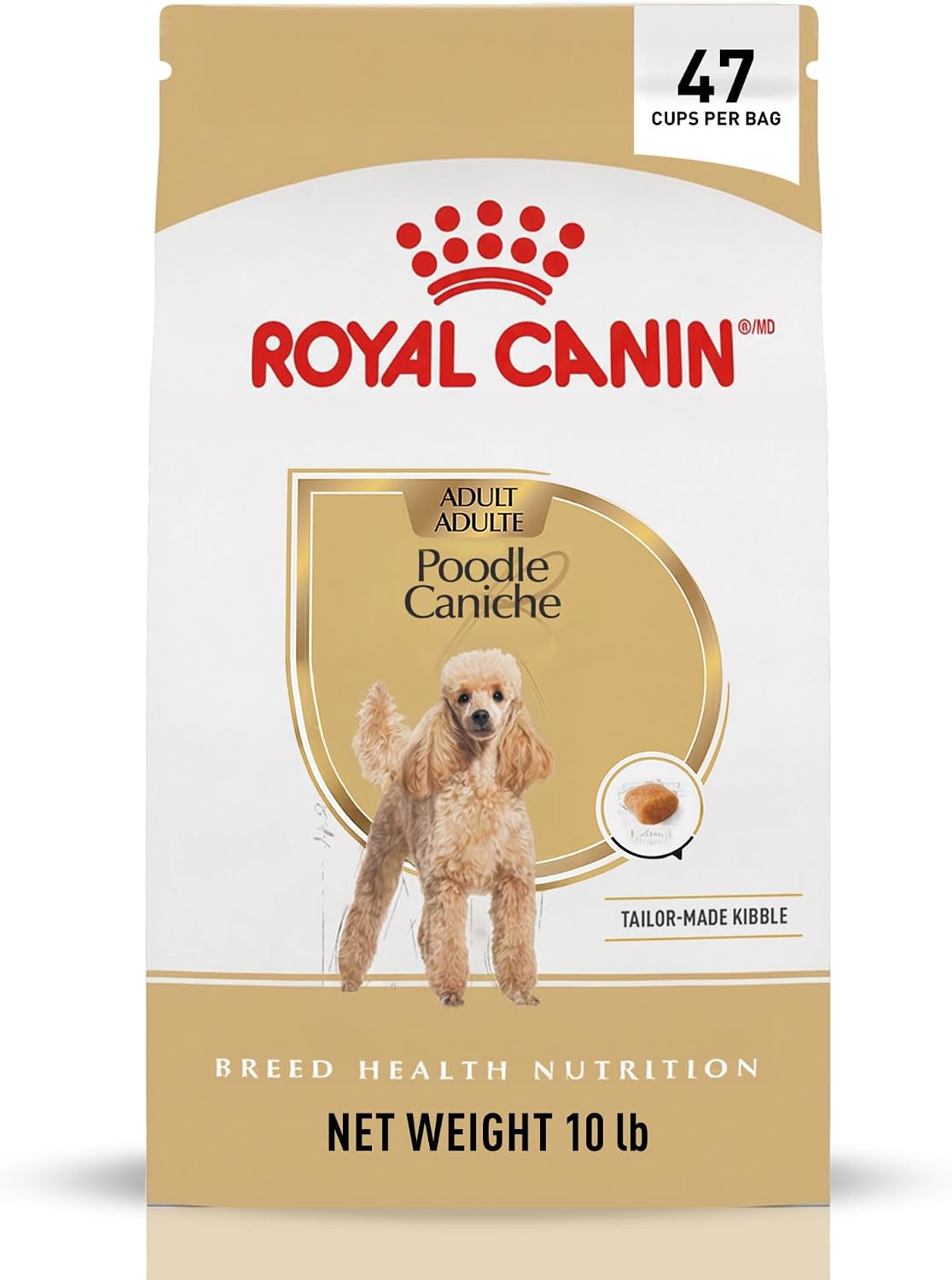
Key Features: Specialized kibble shape and texture designed for a Poodle’s straight muzzle and jaw | EPA and DHA from fish oil support skin and coat care specifically for curly coats | precise protein content supports muscle tone | exclusive antioxidant blend supports healthy aging
Pros: The only genuinely breed-specific formula in this comparison, not just sized for small dogs | kibble shape specifically matched to a Poodle’s jaw and bite pattern | strong coat-support formulation for the breed’s signature curls | widely recommended by veterinarians familiar with the breed
Cons: This formula covers Miniature and Standard Poodles too, not toy poodles exclusively, so it isn’t hyper-tailored to the smallest size specifically | premium pricing relative to general small-breed alternatives
Best For: Owners who want a formula genuinely developed around Poodle-specific traits, not just small-dog sizing
Bottom Line: The most breed-appropriate choice here, with the caveat that it’s Poodle-specific rather than toy-size-specific.
#2 Hill’s Science Diet Adult Small & Mini, Chicken & Brown Rice: Joint and Digestive Support
Overview: Chicken-based formula for small and mini breed dogs | ActivBiome+ Multi-Benefit blend for digestion, immunity, and organ health | nibble-size kibble | 15.5 lb bag, multiple sizes available
Why We Recommend It: Hill’s built this formula around the specific digestive and immune needs of small and mini dogs, backed by the broadest veterinary trust of any brand here, and small dogs like toy poodles often benefit from exactly this kind of easy-to-digest, immune-focused support.
Hill’s Science Diet
Joint and Digestive Support

Key Features: ActivBiome+ Multi-Benefit blend supports digestion, immune system, and organ health | pumpkin and easy-to-digest ingredients support stool quality | balanced protein, fat, and carbs suited to small dogs’ energy needs | nibble-size kibble designed for small mouths
Pros: Most widely recommended and trusted brand among veterinarians | specifically formulated around small and mini dog digestive needs | consistent, well-established formula | widely available at most retailers
Cons: Not Poodle-specific, sized for small breeds generally | doesn’t specifically target curly-coat needs the way Royal Canin’s formula does
Best For: Toy poodles with sensitive digestion or owners who want the most established veterinary-trusted option
Bottom Line: A dependable, broadly trusted choice for small-breed digestive and immune support.
#3 Blue Buffalo Life Protection Formula Chicken, Small Breed: Coat Health
Overview: Real chicken as the first ingredient | small breed-specific kibble size and calorie density | antioxidant-rich LifeSource Bits | 15 lb bag, multiple sizes available
Why We Recommend It: This formula leads with real chicken and adds LifeSource Bits, a low-temperature antioxidant blend, which supports the kind of skin and coat health that matters directly for a toy poodle’s curly coat.
Blue Buffalo
Coat Health

Key Features: Real chicken as the first ingredient supports lean muscle | antioxidant-rich LifeSource Bits formed at low temperature for potency | wholesome grains support gentle digestion and steady energy | calorie density tailored to small breeds’ higher energy needs
Pros: Real named protein leading the ingredient list | dedicated antioxidant blend supports skin and coat health | no chicken by-product meals, corn, wheat, or soy | strong reputation for coat improvement, per reviewers
Cons: Not Poodle-specific, a general small-breed formula | some picky eaters are reportedly particular about the kibble texture
Best For: Toy poodles showing dull coat or skin sensitivity signs
Bottom Line: A strong pick if coat and skin health is your main priority.
#4 Wellness CORE Grain Free Small Breed, Turkey & Chicken: Grain-Free, High Protein
Overview: Real turkey and chicken lead the ingredient list | grain-free recipe with no wheat, corn, or soy | calorie levels tailored to small breed energy needs | 12 lb bag, multiple sizes available
Why We Recommend It: This formula leans into a meat-forward, grain-free philosophy while specifically calibrating calorie density for the higher energy needs of small breeds, a genuinely useful combination for an active toy poodle.
Wellness CORE
Grain-Free, High Protein

Key Features: Premium turkey and chicken provide protein-rich nutrition | optimum calorie levels support small breeds’ higher energy needs | no wheat, corn, soy, meat by-products, or artificial preservatives | made in the USA
Pros: Genuinely grain-free, useful for dogs with grain sensitivities | meat-forward formula with real named proteins | calorie density specifically calibrated for small, active dogs | made in the company’s own USA facility
Cons: Not Poodle-specific, a general small-breed formula | pricier than everyday small-breed options like Purina Pro Plan
Best For: Active toy poodles who do best on a grain-free, higher-protein diet
Bottom Line: The strongest grain-free option here for an energetic toy poodle.
#5 Purina Pro Plan Small Breed, Shredded Blend Chicken & Rice: Most Accessible
Overview: Real chicken leads the ingredient list | shredded blend texture with probiotics | formulated for active adult dogs under 20 lb | 6 lb bag, multiple sizes available
Why We Recommend It: This formula delivers real chicken, guaranteed probiotics, and a texture toy poodles tend to enjoy, all at a more accessible price point than the premium options in this comparison.
Purina Pro Plan
Most Accessible

Key Features: Real chicken as the first ingredient | shredded blend texture combines crunchy kibble with tender pieces | guaranteed live probiotics support digestive health | formulated specifically for active dogs under 20 lb
Pros: More accessible pricing than premium small-breed competitors | probiotics add real digestive support | texture variety appeals to many small dogs | Purina also offers a dedicated Toy Breed formula worth exploring if you want an even more size-specific option
Cons: Not Poodle-specific, a general small-breed formula | contains grains, so it’s not an option for grain-free needs
Best For: Budget-conscious owners who still want real chicken and probiotic support
Bottom Line: The most accessible everyday option that still checks the right small-breed boxes.
Pros & Cons Comparison Table
| Product | Top Pro | Top Con |
| #1 Royal Canin Poodle Adult | The only genuinely Poodle-specific formula | Covers all Poodle sizes, not toy-exclusive |
| #2 Hill’s Small & Mini | Broadest veterinary trust | Not Poodle-specific |
| #3 Blue Buffalo Small Breed | Real chicken, coat-focused antioxidants | Not Poodle-specific |
| #4 Wellness CORE Small Breed | Grain-free, calorie-calibrated for small dogs | Pricier than everyday options |
| #5 Purina Pro Plan Small Breed | Most accessible pricing | Not Poodle-specific |
Who Should Buy Which Product?
Go with #1 Royal Canin Poodle Adult if you want a formula genuinely developed around Poodle-specific traits. Choose #2 Hill’s Small & Mini if digestive sensitivity or broad veterinary trust matters most. Pick #3 Blue Buffalo if coat and skin health is your priority. Go with #4 Wellness CORE if you want a grain-free, higher-protein option for an active toy poodle. Choose #5 Purina Pro Plan if budget is the deciding factor.
How to Choose the Best Dog Food for a Toy Poodle
Most owners start searching for the best dog food for toy poodles after noticing something specific: a dull or irritated coat, joint stiffness in an aging dog, or difficulty managing weight given how little food a toy poodle actually needs relative to its energy level. What “not working” looks like day-to-day is a coat that’s lost its characteristic curl and shine, or a small dog gaining weight despite what seems like a reasonable portion. Many owners don’t realize how much a toy poodle’s small size and high metabolism actually change its nutritional needs compared to a general adult formula.
The mistakes that come up most often involve feeding a large-breed or standard adult formula with kibble too large for a toy poodle to comfortably chew, and overfeeding relative to the breed’s small size and specific calorie needs. This matters because toy poodles are genuinely prone to obesity if portions aren’t carefully measured, given how few calories their small bodies actually require, while also needing calorie-dense nutrition to match their surprisingly high metabolism. Skin and coat issues are also common in the breed, making omega fatty acid support a real, not cosmetic, consideration.
Breed-Specific vs. General Small-Breed: What the Difference Actually Means
A genuinely breed-specific formula, like Royal Canin’s Poodle line, is developed around documented traits, jaw shape, coat type, common health tendencies, specific to that breed. A general small-breed formula, like the other four in this comparison, is calibrated for a weight and size range rather than a specific breed’s traits, which still works well for most toy poodles but doesn’t account for the same level of detail. Compared side by side, both approaches can deliver excellent nutrition, and the general small-breed options here all include real named protein and appropriate kibble sizing. One thing worth knowing: “toy breed” and “small breed” labeling isn’t standardized across brands, so checking the actual weight range on a specific product matters more than the label alone.
This guide is for toy poodle owners who want a formula genuinely suited to their dog’s size and traits, whether that means the one truly breed-specific option or a well-chosen general small-breed formula. By the end of this section, you’ll know exactly which best dog food for toy poodles option fits your dog’s needs.
Common Buying Mistakes to Avoid
- Feeding a standard or large-breed formula with oversized kibble. A toy poodle’s small mouth and jaw genuinely benefit from small, easy-to-chew kibble, not a bag sized for larger dogs.
- Overfeeding relative to the breed’s small size. Toy poodles need surprisingly few calories despite a high metabolism, so precise portioning matters more than it might for a larger dog.
- Assuming “small breed” and “toy breed” mean the exact same thing across brands. These labels aren’t standardized, so checking the actual weight range on a specific product matters more than the label alone.
- Ignoring coat and skin support ingredients. Toy poodles’ curly coats genuinely benefit from omega-3 and omega-6 fatty acids, which not every formula includes at meaningful levels.
Practical Tips for Feeding a Toy Poodle
- Measure portions precisely with an actual measuring cup or scale. Toy poodles need very small amounts relative to their size, and eyeballing portions risks overfeeding.
- Check that the kibble size is genuinely small. Even formulas labeled “small breed” can vary in actual kibble size between brands.
- Watch coat condition as a health indicator. A dull or irritated coat can signal that a formula isn’t providing adequate omega fatty acid support.
- Transition gradually over 7 to 10 days. This applies to any food switch, and small dogs can be particularly sensitive to abrupt changes.
Our Review Process
We evaluated every product on this list against the same criteria:
- Whether the formula is genuinely breed-specific or general small-breed
- Kibble size and suitability for a toy poodle’s mouth and jaw
- Coat and skin support ingredients
- Protein quality and calorie density relative to small-breed energy needs
- Real-world value per pound
We don’t make medical claims about any product, and every figure in this guide came from verified manufacturer or Amazon listing data. If your toy poodle has a diagnosed health condition, a veterinarian should guide food choice ahead of any general recommendation here.
For a broader look at dog nutrition beyond breed-specific needs, our best dog food guide compares budget, premium, and breed-specific options across the board.
Final Recommendation
If you only take one thing from this guide: check whether a formula is genuinely breed-specific or just appropriately sized before assuming either is automatically better. Royal Canin Poodle Adult is the only truly breed-tailored option here, built around a Poodle’s jaw shape and coat needs. Hill’s Small & Mini offers the broadest veterinary trust if digestive support matters most. Blue Buffalo leads specifically on coat health.
This guide is built for anyone feeding a toy poodle who wants nutrition genuinely matched to the breed’s small size, high metabolism, and distinctive coat. Pick the option that matches your dog’s specific needs, measure portions precisely, and watch coat condition as a real indicator of whether the formula is working.
Frequently Asked Questions About Dog Food for Toy Poodles
Is Royal Canin Poodle formula only for toy poodles? No. Royal Canin’s Poodle Adult formula is designed for Poodles of all sizes, including Toy, Miniature, and Standard, based on shared breed traits like jaw shape and coat type, rather than being exclusive to the toy size specifically.
How much should I feed my toy poodle? This varies by your dog’s exact weight, age, and activity level, so checking the specific feeding guide on your chosen formula’s packaging and adjusting based on your toy poodle’s body condition is more reliable than a universal amount.
Do toy poodles need small-breed specific dog food? Many benefit from it, since toy poodles have small mouths that do better with correspondingly small kibble, and their high metabolism relative to body size often means small-breed formulas are calibrated with more appropriate calorie density than a standard adult formula.
What ingredients help a toy poodle’s curly coat? Omega-3 and omega-6 fatty acids, found in formulas like Royal Canin Poodle Adult and Blue Buffalo Small Breed, support skin and coat health, which matters specifically for maintaining a poodle’s characteristic curl and shine.
Are toy poodles prone to weight gain? Yes, this is a common concern for the breed, since toy poodles need relatively few calories given their small size, so precise portion control and a calorie-appropriate formula matter more than they might for a larger, less metabolically efficient dog.