

Introduction
If your vet mentioned Hill’s z/d, your cat probably has itchy skin, ear trouble, or a stomach that reacts to food, and your vet suspects a food sensitivity. Hill’s Prescription Diet z/d Skin/Food Sensitivities is built for that job. It uses a highly hydrolyzed chicken protein, broken down so small that the immune system is far less likely to react to it, plus a single purified carbohydrate source.
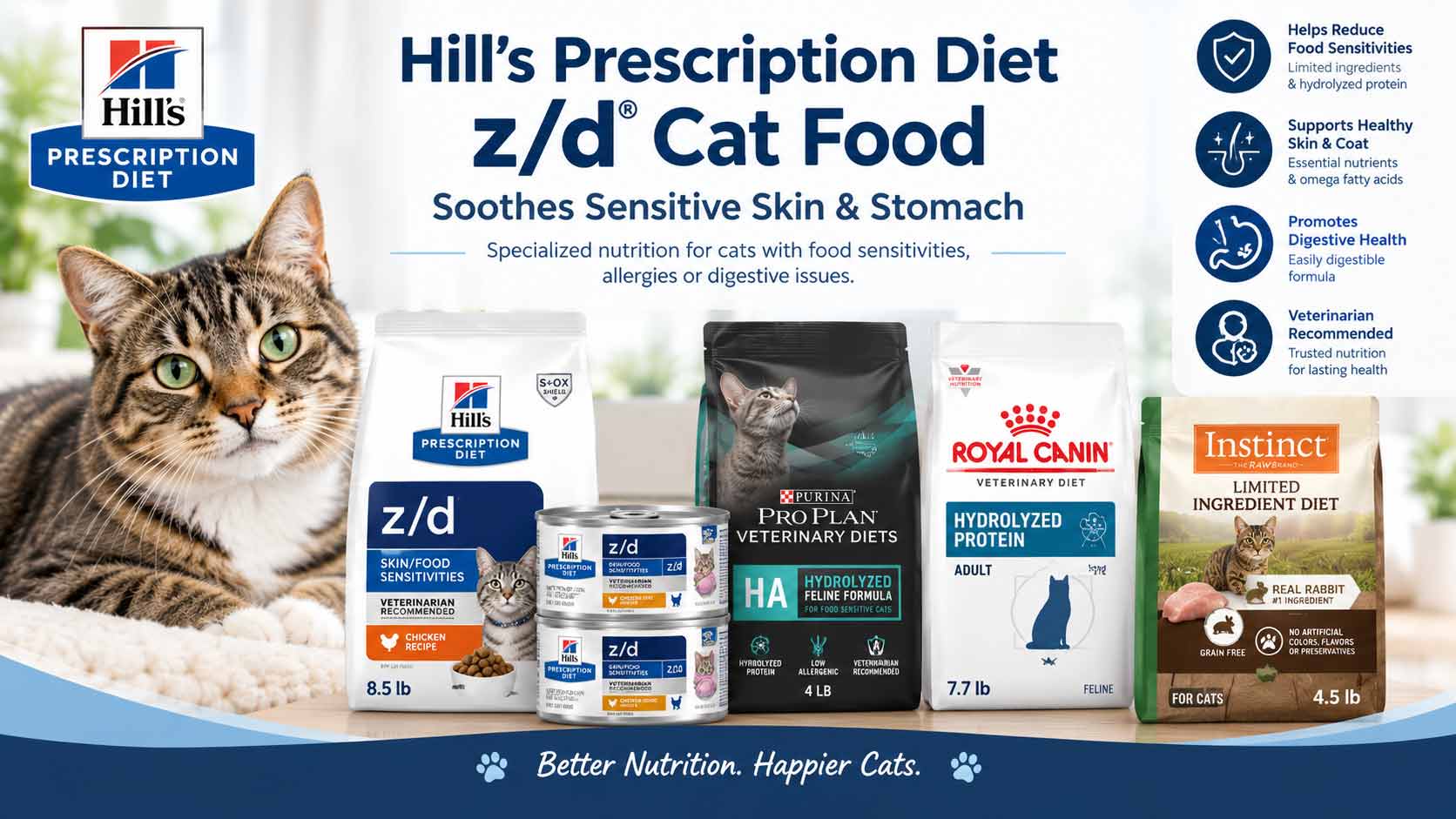
This guide explains how z/d works, what feeding it really involves, and who it suits. We also cover the two hydrolyzed diets vets most often compare it with, in case z/d is not the right fit, plus one non-prescription limited ingredient food for milder cases. Here are the products we cover:
- Hill’s Prescription Diet z/d Skin/Food Sensitivities Dry Cat Food, Chicken, 8.5 lb
- Hill’s Prescription Diet z/d Skin/Food Sensitivities Wet Cat Food
- Purina Pro Plan Veterinary Diets HA Hydrolyzed Feline Formula Dry Cat Food, 4 lb
- Royal Canin Veterinary Diet Feline Hydrolyzed Protein Adult Dry Cat Food, 7.7 lb
- Instinct Limited Ingredient Diet Dry Cat Food, Real Rabbit, 4.5 lb (non-prescription)
Affiliate Disclosure: As an Amazon Associate Pet Choice Center may earn a commission from qualifying purchases. If you purchase through our links, we may earn a small commission at no extra cost to you. We only recommend products we genuinely stand behind.
Quick Verdict
Hill’s z/d dry holds 4.6 stars across 897 Amazon ratings and ranked number 7 in Amazon’s veterinary diet cat food list when we checked. It needs a vet’s authorization, and it only works if your cat eats nothing else during the food trial. If your vet suspects a food sensitivity, it is one of the most established options to ask about. If z/d does not suit your cat, Purina HA (4.5 stars) is the strongest-rated alternative, and Royal Canin Hydrolyzed Protein (4.2 stars) gives your vet a third choice.
Why Trust This Guide
The rating and ranking come from the Amazon listing for the 8.5 lb bag. Formula details come from Hill’s product descriptions shown by retailers, including 1-800-PetMeds and Telus Health’s pet store. Ratings and monthly sales for the wet z/d, Purina HA, and Royal Canin diets come from their Amazon listings. We are not veterinarians, and a food trial should always be planned with yours.
At a Glance
- 1 protein: highly hydrolyzed chicken
- 1 carbohydrate: a single purified source
- 897 ratings at 4.6 stars on Amazon
- 1 hard rule: no treats or other foods during the trial
Quick Comparison Table
| Format | Where We Found It | Rating | Vet Needed? |
|---|---|---|---|
| z/d Dry, Chicken | Amazon | 4.6 stars, 897 ratings | Yes |
| z/d Wet | Amazon | 3.6 stars | Yes |
| Purina HA Hydrolyzed Dry | Amazon | 4.5 stars | Yes |
| Royal Canin Hydrolyzed Protein Dry | Amazon | 4.2 stars | Yes |
| Instinct LID Real Rabbit Dry | Amazon | 4.3 stars | No |
Hill’s z/d and Its Alternatives, Reviewed
01- Hill’s Prescription Diet z/d Skin/Food Sensitivities, Dry
Overview: Highly hydrolyzed chicken protein with a single purified carbohydrate | made without intact animal proteins, soy protein, gluten, lactose, or chicken by-product meal | high vitamin E and antioxidants for skin | ActivBiome+ prebiotic blend and natural fiber for stool quality | 8.5 lb bag
Why We Recommend It: Food trials only work when the diet itself is unlikely to trigger a reaction, and z/d is designed around that idea. It also supports the skin barrier and digestion, which are the two places food sensitivities usually show up in cats.
Hill’s Prescription Diet z/d Dry
For Food Sensitivities

Key Features: Single hydrolyzed animal protein and single carbohydrate | no soy protein, gluten, lactose, or artificial flavors | controlled minerals to help reduce the risk of struvite and calcium oxalate crystals | clinically proven antioxidants, per Hill’s
Pros: 4.6 stars across 897 Amazon ratings | ranked number 7 in veterinary diet cat food when we checked | supports skin and digestion together | wet and dry versions can be mixed, per Hill’s
Cons: Needs a vet’s authorization | only works if your cat eats nothing else, including treats | costs more than everyday food
Best For: Cats with a suspected or confirmed food sensitivity whose vet recommends a hydrolyzed diet
Bottom Line: A well-established diet for food trials and long-term management, as long as you can keep everything else out of the bowl.
02- Hill’s Prescription Diet z/d Skin/Food Sensitivities, Wet
Overview: The canned version of z/d | same highly hydrolyzed chicken protein approach as the dry food | vet authorization required | Hill’s suggests mixing it with the dry food for variety
Why We Recommend It: Some cats on a food trial eat better when part of the meal is wet, and a can adds moisture that kibble does not. It lets you keep the trial strict while giving your cat a softer option.
Hill’s Prescription Diet z/d Wet
Best for Added Moisture

Key Features: Hydrolyzed chicken protein in a canned formula | works alongside z/d dry during a food trial | adds water to the diet | prescription only
Pros: Adds moisture to a kibble-based trial | pairs directly with z/d dry | 500+ bought on Amazon last month | softer texture for picky or older cats
Cons: Rated just 3.6 stars on Amazon, well below the dry version | needs a vet’s authorization
Best For: Cats on z/d that need more moisture or eat better with some wet food
Bottom Line: A useful partner to z/d dry, though owners rate it lower.
03- Purina Pro Plan Veterinary Diets HA Hydrolyzed, Dry
Overview: Purina’s hydrolyzed diet and the most common alternative to z/d | hydrolyzed soy and chicken proteins | rice starch as the single carbohydrate | at least 31% protein, per Purina’s label | for kittens and adults | 4 lb bag
Why We Recommend It: If z/d does not suit your cat, or your vet prefers a different hydrolyzed formula, HA is the obvious next option. It holds 4.5 stars on Amazon, and unlike z/d, Purina’s label covers kittens as well as adults.
Purina Pro Plan HA Hydrolyzed
Best Alternative to z/d

Key Features: Hydrolyzed soy and chicken proteins | rice starch as the only carbohydrate | at least 31% protein | labeled for both kittens and adults
Pros: 4.5 stars on Amazon | 400+ bought last month | covers kittens as well as adults | simple single-carbohydrate recipe
Cons: Contains hydrolyzed soy, so ask your vet if your cat has reacted to soy | needs a vet’s authorization, and the bag is small
Best For: Cats that need a hydrolyzed diet but do not suit z/d, including kittens
Bottom Line: The strongest-rated alternative when z/d is not the right fit.
04- Royal Canin Veterinary Diet Feline Hydrolyzed Protein, Dry
Overview: Royal Canin’s hydrolyzed protein diet for adult cats | prescription only | 7.7 lb bag, the largest of the three dry options here
Why We Recommend It: It gives your vet a third hydrolyzed option to try if a cat does not do well on z/d or HA. Having a choice matters, because the right diet is often the one your cat will actually eat for the whole trial.
Royal Canin Hydrolyzed Protein
Largest Bag
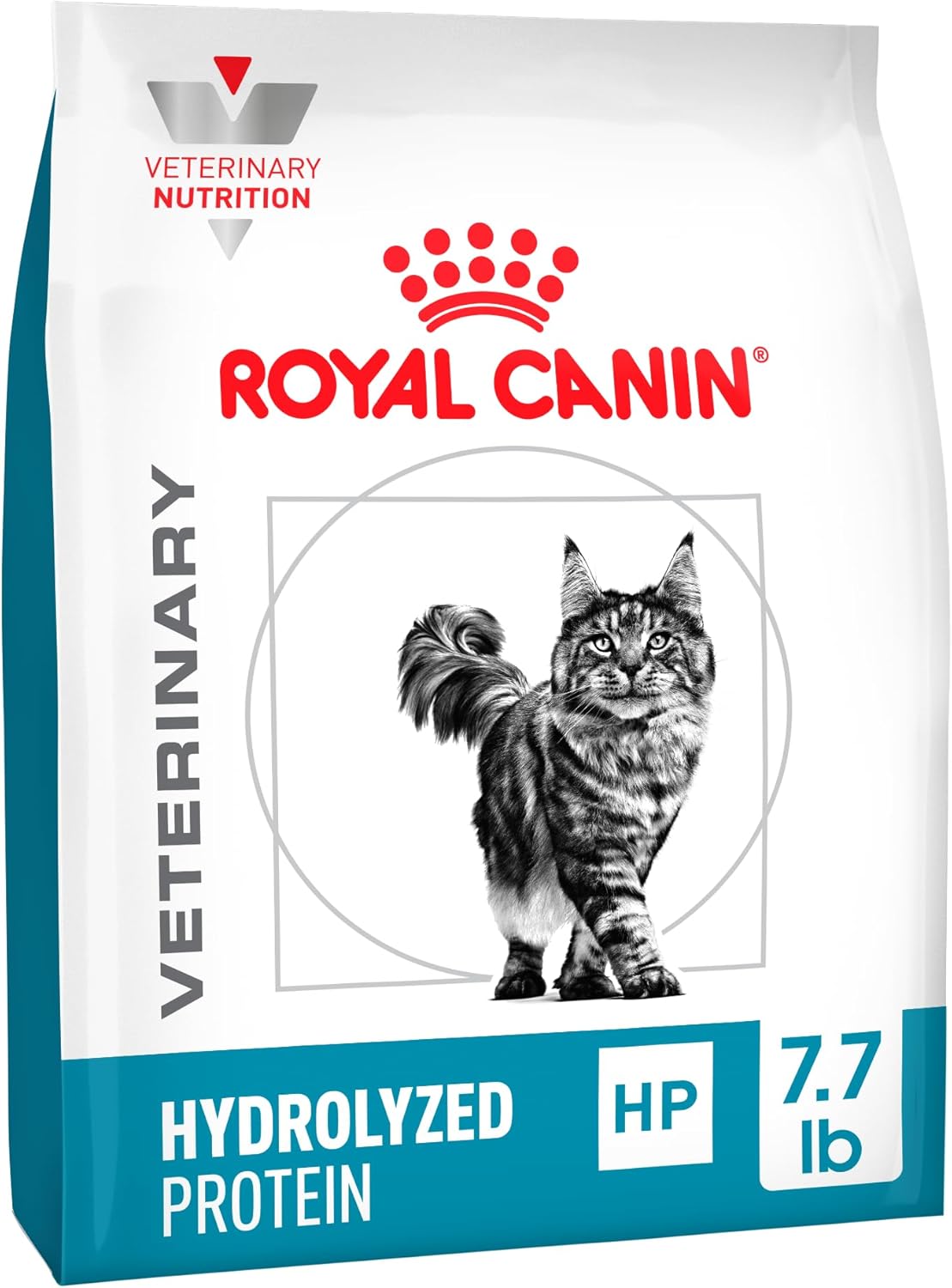
Key Features: Hydrolyzed protein formula | made for adult cats | prescription veterinary diet | large 7.7 lb bag
Pros: A third hydrolyzed choice for your vet to compare | 200+ bought on Amazon last month | largest bag of the dry options here
Cons: 4.2 stars, the lowest of the three dry diets | we did not verify its full ingredient list, so read the label with your vet
Best For: Adult cats whose vet wants to try a different hydrolyzed brand
Bottom Line: A reasonable third option to discuss with your vet.
05- Instinct Limited Ingredient Diet, Real Rabbit (Non-Prescription)
Overview: Over-the-counter limited ingredient dry food | real rabbit as the protein | no prescription needed | 4.5 lb bag
Why We Recommend It: Not every itchy cat needs a prescription diet. Rabbit is a protein most cats have never eaten, and a short ingredient list makes it easier to spot what your cat reacts to. Some vets use novel-protein foods like this after a hydrolyzed trial, or for milder cases.
Instinct Limited Ingredient, Real Rabbit
Best Non-Prescription Option

Key Features: Real rabbit, a novel protein for most cats | limited ingredient recipe | no prescription needed | dry food
Pros: 4.3 stars on Amazon | 1K+ bought last month | buy it without a vet’s authorization | uncommon protein
Cons: Not hydrolyzed, so it is not a substitute for z/d during a vet-run food trial | the lowest dry rating here, and rabbit recipes usually cost more
Best For: Milder food sensitivities, or long-term feeding after a trial if your vet agrees
Bottom Line: A sensible over-the-counter option, as long as your vet is on board.
How a Food Trial Works
There is no simple blood test that reliably pins down a cat’s food sensitivity, so vets usually run a food trial instead. Your cat eats only the trial diet for several weeks, and you watch whether the itching, ear problems, or stomach upset improve. If they do, your vet may then reintroduce an old food to see whether the symptoms return.
The whole trial depends on your cat eating nothing else. 1-800-PetMeds’ guidance for z/d says to feed only the prescribed Hill’s dry and wet foods and to avoid other treats or foods during treatment. One flavored treat, a lick of your plate, or a bite from another pet’s bowl can spoil weeks of work. In a multi-cat home, feed separately or use a microchip feeder.
When to See a Vet
Itching, hair loss, and scabs can come from fleas, parasites, or environmental allergies as well as food. Vomiting and diarrhea have many causes too. A vet should rule those out before a food trial starts, and should check in during it.
Common Buying Mistakes to Avoid
- Starting z/d without a vet. It is a prescription diet, and the symptoms may have another cause.
- Giving treats during the trial. Any extra food can hide whether the diet is working.
- Giving up too early. Skin changes take time, so follow your vet’s timeline.
- Switching overnight. Mix z/d in gradually over 7 days or more, as the feeding directions suggest.
Practical Tips for Feeding z/d
- Keep a simple symptom diary. Note itching, stools, and vomiting each week to share with your vet.
- Tell everyone in the house. Well-meaning family members are the most common source of sneaky treats.
- Store the bag in a cool, dry place. The directions say to protect it from moisture.
- Keep fresh water out, and try a fountain. Many cats drink more from moving water.
Our Review Process
- A real Amazon listing for the product with a buy button
- Ratings and rankings stated, with their source named
- Manufacturer claims labeled as claims
- No buy buttons for versions we could not verify
We do not make medical claims about any product. For non-prescription options, see our guides to the best food for cats with allergies and cat food for cats with allergies.
Final Recommendation
If you only take one thing from this guide, make it this: Hill’s z/d is a tool for a vet-led food trial, and it only works if it is the only thing your cat eats. The dry version is well reviewed and easy to find with your vet’s authorization. Keep a symptom diary, skip every treat, and follow up with your vet.
Frequently Asked Questions About Hill’s z/d
What is Hill’s z/d used for?
It is a prescription diet for cats with food sensitivities that show up as skin, coat, ear, or digestive problems.
Why does z/d contain chicken if my cat reacts to chicken?
The chicken protein is highly hydrolyzed, broken into pieces small enough that the immune system is less likely to recognize them. Ask your vet whether it suits your cat.
Do I need a prescription?
Yes. Retailers need a vet’s authorization before they ship Hill’s Prescription Diet foods.
Can my cat have treats on z/d?
Not during a food trial. Follow your vet’s advice on whether any treats are allowed later.
Can I mix wet and dry z/d?
Yes. Hill’s suggests mixing them for variety.

By the Pet Choice Center Editorial Team– Emma
Reviewed and researched by the Pet Choice Center Editorial Team. We compare pet products using manufacturer specifications, verified customer feedback, and practical buying criteria to help pet owners make informed decisions.