Introduction
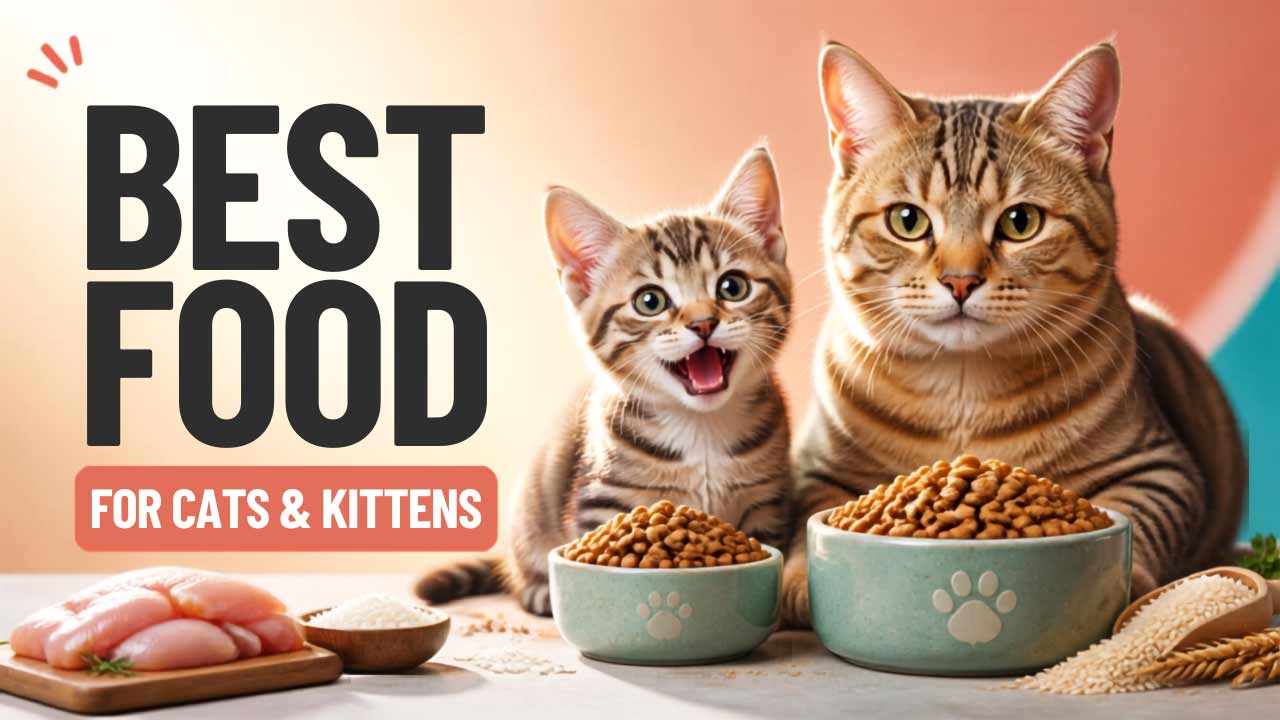
Kittens and adult cats have different nutritional needs. Kittens, generally up to about 12 months old, need higher protein and fat for rapid growth, along with real DHA for brain and eye development. Adult cats need a more balanced maintenance diet focused on weight control and long-term health, with taurine supporting heart function throughout life. Finding the best food for cats and kittens means matching the right formula to the right life stage.
This guide compares six formulas, three for kittens and three for adult cats. Here’s what we’re covering:
For Kittens:
- Royal Canin Feline Health Nutrition Kitten, Dry, 7 lb
- Hill’s Science Diet Kitten, Chicken, 15.5 lb
- ORIJEN Grain-Free Kitten, Chicken & Turkey, 4 lb
For Adult Cats:
- Hill’s Science Diet Adult 1-6, Chicken, 16 lb
- Royal Canin Feline Health Nutrition Indoor Adult, Dry, 7 lb
- Purina Pro Plan High Protein with Probiotics, Chicken & Rice, 7 lb
Affiliate Disclosure: As an Amazon Associate Pet Choice Center may earn a commission from qualifying purchases. If you purchase through our links, we may earn a small commission at no extra cost to you.
Quick Verdict
For kittens, Royal Canin Kitten offers tailored nutrition with real digestive and immune support for cats 4 months to 1 year old. Hill’s Science Diet Kitten provides a real, well-balanced formula with DHA for brain and eye development. ORIJEN Kitten delivers high animal-ingredient content for owners wanting a premium, grain-free option. For adults, Hill’s Science Diet Adult offers real balanced maintenance nutrition. Royal Canin Indoor Adult provides hairball and weight management tailored to indoor lifestyles. Purina Pro Plan rounds things out with real guaranteed live probiotics at an accessible price.
How We Chose These Products
We checked each product’s protein, DHA, and life-stage claims against the manufacturer’s current listing, and left out percentage statistics we couldn’t confirm. We’re not veterinarians, and kittens or cats with health conditions need a vet’s guidance on the right formula.
At a Glance
- What we compared: life-stage-appropriate formulations for kittens and adult cats
- 6 formulas across kitten and adult life stages, each correctly matched to its claimed use
- Kitten and adult formulas compared side by side
- 2 life stages covered with 3 differentiated options each
Quick Comparison Table
Short on time? Here’s a quick side-by-side before you dive into the full breakdowns below.
| Product | Life Stage | Positioning | Best For |
|---|---|---|---|
| Royal Canin Kitten | Kitten (4mo-1yr) | Tailored | Weaning kittens, digestive support |
| Hill’s Science Diet Kitten | Kitten | Overall | Balanced growth for most kittens |
| ORIJEN Kitten | Kitten | Premium | Owners wanting high animal-ingredient content |
| Hill’s Science Diet Adult | Adult (1-6yr) | Overall | Balanced everyday maintenance |
| Royal Canin Indoor Adult | Adult | Premium | Indoor cats managing hairballs and weight |
| Purina Pro Plan | Adult | Budget | Accessible, real probiotic support |
The Six Options, Reviewed
Royal Canin Feline Health Nutrition Kitten
Overview: Formulated specifically for kittens between 4 months and 1 year old | exclusive blend of antioxidants and vitamins for immune support | highly digestible proteins, fibers, and prebiotics for digestive support | easy-to-chew kibble texture | 7 lb bag, multiple sizes available
Why We Recommend It: This delivers tailored nutrition for the specific 4-month-to-1-year kitten window, with real digestive and immune support built into the formula.
Royal Canin Kitten
Tailored, 4mo-1yr Window

Key Features: Tailored to the 4-month-to-1-year kitten stage | real antioxidant and vitamin blend supports immune development | highly digestible proteins, fibers, and prebiotics support digestion | easy-to-chew kibble suits emerging teeth
Pros: Age-specific formulation for this exact kitten window | real digestive support built into the recipe | easy-to-chew texture suits young kittens | developed by veterinary nutritionists
Cons: Premium pricing relative to other options here | contains by-products
Best For: Kittens transitioning through the specific 4-month-to-1-year growth window
Bottom Line: A well-targeted option for this specific kitten age range.
Hill’s Science Diet Kitten
Overview: DHA from fish oil supports healthy brain and eye development | high-quality protein fuels growing muscles and active play | balanced minerals support growing bones and teeth | ActivBiome+ prebiotic fiber blend supports gut microbiome | 15.5 lb bag, multiple sizes available
Why We Recommend It: This provides a well-balanced formula with real DHA specifically for brain and eye development, a widely trusted starting point for kitten growth.
Hill’s Science Diet Kitten
Overall, Real DHA

Key Features: DHA from fish oil supports brain and eye development | high-quality protein fuels growing muscles | balanced minerals support developing bones and teeth | ActivBiome+ prebiotic fiber supports gut microbiome and digestion
Pros: Well-balanced, widely trusted formulation | real DHA inclusion for brain and eye support | from the most veterinarian-recommended brand | multiple sizes and formats available
Cons: Contains grains, a real consideration for grain-sensitive kittens | moderate pricing relative to budget options
Best For: Most kittens needing balanced growth support across breeds
Bottom Line: A solid, broadly trusted default for kitten nutrition.
ORIJEN Grain-Free Kitten
Overview: Packed with 90% animal ingredients | first five ingredients are fresh or raw chicken, turkey, wild-caught salmon, whole herring, and chicken liver | kibble specially sized for kittens and freeze-dried coated | supports muscle development, digestion, brain development, and cognitive function | 4 lb bag
Why We Recommend It: This delivers high animal-ingredient content, real named proteins throughout, for owners specifically wanting a premium, grain-free option built around whole-prey nutrition.
ORIJEN Kitten
Premium, 90% Animal Ingredients

Key Features: 90% animal ingredients, an unusually high proportion for the category | real fresh or raw chicken, turkey, and wild-caught fish lead the recipe | freeze-dried coating adds real flavor appeal | grain-free formulation
Pros: High animal-ingredient content | real named proteins throughout, not fillers | grain-free formulation | kibble sized specifically for kittens
Cons: Premium pricing relative to mainstream options | richer formulation may not suit every kitten’s digestion initially
Best For: Owners wanting a premium, high-protein, grain-free kitten option
Bottom Line: A high-quality premium choice for owners prioritizing animal-ingredient content.
Hill’s Science Diet Adult 1-6
Overview: Healthy skin and fur supported by omega-6 and vitamin E | lean muscles supported with high-quality protein | made with natural ingredients | formulated for cats 1 to 6 years old | 16 lb bag, multiple sizes available
Why We Recommend It: This provides balanced everyday maintenance nutrition, a widely trusted default for adult cats without a highly specific need.
Hill’s Science Diet Adult
Overall, Balanced Maintenance

Key Features: Real omega-6 and vitamin E support healthy skin and coat | high-quality protein supports lean muscle maintenance | made with natural ingredients | formulated specifically for the 1-to-6-year adult range
Pros: Well-balanced, widely trusted formulation | from the most veterinarian-recommended brand | supports weight maintenance for the prime adult years | multiple sizes and formats available
Cons: Contains grains, a real consideration for grain-sensitive cats | moderate pricing relative to budget options
Best For: Most adult cats needing balanced everyday maintenance
Bottom Line: A solid, trusted default for adult cat nutrition.
Royal Canin Feline Health Nutrition Indoor Adult
Overview: Formulated specifically for indoor cats 1 to 7 years old | optimal blend of fiber helps manage hairballs | controlled calorie content supports healthy weight for an indoor lifestyle | highly digestible proteins reduce litter box odor | 7 lb bag, multiple sizes available
Why We Recommend It: This delivers hairball and weight management specifically tailored to the indoor lifestyle, addressing real needs that differ from an outdoor or highly active cat’s diet.
Royal Canin Indoor Adult
Premium, Indoor-Specific

Key Features: Real fiber blend helps manage hairballs common in indoor cats | controlled calorie content supports weight management for a less active lifestyle | highly digestible proteins reduce waste and odor | unique kibble shape encourages chewing for dental health
Pros: Tailored to indoor-specific needs | real hairball and weight management combined | established veterinary nutrition brand | supports dental health through kibble design
Cons: Premium pricing relative to other options here | contains by-products
Best For: Indoor adult cats needing hairball and weight management together
Bottom Line: A well-targeted premium option for indoor-specific adult needs.
Purina Pro Plan High Protein with Probiotics
Overview: Real chicken as the first ingredient | natural prebiotic fiber from chicory root supports digestive health | fortified with guaranteed live probiotics | vitamin A and omega-6 fatty acids support skin, coat, and vision | 7 lb bag, multiple sizes available
Why We Recommend It: This delivers guaranteed live probiotics and real named chicken at the most accessible price point in this comparison, a solid everyday option for adult cats.
Purina Pro Plan
Budget, Real Live Probiotics

Key Features: Real chicken as the first ingredient provides quality protein | prebiotic fiber from chicory root supports digestion | guaranteed live probiotics support digestive and immune health | vitamin A and omega-6 support skin, coat, and vision
Pros: Accessible pricing for the formulation offered | real guaranteed live probiotics, not just general claims | real named protein leads the recipe | widely available at nearly every retailer
Cons: Contains by-products | less premium ingredient sourcing than boutique brands
Best For: Budget-conscious owners wanting real probiotic support
Bottom Line: A solid, accessible option for adult cats.
Pros & Cons Comparison Table
| Product | Top Pro | Top Con |
|---|---|---|
| Royal Canin Kitten | Tailored to 4mo-1yr window | Premium pricing |
| Hill’s Science Diet Kitten | Widely trusted, real DHA | Contains grains |
| ORIJEN Kitten | 90% animal ingredients | Premium pricing |
| Hill’s Science Diet Adult | Widely trusted, balanced | Contains grains |
| Royal Canin Indoor Adult | Indoor-specific tailoring | Premium pricing |
| Purina Pro Plan | Real live probiotics, accessible | Contains by-products |
Which Option Matches Your Cat?
For kittens: if you want tailored nutrition for the 4-month-to-1-year window, Royal Canin Kitten delivers that. If you want a well-balanced, widely trusted default, Hill’s Science Diet Kitten is a reasonable starting point. If you want a premium, high-protein, grain-free option, ORIJEN Kitten fits that.
For adults: if you want balanced everyday maintenance, Hill’s Science Diet Adult is a solid default. If your cat is indoor and needs hairball and weight management together, Royal Canin Indoor Adult addresses that specifically. If budget matters most, Purina Pro Plan keeps things accessible with real probiotics.
Why Life-Stage-Specific Nutrition Matters
Most owners searching for the best food for cats and kittens want to understand what differs between these life stages. Kittens have real, higher energy and protein needs to fuel rapid growth, along with a requirement for DHA to support developing brain and eye function. Adult cats, once growth slows, benefit more from balanced maintenance nutrition focused on weight control and long-term organ health, with taurine supporting heart function throughout their life.
The mistake that matters most when researching this topic is trusting precise-sounding statistics, like specific calorie ranges or percentage figures, without a real, checkable source. We’ve focused this guide on formulation claims we can actually verify against manufacturer listings.
Why Transition Timing Matters
Compared to switching a kitten to adult food too early or keeping an adult cat on kitten food too long, matching the formula to your cat’s actual life stage supports appropriate growth and weight management. One thing worth knowing: kittens are generally kittens for about 12 months, though this can vary somewhat by breed, so a gradual transition around that age is a reasonable general guideline, ideally confirmed with your vet.
This guide is for owners feeding either a growing kitten or an adult cat who wants a verified, life-stage-appropriate formula. By the end of this section, you should understand which of these six fits your cat’s actual needs.
Common Buying Mistakes to Avoid
- Trusting precise statistics that can’t be independently verified. Specific calorie or percentage figures without a real source should be treated skeptically.
- Keeping a kitten on kitten food too long, or switching too early. Both can result in nutrition that doesn’t match your cat’s actual current needs.
- Assuming all adult formulas are interchangeable. Indoor, weight-management, and general maintenance formulas each address somewhat different real needs.
- Switching to a new formula abruptly. Even an appropriate food can cause temporary digestive upset without a gradual transition.
Practical Tips for Feeding Cats and Kittens
- Transition from kitten to adult food gradually, generally around 12 months. This timing can vary by breed, so confirming with your vet is worthwhile.
- Introduce any new formula gradually over 7 to 10 days. This helps avoid digestive upset during the switch.
- Monitor your kitten’s or cat’s weight regularly. This helps confirm the current formula still matches their actual needs.
- Keep fresh water available at all times. This supports digestion and overall health at every life stage.
Our Review Process
We evaluated every product on this list against the same criteria:
- Life-stage-appropriate formulation, checked against the current product listing
- Real protein, DHA, and taurine content checked against manufacturer data
- Confirmed age-range claims where stated
- Real ingredient panel accuracy
- Value for money, based on price and Amazon customer ratings
We don’t make medical claims about any product, and we deliberately avoid citing precise statistics we can’t independently verify. Kittens or cats with specific health conditions benefit from veterinary guidance in selecting the most appropriate formula.
For related life-stage guidance, our best dry cat food for older cats guide covers the senior end of the spectrum in depth.
Final Recommendation
If you only take one thing from this guide: match the formula to your cat’s actual current life stage, and verify any statistic against a real, checkable source rather than taking precise-sounding figures at face value. For kittens, Royal Canin Kitten offers tailored nutrition, Hill’s Science Diet Kitten provides a well-balanced default, and ORIJEN Kitten delivers premium quality. For adults, Hill’s Science Diet Adult is a solid maintenance default, Royal Canin Indoor Adult addresses indoor-specific needs, and Purina Pro Plan keeps things accessible.
This guide is built to help you match the right formula to your kitten’s or cat’s actual life stage. Confirm the product, transition gradually, and watch for changing needs over time.
Frequently Asked Questions About Food for Cats and Kittens
When should I switch my kitten to adult food?
Generally around 12 months of age, though this can vary somewhat by breed, with larger breeds sometimes maturing more slowly; confirming timing with your vet is a reasonable approach.
Can I feed kitten food to an adult cat, or vice versa?
This isn’t ideal long-term; kitten food’s higher calorie and protein density can contribute to excess weight in an adult cat, while adult food may not provide enough energy and nutrients for a growing kitten.
Why does DHA matter specifically for kittens?
DHA supports brain and eye development during the rapid growth period of kittenhood, which is why it’s a common and meaningful ingredient in kitten-specific formulas.
Is grain-free better for kittens or adult cats?
Not necessarily; grain-free is one formulation choice among several, and most healthy cats and kittens do fine on either grain-free or grain-inclusive formulas unless a specific sensitivity has been identified.
How do I know if a cat food’s life-stage claim is accurate?
Check the real ingredient panel and age-range statement on the actual current product listing rather than relying solely on a product’s name or category, and confirm with your vet if you’re ever unsure.

By the Pet Choice Center Editorial Team– Emma
Reviewed and researched by the Pet Choice Center Editorial Team. We compare pet products using manufacturer specifications, brand-published information, and practical buying criteria to help pet owners make informed decisions.
Leave a Reply