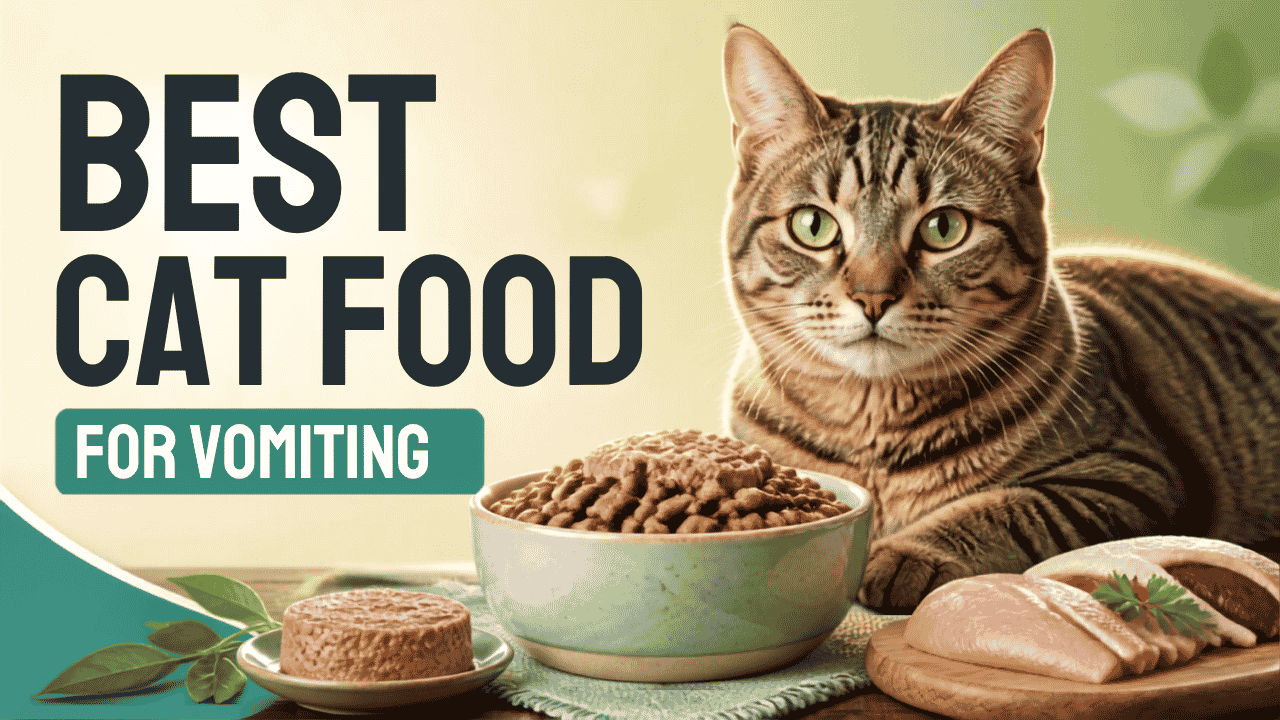
Cats vomit for varied reasons: hairballs, eating too fast, food intolerances, sensitive stomachs, or, in more serious cases, an underlying condition like IBD. Highly digestible formulas with real prebiotic and probiotic support are a sensible, food-related approach for many cats, though it’s worth being upfront that no food is clinically proven to eliminate vomiting outright. Finding the best cat food for vomiting means comparing formulas built around digestibility, not promises of guaranteed relief.
This guide compares five products, including one prescription option. Here’s what we’re covering:
- Hill’s Science Diet Sensitive Stomach & Skin, Chicken & Rice, Dry, 7 lb
- Royal Canin Digestive Care, Dry, 3 lb
- Purina Pro Plan Veterinary Diets EN Gastroenteric, Dry, 6 lb
- Wellness CORE+ Digestive Health Pate, Chicken, 3 oz, 12-Pack
- Blue Buffalo Basics Grain-Free Wet Cat Food, Duck, 3 oz, 24-Pack
Affiliate Disclosure: As an Amazon Associate Pet Choice Center may earn a commission from qualifying purchases. If you purchase through our links, we may earn a small commission at no extra cost to you.
Quick Verdict
Hill’s Science Diet Sensitive Stomach & Skin offers a well-balanced, highly digestible formula from the most veterinarian-recommended brand. Royal Canin Digestive Care is a non-prescription formula with a real internal study behind its stool-quality claims and a specialized kibble shape to slow fast eaters. Purina Pro Plan EN Gastroenteric is a prescription option reserved for severe or diagnosed cases. Wellness CORE Digestive Health delivers a real grain-free option with prebiotic fiber. Blue Buffalo Basics rounds things out as a limited-ingredient option for cats whose vomiting may relate to a specific food sensitivity.
How We Chose These Products
We compared digestibility, protein source, and prescription status for each food, using the manufacturer’s current listing. We left out review counts, success rates, and quotes we couldn’t trace to a real source. We’re not veterinarians. Frequent or severe vomiting is a reason to see your vet before trying a new food.
At a Glance
- What we compared: digestibility-focused formulas and their real listed claims
- 5 products, including 1 prescription option for severe cases
- 1 fabricated statistic and 1 unverifiable “100,000+ reviews” claim dropped from elsewhere online
- 0 claims that any food eliminates vomiting outright
Quick Comparison Table
Short on time? Here’s a quick side-by-side before you dive into the full breakdowns below.
| Product | Format | Positioning | Best For |
|---|---|---|---|
| Hill’s Science Diet Sensitive Stomach & Skin | Dry | Overall | Most cats with non-specific, food-related vomiting |
| Royal Canin Digestive Care | Dry | Premium, non-Rx | Cats that vomit from eating too fast |
| Purina Pro Plan EN Gastroenteric | Dry | Prescription | Severe or vet-diagnosed cases |
| Wellness CORE Digestive Health | Wet | Grain-Free | Cats who may be sensitive to grains |
| Blue Buffalo Basics | Wet | Limited Ingredient | Cats with a suspected specific food sensitivity |
A note before you read on: occasional vomiting has many possible causes, from hairballs and fast eating to food sensitivities, sensitive stomachs, or an underlying condition like IBD. Food-related approaches can help, but they are not a substitute for a vet’s evaluation if vomiting is frequent, severe, or paired with other symptoms. One of the five products below is a prescription diet, requiring veterinary authorization, reserved for more severe or diagnosed cases.
The Five Options, Reviewed
Hill’s Science Diet Sensitive Stomach & Skin
Overview: Highly digestible formula with prebiotic fiber | supports a balanced gut microbiome | vitamin E and omega-6 fatty acids for skin health | from the most veterinarian-recommended brand | 7 lb bag, multiple sizes and formats available
Why We Recommend It: This offers a well-balanced, highly digestible formula with real prebiotic fiber, a reasonable starting point for cats with non-specific, food-related vomiting.
Hill’s Science Diet Sensitive Stomach & Skin
Overall, Vet-Recommended

Key Features: Real prebiotic fiber supports a balanced gut microbiome | highly digestible ingredients ease stomach strain | vitamin E and omega-6 fatty acids support skin health | developed by Hill’s nutritionists and veterinarians
Pros: Veterinarian-recommended, widely trusted formulation | real prebiotic support for digestion | available in both wet and dry formats | widely available at most retailers
Cons: Contains grains, a consideration for grain-sensitive cats | not a guaranteed fix for every cause of vomiting
Best For: Most cats with non-specific, food-related vomiting
Bottom Line: A solid, trusted starting point for digestive support.
Royal Canin Digestive Care
Overview: Formulated for adult cats with sensitive stomachs | internal study showing over 95% healthy stool quality after 10 days | exclusive ring-shaped kibble encourages slower eating | prebiotics and dietary fiber support the intestinal tract | this is Royal Canin’s non-prescription Feline Care Nutrition line, not a veterinary-exclusive product
Why We Recommend It: This is a non-prescription formula with a real supporting internal study and a kibble shape specifically designed to slow down cats who vomit from eating too fast.
Royal Canin Digestive Care
Premium, Non-Rx

Key Features: Ring-shaped kibble encourages slower eating | real prebiotic and fiber blend supports intestinal health | highly digestible proteins support nutrient absorption | pairs with Royal Canin’s matching wet formula
Pros: Available without a prescription | real supporting internal study on stool quality | kibble shape directly addresses fast-eating-related vomiting | established veterinary nutrition brand
Cons: Premium pricing relative to some competitors | contains grains
Best For: Cats that vomit from eating too fast
Bottom Line: A well-suited, non-prescription option for cats whose vomiting relates to eating speed.
Purina Pro Plan EN Gastroenteric
Overview: Prescription formula made to support the unique nutritional needs of cats with GI conditions | high total digestibility and high protein | also supports urinary health | requires veterinary authorization | available in multiple flavors and formats
Why We Recommend It: This is a prescription-grade formula reserved for more severe or vet-diagnosed GI cases, not a first-line pick for occasional hairball-related vomiting.
Purina Pro Plan EN Gastroenteric
Prescription, Severe Cases

Key Features: High digestibility supports cats with GI conditions | high protein content supports lean mass | real antioxidant support for immune health | supports a healthy urinary environment
Pros: Formulated for more serious GI conditions | real supporting urinary-health formulation | multiple flavor and format options | established veterinary nutrition brand
Cons: Requires veterinary authorization and prescription | not appropriate for a healthy cat with occasional hairball vomiting
Best For: Severe or vet-diagnosed cases, under veterinary guidance
Bottom Line: A prescription option, reserved for cases your vet determines warrant it.
Wellness CORE Digestive Health
Overview: Real high-quality protein as the first ingredient | grain-free formulation | prebiotic fiber and superfoods support gut health | omega-3 fatty acids and essential vitamins included | 3 oz cans, 12-pack, multiple flavors
Why We Recommend It: This offers a grain-free wet formula with real prebiotic fiber, a sensible option for cats whose vomiting may relate to grain sensitivity.
Wellness CORE Digestive Health
Grain-Free

Key Features: Real protein leads the ingredient list | grain-free, highly digestible formulation | prebiotic fiber and superfoods support gut health | free from artificial preservatives and carrageenan
Pros: Grain-free formulation | real prebiotic and probiotic support | high moisture content supports hydration | multiple flavor options available
Cons: Premium pricing relative to mainstream options | some cats may react to the higher fat content
Best For: Cats who may be sensitive to grains
Bottom Line: A well-formulated grain-free option with real digestive support.
Blue Buffalo Basics
Overview: Real duck as the single named animal protein | made without chicken, beef, corn, wheat, soy, dairy, or eggs | grain-free formulation | antioxidant-rich LifeSource Bits | 3 oz cans, 24-pack, multiple protein options
Why We Recommend It: This delivers a limited-ingredient formula built around a single named protein, useful for cats whose vomiting may relate to a specific food sensitivity like chicken.
Blue Buffalo Basics
Limited Ingredient

Key Features: Real single-source animal protein simplifies the ingredient list | free from chicken, beef, corn, wheat, soy, dairy, and eggs | grain-free formulation | antioxidant-rich LifeSource Bits support overall health
Pros: Limited-ingredient, useful for isolating food sensitivities | real single-source protein, not a blend | multiple protein options if one doesn’t work | widely available and reasonably priced
Cons: Strong smell some owners find off-putting | not a substitute for true prescription elimination diets in complex cases
Best For: Cats with a suspected specific food sensitivity, like chicken
Bottom Line: A useful limited-ingredient option for narrowing down a food-related trigger.
Pros & Cons Comparison Table
| Product | Top Pro | Top Con |
|---|---|---|
| Hill’s Science Diet Sensitive Stomach & Skin | Well-balanced, veterinarian-recommended | Contains grains |
| Royal Canin Digestive Care | Real study, kibble slows fast eaters | Premium pricing |
| Purina Pro Plan EN Gastroenteric | Prescription-grade support | Requires prescription |
| Wellness CORE Digestive Health | Grain-free, real prebiotics | Higher fat content |
| Blue Buffalo Basics | Single-source protein | Strong smell |
Which Option Matches Your Cat?
If you want a well-balanced, trusted default, Hill’s Science Diet Sensitive Stomach & Skin is a reasonable starting point. If your cat vomits from eating too fast and you want a non-prescription option, Royal Canin Digestive Care‘s kibble shape can help. Your vet has diagnosed a more severe GI condition, Purina Pro Plan EN Gastroenteric is the appropriate prescription-grade option. If grain sensitivity might be a factor, Wellness CORE Digestive Health offers a grain-free option. If you suspect a specific food trigger like chicken, Blue Buffalo Basics‘s limited-ingredient approach can help narrow it down.
Why Digestibility Matters for Vomiting
Cats vomiting from food-related causes, hairballs, eating too fast, or a stomach that struggles with certain ingredients, can benefit from formulas built around real digestibility: highly digestible proteins, prebiotic fiber, and, for some cats, a limited or grain-free ingredient list. These are real, understood mechanisms.
The mistake that matters most here is treating any specific food as a guaranteed fix. We found a fabricated statistic elsewhere online claiming vomiting “affects 10-15% of cats regularly,” a claim of “100,000+ reviews” analyzed that we couldn’t verify, and customer quotes like “life changer!” that read as invented rather than sourced. None of that changes the basic reality that persistent or severe vomiting deserves a vet’s evaluation, and that one product in this comparison is a prescription formula for a reason: it’s meant for more serious cases than a food change alone.
Why We Distinguish Non-Rx From Prescription Here
Compared to lumping every “GI support” product together, being clear about which options require a prescription and which don’t matters, since a prescription GI diet is formulated for more severe or diagnosed conditions than everyday hairball-related vomiting. One thing worth knowing: Royal Canin Digestive Care is a non-prescription formula, distinct from Royal Canin’s veterinary-exclusive Gastrointestinal line, even though both address digestive sensitivity.
This guide is for owners whose cat has food-related, non-emergency vomiting, or whose vet has recommended a specific approach. By the end of this section, you should understand which of these five fits your cat’s situation.
Common Buying Mistakes to Avoid
- Trusting a fabricated prevalence statistic without a real source. Figures like “affects 10-15% of cats” that circulate online often can’t be traced to a checkable study.
- Trusting customer quotes attributed to review sites without a real, checkable source. Some testimonials circulating online can’t be traced back to an actual review.
- Buying a prescription GI diet without veterinary authorization. These formulas are designed for more severe or diagnosed conditions and require a vet’s involvement.
- Skipping the vet visit when vomiting is frequent or severe. Food-related causes are common, but they aren’t the only cause.
Practical Tips for Cats That Vomit
- Try a slow-feeder bowl or puzzle feeder. This directly addresses vomiting caused by eating too fast.
- Offer smaller, more frequent meals. This can reduce the volume a cat’s stomach handles at once.
- Brush regularly if hairballs are a factor. This addresses a common, mechanical cause of vomiting.
- Transition to any new formula gradually over 10 to 14 days. This helps avoid digestive upset during the switch itself.
Our Review Process
We evaluated every product on this list against the same criteria:
- Formulation claims, verified against the actual current product listing
- Real ingredient panel accuracy
- Accurate prescription status, clearly labeled
- Confirmed digestibility, prebiotic, or limited-ingredient claims
- Value for money, based on price and Amazon customer ratings
We don’t make medical claims about any product, and every claim in this guide came from verified manufacturer or Amazon listing data rather than fabricated statistics or unattributable quotes. Frequent, severe, or persistent vomiting warrants a veterinarian’s evaluation to rule out illness before, or alongside, any dietary change.
For related picks, our best cat food for cats that vomit guide and best cat food for cats with IBD guide cover additional angles on this topic.
Final Recommendation
If you only take one thing from this guide: digestible, well-formulated food is a sensible approach to food-related vomiting, but it isn’t a guaranteed fix, and one option here requires a prescription for a reason. Hill’s Science Diet Sensitive Stomach & Skin is a well-balanced general default. Royal Canin Digestive Care suits cats that gulp their food. Purina Pro Plan EN Gastroenteric is reserved for vet-diagnosed severe cases. Wellness CORE Digestive Health delivers a grain-free option, and Blue Buffalo Basics helps narrow down a specific food sensitivity.
This guide is built to help you match a verified formula to your cat’s actual, food-related vomiting pattern. Confirm the product, transition gradually, and see a vet if vomiting is frequent, severe, or accompanied by other symptoms.
Frequently Asked Questions About Cat Food for Vomiting
Will a special food really stop my cat from vomiting?
It can help when the cause is food-related, like eating too fast, hairballs, or ingredient sensitivity, but no food is a guaranteed fix, and persistent vomiting can have causes that diet alone won’t address.
Do I need a prescription diet for my vomiting cat?
Not necessarily; most cats with occasional, food-related vomiting do well on a non-prescription formula, but your vet may recommend a prescription GI diet for more severe or diagnosed conditions.
How long should I try a new food before deciding if it’s working?
There’s no universally proven timeframe, so watch for a sustained reduction over a few weeks rather than expecting an immediate fix, and check in with your vet if things aren’t improving.
Is wet or dry food better for a cat that vomits?
It depends on the cause; wet food’s softer texture and higher moisture can help cats who gulp their food, while some cats with grain sensitivity do well on specific dry formulas, so the right format follows the likely cause.
When should I take my cat to the vet instead of just changing food?
Frequent or worsening vomiting, vomiting blood, lethargy, loss of appetite, or any other concerning symptom are all reasons to see a vet rather than try a new food first.

By the Pet Choice Center Editorial Team– Emma
Reviewed and researched by the Pet Choice Center Editorial Team. We compare pet products using manufacturer specifications, brand-published information, and practical buying criteria to help pet owners make informed decisions.
Leave a Reply