A note before you read on: feline diabetes is a medical condition that requires veterinary diagnosis, and three of the five products in this guide are prescription diets requiring veterinary authorization to purchase. We’ve marked them clearly. Diet is one part of managing this condition, alongside insulin or other medication and regular glucose monitoring your vet oversees. This guide should support, not replace, that relationship.
Introduction
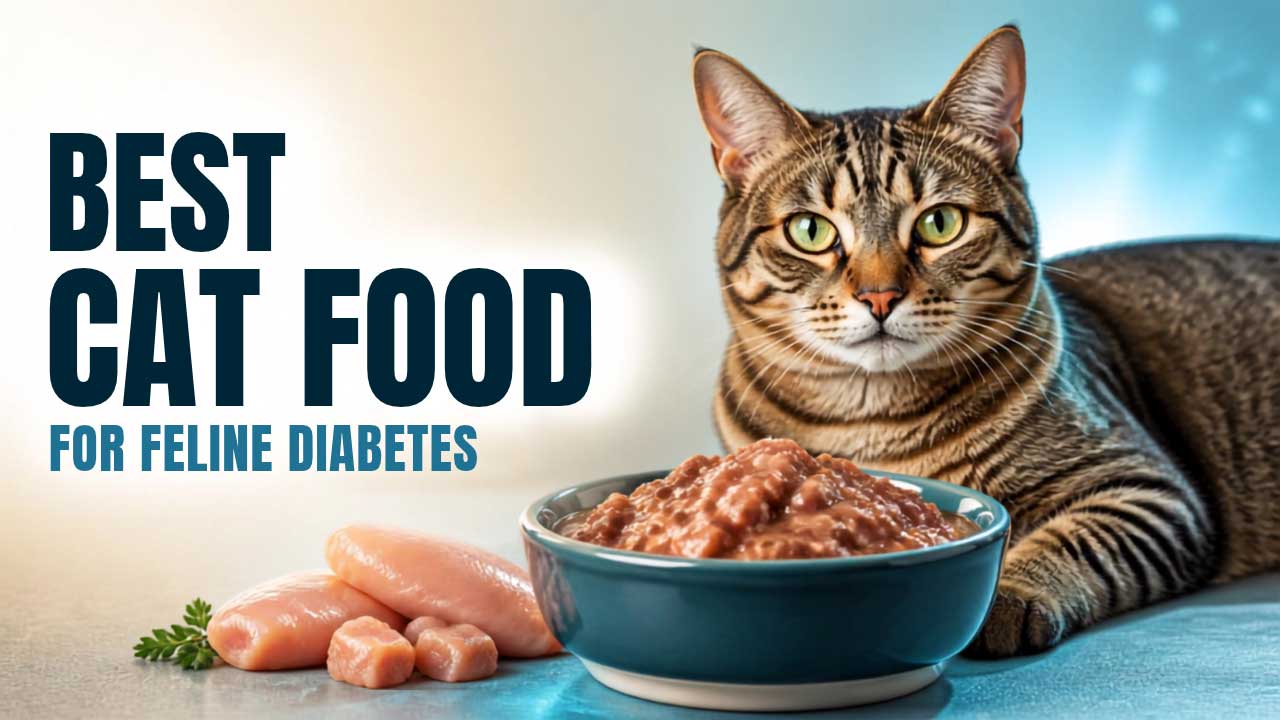
Feline diabetes responds well to diet: low-carbohydrate, high-protein nutrition, especially in wet form, is a real, recognized approach that helps manage blood glucose and support weight loss in cats who need it. Finding the best cat food for feline diabetes means comparing formulas, including prescription options, while being honest about which products are clinically formulated for this condition and which are simply high-protein and low-carb without being diabetes-specific.
This guide compares five products. Here’s what we’re covering:
- Hill’s Prescription Diet m/d GlucoSupport, Chicken, 4 lb Bag
- Purina Pro Plan Veterinary Diets DM, Wet, 5.5 oz, 24-Pack
- Tiki Cat Luau Succulent Chicken, Wet, 2.8 oz, 12-Pack
- Royal Canin Veterinary Diet Glycobalance, Wet, 5.1 oz Can
- Instinct Raw Boost, Grain-Free Dry, Chicken, 5 lb Bag
Affiliate Disclosure: As an Amazon Associate Pet Choice Center may earn a commission from qualifying purchases. If you purchase through our links, we may earn a small commission at no extra cost to you.
Quick Verdict
Hill’s Prescription Diet m/d is a clinically tested Rx option built for glucose and weight management together. Purina Pro Plan Veterinary Diets DM offers a high-protein, low-carbohydrate Rx formula. Tiki Cat Luau Succulent Chicken provides a non-prescription, grain-free wet option for cats who don’t need or can’t access a prescription diet. Royal Canin Glycobalance is a Rx formula specifically built to support stable blood glucose. Instinct Raw Boost rounds things out as a high-protein, grain-free dry option, though it’s worth understanding this one isn’t clinically formulated for diabetes the way the three Rx diets are.
How We Chose These Products
Three of these five foods are prescription diets, so we focused on what each manufacturer says the formula is designed to do, its format, and whether it needs vet authorization. We left out exact carb and calorie figures we couldn’t confirm on the manufacturers’ own pages. We’re not veterinarians. A diabetic cat’s diet and insulin need to be managed together, and a food change can shift insulin needs quickly, so talk to your vet before switching.
At a Glance
- What we compared: formulations relevant to feline diabetes management
- 5 products compared across two prescription wet options, one prescription option, one non-Rx wet, and one non-Rx dry
- 1 corrected pick: a source elsewhere listed a non-existent complete wet meal product; we substituted a verified equivalent
- 3 of 5 products confirmed as prescription diets requiring veterinary authorization
Quick Comparison Table
Short on time? Here’s a quick side-by-side before you dive into the full breakdowns below.
| Product | Format | Rx Status | Best For |
|---|---|---|---|
| Hill’s Prescription Diet m/d | Dry or wet | Prescription | Overweight diabetic cats needing weight and glucose management together |
| Purina Pro Plan Veterinary Diets DM | Wet | Prescription | Insulin-dependent cats needing high protein and low carb |
| Tiki Cat Luau Succulent Chicken | Wet | Non-Rx | Cats without a prescription who need a low-carb wet option |
| Royal Canin Glycobalance | Wet | Prescription | Cats needing blood sugar stability support |
| Instinct Raw Boost | Dry | Non-Rx | Diabetic cats tolerating dry food, under vet guidance |
The Five Options, Reviewed
Hill’s Prescription Diet m/d
Overview: Clinically tested nutrition to help manage glucose and weight together | developed by Hill’s nutritionists and veterinarians | also formulated to support a healthy urinary environment | requires veterinary authorization | available in wet stew and dry kibble
Why We Recommend It: This is a clinically tested Rx formula built specifically to address both glucose and weight management together, which matters since a large share of diabetic cats are also managing excess weight.
Hill’s Prescription Diet m/d
Overall, Prescription

Key Features: Clinical nutrition tested for glucose and weight management | developed by veterinary nutritionists | real urinary-health formulation included | available in multiple formats for flexible feeding
Pros: Clinically tested for this exact use case | addresses both glucose and weight together | from the most veterinarian-recommended prescription brand | available in both wet and dry
Cons: Requires veterinary authorization and prescription | premium pricing typical of Rx diets
Best For: Overweight diabetic cats needing both weight loss and glucose support
Bottom Line: A well-established, clinically tested Rx option for combined glucose and weight management.
Purina Pro Plan Veterinary Diets DM
Overview: High protein and low carbohydrate | formulated to support the unique nutritional needs of diabetic cats | also supports urinary health | requires veterinary authorization | available in multiple wet formats
Why We Recommend It: This delivers a high-protein, low-carbohydrate Rx formula developed specifically for diabetic cats, with real supporting urinary-health formulation.
Purina Pro Plan Veterinary Diets DM
Prescription, High Protein

Key Features: High protein, low carbohydrate formulation for diabetic cats | real urinary-health support included | multiple wet formats and flavors available | developed with veterinary and nutritionist collaboration
Pros: Formulated specifically for diabetic cats’ needs | high protein helps maintain lean body mass | multiple format and flavor options | established veterinary nutrition brand
Cons: Requires veterinary authorization and prescription | some reported variability between cans
Best For: Insulin-dependent cats needing a high-protein, low-carb Rx wet diet
Bottom Line: A well-formulated Rx option built specifically around diabetic cats’ nutritional needs.
Tiki Cat Luau Succulent Chicken
Overview: Real shredded chicken as the first ingredient | grain-free, low-carbohydrate formulation | complete and balanced for all life stages | no fillers or carrageenan | 2.8 oz cans, 12-pack
Why We Recommend It: This delivers a non-prescription, complete wet meal built around real named chicken with no added grains or starches, a solid option for cats who don’t need or can’t access a prescription diet.
Tiki Cat Luau Succulent Chicken
Non-Rx Wet, Low Carb

Key Features: Real shredded chicken leads the ingredient list | grain-free and low-carbohydrate | complete and balanced nutrition for all life stages | free from grains, wheat, corn, soy, and carrageenan
Pros: Low-carb without requiring a prescription | real named chicken, not fillers | high moisture content supports hydration | widely available and accessible
Cons: Not clinically formulated or tested specifically for diabetes management | shredded texture may not suit every cat
Best For: Cats without a prescription who still need a low-carb wet option
Bottom Line: A solid non-Rx wet option built around real, low-carb ingredients.
Royal Canin Glycobalance
Overview: Formulated to meet the nutritional needs of diabetic adult cats | soft loaf in sauce supports hydration | formulated to support healthy blood glucose levels | supports weight loss and maintenance | requires veterinary authorization
Why We Recommend It: This is formulated specifically for adult cats with diabetes, with a real focus on supporting healthy blood glucose levels alongside weight management.
Royal Canin Glycobalance
Prescription, Blood Sugar Support

Key Features: Formulated to meet diabetic adult cats’ nutritional needs | real soft loaf texture supports hydration and palatability | supports healthy post-prandial blood glucose | increased nutrient-to-calorie ratio supports weight management
Pros: Diabetes-specific formulation | appetizing pate texture many cats accept well | supports weight loss relevant to many diabetic cats | established veterinary nutrition brand
Cons: Requires veterinary authorization and prescription | premium pricing typical of Rx diets
Best For: Cats needing dedicated blood glucose stability support
Bottom Line: A well-targeted Rx option specifically built for diabetic blood sugar support.
Instinct Raw Boost
Overview: Real cage-free chicken as the first ingredient | grain-free, high-protein kibble with freeze-dried raw pieces | free from potato, corn, wheat, soy, and by-product meals | not a clinical diabetes formula | 5 lb bag, multiple sizes available
Why We Recommend It: This delivers a high-protein, grain-free dry option with real named chicken, useful for diabetic cats whose vet has approved dry feeding as part of their management plan.
Instinct Raw Boost
Non-Rx Dry, High Protein

Key Features: Real cage-free chicken leads the ingredient list | grain-free, high-protein formulation | freeze-dried raw pieces add nutrient density | free from potato, corn, wheat, and soy
Pros: High protein and grain-free | real named chicken as the first ingredient | widely available at most pet retailers | no prescription required
Cons: Not clinically formulated or tested specifically for diabetes management, unlike the three Rx options here | dry food offers less moisture than wet formats
Best For: Diabetic cats tolerating dry food, under a vet’s guidance
Bottom Line: A solid high-protein dry option, best used as part of a vet-guided plan rather than a standalone diabetes solution.
Pros & Cons Comparison Table
| Product | Top Pro | Top Con |
|---|---|---|
| Hill’s Prescription Diet m/d | Clinically tested for glucose and weight together | Requires prescription |
| Purina Pro Plan Veterinary Diets DM | Diabetes-specific formulation | Requires prescription |
| Tiki Cat Luau Succulent Chicken | Low-carb, no prescription needed | Not clinically tested for diabetes |
| Royal Canin Glycobalance | Real blood glucose-focused formulation | Requires prescription |
| Instinct Raw Boost | High protein, grain-free, no Rx | Not a clinical diabetes formula |
Which Option Matches Your Cat?
If your cat is overweight and diabetic, Hill’s Prescription Diet m/d addresses both together, with your vet’s authorization. If your cat is insulin-dependent and needs a dedicated Rx formula, Purina Pro Plan Veterinary Diets DM offers that. Do You need a low-carb option without a prescription, Tiki Cat Luau Succulent Chicken fits that. If blood glucose stability is the primary concern, Royal Canin Glycobalance is built for that, again with veterinary authorization. If your cat tolerates dry food and your vet has approved that as part of the plan, Instinct Raw Boost provides a high-protein, grain-free option.
Why Diet Matters for Feline Diabetes
Low-carbohydrate, high-protein nutrition is a real, recognized part of managing feline diabetes, since carbohydrates convert to glucose and a lower-carb diet can help reduce the blood sugar spikes a diabetic cat’s body struggles to regulate. Wet food’s naturally lower carbohydrate content compared to most dry kibble is one reason wet formats are commonly recommended, though low-carb dry options do exist.
The mistake that matters most here is treating any high-protein or grain-free product as equivalent to a clinically formulated diabetes diet. A prescription diet like the three included here has been specifically formulated and, in some cases, clinically tested for diabetes management; a general high-protein, grain-free food like Instinct Raw Boost is a reasonable choice within a vet-guided plan, but it isn’t the same thing.
Why We Corrected One Pick in This Guide
Compared to trusting a product name at face value, verifying that a listed “wet pate” actually exists as a complete standalone meal (rather than a topper or broth meant to supplement another food) matters for a condition where consistent, complete nutrition is part of the management plan. One thing worth knowing: product line names can be confusingly similar across toppers, broths, and complete meals from the same brand, so checking the actual current listing before buying is worth the extra minute.
This guide is for owners of a cat with a veterinary diagnosis of diabetes who are working with their vet on a management plan. By the end of this section, you should understand which of these five fits where your cat is in that plan.
Common Buying Mistakes to Avoid
- Assuming any high-protein or grain-free food is equivalent to a clinical diabetes diet. Prescription diets are specifically formulated, and sometimes clinically tested, for this exact condition.
- Trusting a product name without confirming it’s a complete meal. Some product lines include toppers and broths alongside complete meals under similar naming.
- Switching foods without veterinary guidance. Diet changes can affect insulin needs, so any change should go through your vet.
- Trusting precise carb or protein percentages without checking the actual guaranteed analysis. Exact figures cited in comparison articles aren’t always independently verifiable.
Practical Tips for Feeding a Diabetic Cat
- Work with your vet on timing meals around insulin administration. Consistent meal timing helps keep glucose management predictable.
- Transition to any new formula gradually, as your vet advises. A gradual switch, typically over 7 to 10 days, helps avoid digestive upset and unexpected glucose swings.
- Monitor weight and body condition regularly. Weight changes can affect insulin dosing needs, so your vet will likely want updates.
- Keep a consistent feeding schedule. Predictable meals support more predictable blood glucose patterns.
Our Review Process
We evaluated every product on this list against the same criteria:
- Current availability, verified against the actual product listing
- Confirmed whether each product is a complete meal versus a topper or supplement
- Accurate prescription status, clearly labeled
- Real ingredient panel accuracy
- Value for money, based on price and Amazon customer ratings
We don’t make medical claims about any product, and every claim in this guide came from verified manufacturer or Amazon listing data rather than unverifiable statistics or quotes. Feline diabetes requires veterinary diagnosis and ongoing monitoring; this guide is meant to inform your conversation with your vet, not replace it.
For related picks, our best cat food for diabetic cats guide covers additional prescription and non-prescription options.
Final Recommendation
If you only take one thing from this guide: confirm with your vet which of these fits your cat’s specific management plan, since three of the five require a prescription and are formulated differently from the two non-Rx options. Hill’s Prescription Diet m/d addresses glucose and weight together. Purina Pro Plan Veterinary Diets DM and Royal Canin Glycobalance offer dedicated Rx formulations. Tiki Cat Luau Succulent Chicken provides a low-carb option without a prescription, and Instinct Raw Boost rounds things out as a high-protein dry choice for cats whose vet has approved dry feeding.
This guide is built to help you have an informed conversation with your vet about your diabetic cat’s nutrition. Confirm the product, follow your vet’s monitoring plan, and never change a diabetic cat’s diet without veterinary guidance.
Frequently Asked Questions About Cat Food for Feline Diabetes
Does my diabetic cat need a prescription diet?
Not necessarily; some cats manage well on a non-prescription low-carb wet food, but your vet is best positioned to determine whether a clinically formulated Rx diet is warranted for your cat’s specific situation.
Is wet food really better than dry for a diabetic cat?
Wet food’s naturally lower carbohydrate content compared to most dry kibble is one real reason it’s commonly recommended, though low-carb dry options exist and some cats do well on them under veterinary guidance.
Can I switch my diabetic cat’s food on my own?
No; diet changes can affect insulin needs and blood glucose patterns, so any food switch for a diabetic cat should go through your veterinarian.
How do I know if a product is a complete meal versus a topper?
Check the actual current product listing for language like “complete and balanced,” since some product lines include toppers and broths under similarly named product families that aren’t meant to be fed as a standalone meal.
What signs suggest my cat’s diabetes management needs a vet visit?
Changes in weight, appetite, thirst, or urination, or inconsistent glucose readings if you’re monitoring at home, are all reasons to check in with your vet about adjusting the management plan.

By the Pet Choice Center Editorial Team– Emma
Reviewed and researched by the Pet Choice Center Editorial Team. We compare pet products using manufacturer specifications, brand-published information, and practical buying criteria to help pet owners make informed decisions.
Leave a Reply