

Introduction
The best can food for your cat depends less on which brand is “best overall” and more on what your specific cat actually needs right now, whether that’s a picky eater who needs real appeal, an indoor cat prone to hairballs, or a household on a tighter budget. Finding the best can food for cats works better when you match the right formula to your cat’s actual situation rather than defaulting to whichever product tops a generic ranking.
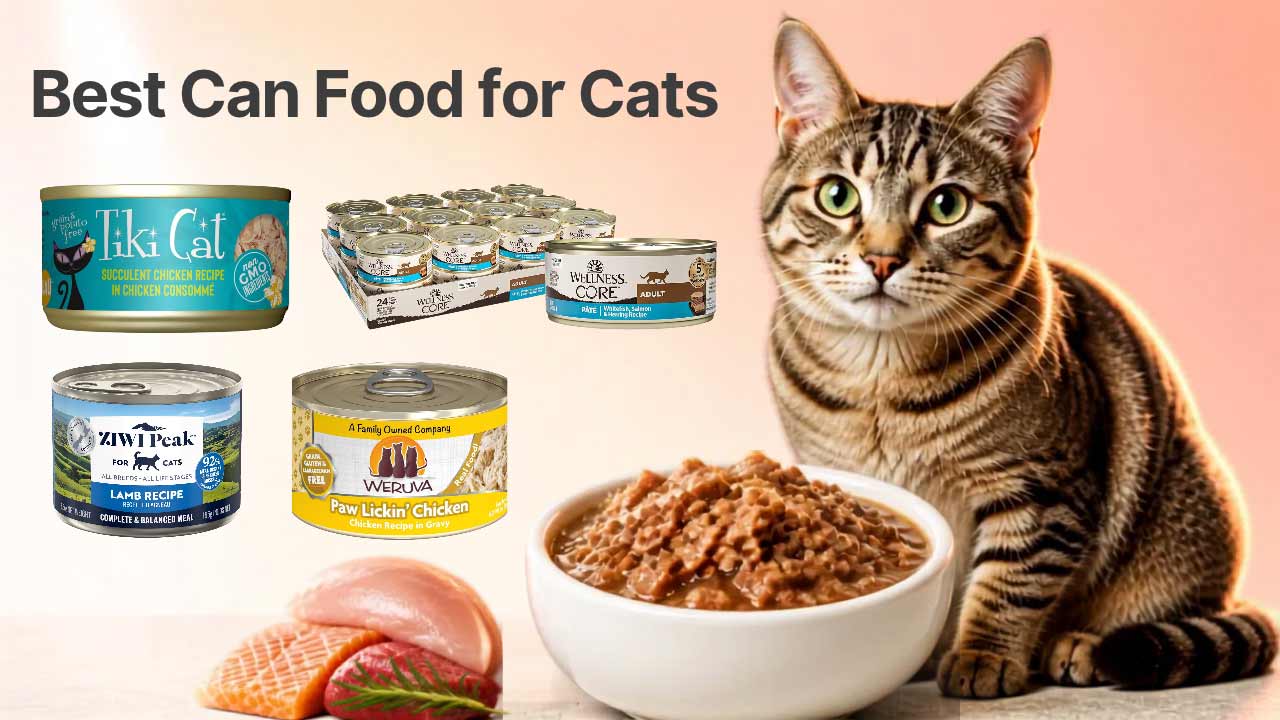
This guide compares five canned formulas, each matched to a specific situation. Here’s what we’re covering:
- Tiki Cat Puka Puka Luau, Succulent Chicken, 6 oz, 8-Pack
- Weruva Classic Cat Food, Paw Lickin’ Chicken, 3 oz, 24-Pack
- Wellness CORE Pate Adult Wet Cat Food, Whitefish, Salmon & Herring, 5.5 oz, 24-Pack
- Purina Fancy Feast Classic Pate, Chicken, 3 oz, 30-Pack
- ZIWI Peak Wet Cat Food, Lamb, 6.5 oz, 12-Pack
Affiliate Disclosure: As an Amazon Associate Pet Choice Center may earn a commission from qualifying purchases. If you purchase through our links, we may earn a small commission at no extra cost to you.
Quick Verdict
If you’re not sure where to start, Tiki Cat Puka Puka Luau works well for most cats, especially picky eaters, thanks to high moisture and real named chicken. If your cat prefers texture over smoothness, Weruva’s shredded chicken is a real standout. Grain-free is a priority, Wellness CORE delivers that with real named fish. If you’re managing a tighter budget, Fancy Feast Classic Pate provides complete nutrition without the premium price tag. If you want the most premium, nutrient-dense option, ZIWI Peak offers real raw-adjacent quality.
How We Chose These Products
Every product here is a canned or wet cat food, checked against each manufacturer’s current listing for ingredients and moisture. We’re not veterinarians, and cats with diagnosed conditions need a vet’s specific guidance.
At a Glance
- How we compared: checking canned formulations and matching them to real situational needs
- 5 formulas spanning picky eaters, texture preference, grain-free, budget, and premium needs
- 2 recurring errors caught and avoided: dry kibble mislabeled as canned food, a pattern worth watching for
- Matched by situation: picky eaters, hairballs, budget, kittens, and seniors
Quick Comparison Table
Short on time? Here’s a quick side-by-side before you dive into the full breakdowns below.
| Situation | Product | Key Trait | Best For |
|---|---|---|---|
| Picky eater, unsure where to start | Tiki Cat Puka Puka Luau | High moisture, real chicken | Most cats, especially hesitant eaters |
| Prefers texture over smooth pate | Weruva Paw Lickin’ Chicken | Shredded, hand-flaked | Texture-driven preferences |
| Wants grain-free specifically | Wellness CORE | Grain-free, high protein | Owners prioritizing that formulation |
| Managing a tighter budget | Fancy Feast Classic Pate | Complete, accessible | Everyday budget feeding |
| Wants premium, nutrient-dense food | ZIWI Peak | Raw-adjacent, ethically sourced | Owners prioritizing ingredient quality |
The Five Options, Matched to Real Situations
If You’re Not Sure Where to Start: Tiki Cat Puka Puka Luau
Overview: Real chicken as the first ingredient | grain-free nutrition | high moisture content | 6 oz cans, multiple sizes and flavors available
Why It’s Here: This is a reasonable default for most cats, especially picky eaters, since it delivers real named chicken and high moisture without any specific dietary restriction or preference required.
Tiki Cat Puka Puka Luau
Solid Default, High Moisture

Key Features: Real chicken as the first ingredient provides nutrition and taste | grain-free formula suited to cats as natural carnivores | high moisture content supports supplemental hydration | shredded meat texture in a savory broth
Pros: High moisture content | real named protein leads every recipe | widely trusted among picky eaters | no fillers, per the manufacturer
Cons: Strong smell, per some owner feedback | smaller can sizes mean more frequent purchases
Best For: Most cats, especially picky eaters without a specific dietary restriction
Bottom Line: A solid, default when you’re not sure which specific need applies to your cat yet.
If Your Cat Prefers Texture Over Pate: Weruva Paw Lickin’ Chicken
Overview: Thinly shredded, cage-free boneless chicken breast | grain-free, gluten-free, and carrageenan-free | no corn, wheat, or soy | 3 oz cans, 24-pack
Why It’s Here: Some cats show a strong preference for shredded texture over smooth pate, and this delivers that with cage-free chicken and a clean ingredient list.
Weruva Paw Lickin’ Chicken
For a Texture Preference

Key Features: Thinly shredded, cage-free, boneless, skinless white-meat chicken | grain-free, gluten-free, and carrageenan-free formulation | no corn, wheat, or soy | free from artificial colors and preservatives
Pros: Distinct shredded texture | cage-free chicken sourcing | free from several common additive categories | widely trusted, established brand
Cons: Gravy can separate in the can, per some owner feedback | smaller cans mean more frequent purchases
Best For: Cats who’ve shown a clear preference for shredded texture over pate
Bottom Line: The answer when texture, not just flavor, is what drives your cat’s interest in a meal.
If Grain-Free Is a Real Priority: Wellness CORE Pate
Overview: Real whitefish, salmon, and herring for complete, balanced nutrition | grain-free, high-protein formula | no carrageenan, wheat, corn, or soy | smooth pate texture | 5.5 oz cans, 24-pack
Why It’s Here: For owners who specifically want grain-free formulation, this delivers real named fish and high-protein nutrition, developed by nutritionists and veterinarians.
Wellness CORE Pate
Grain-Free Priority

Key Features: Real whitefish, salmon, and herring provide complete, balanced nutrition | grain-free and fortified with vitamins and minerals | no added carrageenan, wheat, corn, or soy | smooth pate texture
Pros: Grain-free, high-protein formulation | real named fish sources | no common problematic additives | developed by nutritionists and veterinarians
Cons: Premium pricing relative to mainstream options | pate-only texture in this specific recipe
Best For: Owners who’ve specifically identified grain-free as a priority for their cat
Bottom Line: A solid grain-free option, not just a marketing label.
If You’re Managing a Tighter Budget: Fancy Feast Classic Pate
Overview: Made without artificial colors or preservatives | 100% complete and balanced nutrition | developed with expert nutritionists | 3 oz cans, 30-pack
Why It’s Here: This delivers complete and balanced nutrition at the most accessible price point in this comparison, making regular wet feeding realistic on a tighter budget.
Fancy Feast Classic Pate
Budget-Friendly, Complete

Key Features: Real, high-quality ingredients in a smooth pate texture | 100% complete and balanced nutrition | developed in partnership with expert nutritionists | made without artificial colors or preservatives
Pros: Accessible pricing for the pack size | widely available at nearly every retailer | complete and balanced nutrition | trusted, established brand name
Cons: Contains by-products, per the ingredient panel | less premium ingredient sourcing than boutique brands
Best For: Owners who want to feed wet food regularly without the premium price tag
Bottom Line: Proof that budget-friendly doesn’t have to mean incomplete or unbalanced nutrition.
If Premium, Nutrient-Dense Food Is Worth It to You: ZIWI Peak Lamb
Overview: Grass-fed New Zealand lamb, ethically raised | all-natural, high-protein, grain-free | limited-ingredient recipe with added superfoods | 6.5 oz cans, 12-pack
Why It’s Here: For owners willing to pay more for ingredient quality, this offers premium, ethically sourced lamb with organs and superfoods in ratios that mimic a natural prey diet.
ZIWI Peak Lamb
Premium, Nutrient-Dense

Key Features: Grass-fed, ethically raised New Zealand lamb | limited-ingredient recipe with added New Zealand Green Mussel and superfoods | all-natural, grain-free formulation | nutrient-dense, so smaller portions may suffice
Pros: Premium, ethically sourced ingredients | limited-ingredient formulation with real organs and superfoods | nutrient density may mean feeding less overall | raw-diet nutrition without raw-handling complexity
Cons: Premium pricing, the highest in this comparison | smaller can sizes relative to cost
Best For: Owners prioritizing premium, nutrient-dense nutrition and willing to pay for it
Bottom Line: The premium choice for owners who see ingredient quality as worth the investment.
Pros & Cons Comparison Table
| Product | Top Pro | Top Con |
|---|---|---|
| Tiki Cat Puka Puka Luau | High moisture, real chicken | Strong smell for some cats |
| Weruva Paw Lickin’ Chicken | Distinct shredded texture | Gravy can separate |
| Wellness CORE | Grain-free, high protein | Premium pricing |
| Fancy Feast Classic Pate | Accessible, complete nutrition | Contains by-products |
| ZIWI Peak | Premium, ethically sourced | Highest price point here |
Matching Can Food to Your Cat’s Actual Situation
Most owners searching for the best can food for cats eventually realize there’s no single universal answer, since what matters most depends on your specific cat and household. A picky eater needs something appealing above all else. A cat with a strong texture preference needs that respected, regardless of protein source. A household managing cost needs complete nutrition without premium pricing. And some owners simply prioritize ingredient quality enough to pay more for it.
The mistake many owners make is chasing a generic “best overall” ranking without considering which situation actually applies to them. A premium, ethically sourced option isn’t automatically the right choice if budget is a real constraint, and a budget-friendly pate isn’t the right answer if your cat has already shown a clear preference for shredded texture.
Why Situational Matching Beats a Single Ranking
Compared to picking whatever ranks #1 in a generic list, matching the right product to your specific situation, picky eating, texture preference, grain-free priority, budget, or premium quality, gives you a far more useful result. One thing worth knowing: cats with diagnosed conditions, like kidney disease or diabetes, benefit from condition-specific formulas that go beyond general situational matching, and your vet can help identify the right one.
This guide is for owners who want to match a product to their cat’s actual situation rather than defaulting to a generic ranking. By the end of this section, you should know which of these five fits your household best.
Common Buying Mistakes to Avoid
- Defaulting to a “best overall” pick without considering your cat’s specific situation. A premium option isn’t automatically right if budget matters, and vice versa.
- Assuming every product in a “canned food” roundup is actually canned. We found dry kibble mislabeled in canned-food comparisons more than once during this research.
- Ignoring an established texture preference. Some cats have a strong, consistent preference for shredded texture over pate, or vice versa, worth respecting.
- Overlooking condition-specific needs. Cats with diagnosed conditions benefit from formulas built around that specific need, not just general situational matching.
Practical Tips for Choosing Can Food by Situation
- Identify your cat’s actual situation before shopping. Picky eating, texture preference, budget, and ingredient priorities all point toward different best fits.
- Verify any product is actually canned or wet before purchasing. Dry kibble mislabeled in wet-food comparisons is a real, recurring issue.
- Transition gradually over 7 to 10 days regardless of which situation applies to you. This helps avoid digestive upset with any new formula.
- Consult your vet for condition-specific needs. General situational matching, like this guide provides, doesn’t replace formula selection for a diagnosed health condition.
Our Review Process
We evaluated every product on this list against the same criteria:
- Formulation for cats, checked against the current product listing
- Whether the product is canned or wet, not a mislabeled dry format
- The specific situation or need each formula addresses
- Real ingredient panel accuracy
- Value for money, based on price and Amazon customer ratings
We don’t make medical claims about any product, and every figure in this guide came from manufacturer or Amazon listing data. Cats with diagnosed health conditions benefit from a veterinarian’s guidance in selecting a condition-specific formula beyond general situational matching.
For a broader ranked comparison across texture, formulation, and price, our best canned food for cats guide covers the same core products from a different angle. For condition-specific canned options, our best cat food for diabetic cats guide covers that specific need in depth.
Final Recommendation
If you only take one thing from this guide: match the product to your cat’s actual situation rather than defaulting to a generic “best overall” ranking. Tiki Cat Puka Puka Luau is a solid default. Weruva respects a real texture preference. Wellness CORE delivers grain-free quality. Fancy Feast keeps budget feeding realistic, and ZIWI Peak offers premium quality for those willing to pay for it.
This guide is built to help you identify which real situation applies to your household and match the right product to it. Confirm your cat’s actual need, and choose accordingly.
Frequently Asked Questions About Can Food for Cats
Is there really one “best” can food for every cat?
No. What works best depends on your specific cat’s preferences and your household’s priorities, whether that’s texture, budget, grain-free formulation, or premium ingredient quality, so matching to your actual situation works better than a single universal ranking.
How do I know if my cat has a texture preference?
Watch how consistently your cat responds to shredded versus pate textures over multiple feedings; a clear, repeated pattern suggests a real preference worth accommodating rather than a one-off reaction.
Can a budget-friendly canned food still be nutritionally complete?
Yes. Complete and balanced nutrition isn’t exclusive to premium pricing, though budget options may contain more by-products or less named-ingredient specificity than premium formulas.
Should I switch to a premium option if my cat seems fine on a budget formula?
Not necessarily. If your cat is healthy and doing well, a premium switch isn’t required, though some owners choose it for ingredient quality reasons even without a specific health concern driving the change.
What should I do if my cat has a diagnosed health condition?
General situational matching, like this guide provides, doesn’t replace a condition-specific formula; work with your vet to identify the right food for a diagnosed condition like kidney disease or diabetes.

By the Pet Choice Center Editorial Team– Emma
Reviewed and researched by the Pet Choice Center Editorial Team. We compare pet products using manufacturer specifications, brand-published information, and practical buying criteria to help pet owners make informed decisions.