

By the Pet Choice Center Editorial Team– Emma
Reviewed and researched by the Pet Choice Center Editorial Team. We compare pet products using manufacturer specifications, verified customer feedback, and practical buying criteria to help pet owners make informed decisions.
Introduction
Somewhere around age seven, your cat’s nutritional needs start quietly shifting. Muscle mass becomes harder to maintain, joints stiffen, and a cat that used to inhale dinner might start eating less or skipping meals entirely. None of that means something is wrong. It usually just means it’s time to reconsider what’s in the bowl. Finding the best cat food for senior cats means looking for formulas that actively work to preserve muscle, ease joint discomfort, and stay appealing to a cat whose appetite or sense of smell has changed with age.
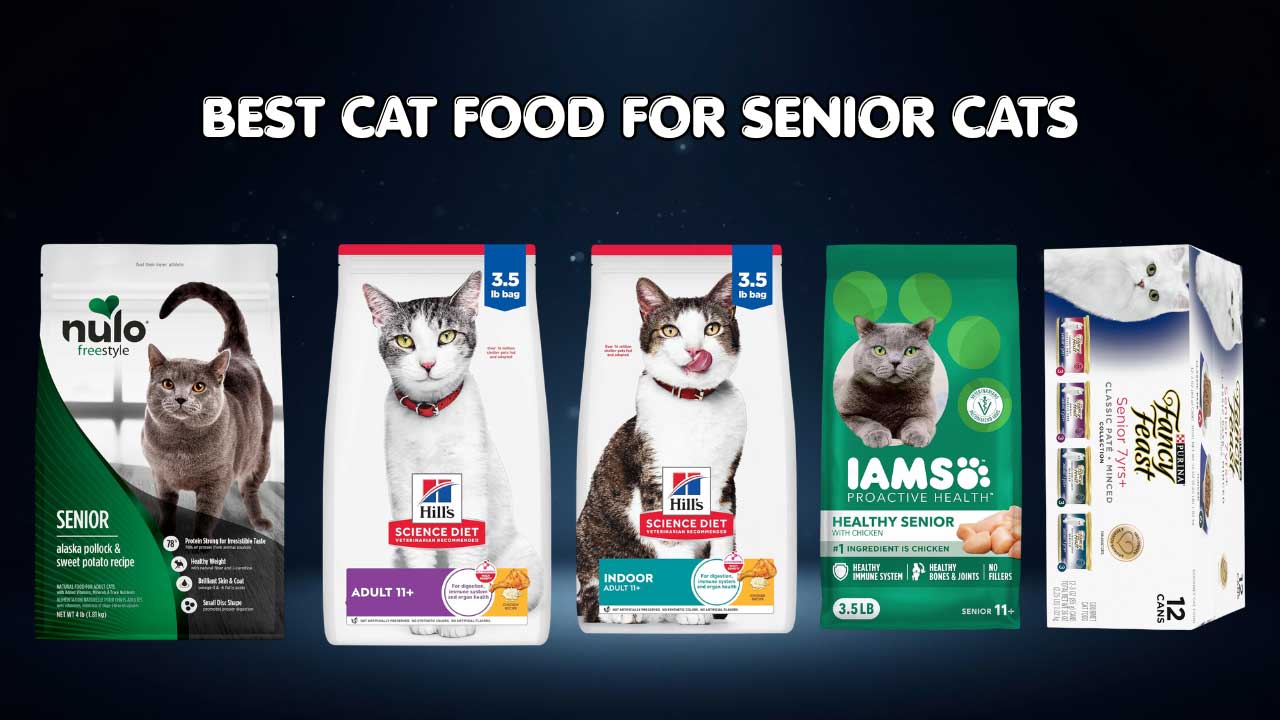
This guide compares five real senior formulas across dry and wet formats, spanning cats aged 7 and up. Here’s a quick look at our top picks before we break each one down:
- Hill’s Science Diet Senior 11+ Dry Cat Food, Chicken
- Hill’s Science Diet Senior 11+ Indoor Dry Cat Food, Chicken
- IAMS Proactive Health Healthy Senior Dry Cat Food, Chicken
- Purina Fancy Feast Senior 7+ Wet Cat Food Variety Pack, 24-Pack
- Nulo FreeStyle Senior Dry Cat Food, Alaska Pollock & Sweet Potato, 4 lb
Quick Verdict
Nulo FreeStyle Senior takes the top spot for protein quality, with 78% of its protein coming from animal sources and L-carnitine included for fat metabolism. Hill’s Science Diet Senior 11+ is the most widely trusted overall pick, backed by decades of veterinary research. The Indoor version adds hairball and litter-odor control for lower-activity cats. IAMS Healthy Senior includes glucosamine and chondroitin for joint support at a lower price. Fancy Feast Senior 7+ rounds things out as the highest-moisture option for cats who need extra hydration or have lost interest in dry kibble.
Why Trust This Guide
We compared these formulas specifically on what changes for aging cats: protein quality and digestibility, joint-support ingredients, moisture content, and palatability for reduced appetite. We checked each formula’s actual ingredient panel and guaranteed analysis against the manufacturer’s own published data. We’re not veterinarians, and any sudden change in a senior cat’s appetite or weight deserves a vet visit, since it can signal an underlying condition rather than normal aging.
At a Glance
- 20+ hours spent comparing senior-specific formulas and their actual nutrient profiles
- 3 brands compared across dry and wet formats
- 5 features evaluated: protein source and quality, joint support, moisture content, digestibility, and age range
- 5 top picks spanning cats aged 7 through the most senior years
Quick Comparison Table–Best Cat Food for Senior Cats: Top Picks Compared
Short on time? Here’s a quick side-by-side of our top picks before you dive into the full breakdowns below.
| Rank & Product | Protein & Type | Special Support | Format | Best For |
| #1 Nulo FreeStyle Senior | Pollock, 78% animal-based | L-carnitine, probiotics | Dry | Highest protein quality |
| #2 Hill’s Senior 11+ | Chicken, everyday | Taurine, cognitive support | Dry | Most widely trusted |
| #3 Hill’s Senior 11+ Indoor | Chicken, everyday | Hairball, litter odor control | Dry | Lower-activity indoor cats |
| #4 IAMS Healthy Senior | Chicken, everyday | Glucosamine, chondroitin | Dry | Joint support on a budget |
| #5 Fancy Feast Senior 7+ | Chicken/beef/tuna, wet | High moisture, 4 flavors | Wet | Hydration and picky eaters |
Top 5 Best Cat Foods for Senior Cats, Reviewed
Affiliate Disclosure: As an Amazon Associate Pet Choice Center may earn a commission from qualifying purchases. If you purchase through our links, we may earn a small commission at no extra cost to you. We only recommend products we genuinely stand behind.
#1 Nulo Free Style Senior, Alaska Pollock & Sweet Potato: Highest Protein Quality
Overview: Real Alaska pollock first ingredient | 78% of protein from animal sources | grain-free, low glycemic recipe | 4 lb bag
Why We Recommend It: Aging cats lose muscle mass more easily than younger cats, and Nulo addresses that directly with a top-four ingredient list that’s entirely animal protein, plus L-carnitine to support healthy fat metabolism alongside it.
Nulo Free Style Senior
Highest Protein Quality

Key Features: 78% of protein comes from animal sources | L-carnitine and natural fiber support fat metabolism and weight | GanedenBC30 probiotic survives cooking for guaranteed digestive support | omega-3 and omega-6 fatty acids plus taurine for heart and vision health
Pros: Highest verified animal-protein percentage in this comparison | grain-free recipe with no white potatoes or tapioca fillers | small, disc-shaped kibble designed for easier chewing | probiotic strain specifically chosen to survive the cooking process
Cons: Pricier than everyday senior formulas | smaller bag size means more frequent reordering
Best For: Owners who want to prioritize muscle preservation with the highest protein quality available
Bottom Line: The strongest pick here for a senior cat that needs real, verified protein density to maintain muscle.
#2 Hill’s Science Diet Senior 11+, Chicken: Most Widely Trusted
Overview: Chicken-based formula for cats 11 and older | supports agility and alertness | taurine for heart health | 7 lb bag, larger sizes available
Why We Recommend It: This formula is backed by the broadest veterinary trust of any senior brand, and it specifically targets cognitive alertness and mobility alongside the standard nutrients most senior formulas offer.
Hill’s Science Diet Senior
Most Widely Trusted

Key Features: Special ingredient blend supports agility and alertness in older cats | taurine supports heart health, balanced minerals support kidney and bladder health | vitamin E, omega-3s, and omega-6s for skin and coat | natural fibers ease digestion for sensitive senior stomachs
Pros: Most widely recommended and trusted senior brand among veterinarians | targets cognitive alertness specifically, not just general nutrition | supports kidney and bladder health with balanced minerals | consistent, well-established formula
Cons: Contains corn protein meal and wheat gluten, not grain-free | doesn’t include glucosamine or chondroitin for joint support directly
Best For: Owners who want the most established, veterinarian-trusted senior formula available
Bottom Line: The safest default pick if you want broad trust and cognitive support in one bag.
#3 Hill’s Science Diet Senior 11+ Indoor, Chicken: Best for Lower-Activity Indoor Cats
Overview: Same senior nutrition base as standard k/d, tailored for indoor lifestyle | natural fiber for easy litter box cleanup | helps avoid hairballs within 30 days | 7 lb bag
Why We Recommend It: Senior cats who spend all their time indoors often deal with hairballs and reduced activity, and this formula addresses both while still supporting eye, heart, kidney, and joint health for aging cats specifically.
Diet Senior 11+
Lower-Activity Indoor

Key Features: Natural fiber supports digestive health and easier litter box cleanup | helps reduce hairballs within 30 days of feeding | optimal nutrient levels support eye, heart, kidney, and joint health | tailored specifically to indoor lifestyle energy needs
Pros: Addresses hairballs directly, a common complaint with senior indoor cats | supports joint health alongside standard senior nutrients | same trusted Hill’s research behind the standard senior formula | tailored calorie level for lower indoor activity
Cons: Contains corn gluten meal and wheat gluten, not grain-free | pricier than the standard non-indoor version in some retailers
Best For: Indoor senior cats dealing with hairballs or needing calorie adjustment for lower activity
Bottom Line: The right choice if your senior cat’s indoor lifestyle is creating specific, solvable problems.
#4 IAMS Proactive Health Healthy Senior, Chicken: Joint Support on a Budget
Overview: Real chicken first ingredient | contains glucosamine and chondroitin from chicken by-product meal | L-carnitine for weight management | 7 lb bag, larger sizes available
Why We Recommend It: This is the only formula in our comparison that includes glucosamine and chondroitin specifically, ingredients commonly used to support joint health, at a more accessible price than premium competitors.
IAMS Proactive
Joint Support on a Budget

Key Features: Glucosamine and chondroitin support joint health | L-carnitine helps maintain a healthy weight | vitamin E and antioxidants support an aging immune system | crunchy kibble texture helps reduce plaque buildup
Pros: Includes glucosamine and chondroitin at the most accessible price point here | 2x the antioxidants of IAMS’s standard adult formula | widely available at most retailers | veterinarian-recommended, well-established formula
Cons: Contains chicken by-product meal and corn grits, which some owners prefer to avoid | not grain-free
Best For: Budget-conscious owners who still want targeted joint-support ingredients
Bottom Line: The most accessible way to get real joint-support ingredients without premium pricing.
#5 Purina Fancy Feast Senior 7+ Wet Variety Pack: Best for Hydration and Picky Eaters
Overview: Four flavors, chicken and beef pate plus chicken and tuna in gravy | 78 to 79% moisture content | complete nutrition for cats 7 and older | 3 oz cans, 24-pack
Why We Recommend It: Senior cats sometimes drink less water and lose interest in dry kibble as their sense of smell changes, and this variety pack solves both problems at once with high moisture and four rotating flavors to keep meals interesting.
Senior 7+ Wet Variety
Best for Hydration

Key Features: Four distinct flavors across pate and minced-in-gravy textures | 78 to 79% moisture content supports hydration | taurine for vision, vitamin E for coat health | convenient pull-tab cans for easy feeding
Pros: High moisture content directly supports hydration in senior cats | flavor rotation helps cats who’ve lost interest in the same meal daily | trusted, well-established Fancy Feast formula | convenient can size for portion control
Cons: Lower protein percentage than premium dry formulas, typical for wet food | smaller cans mean more frequent purchases for larger or multiple cats
Best For: Senior cats needing more moisture, or those who’ve become picky about dry kibble
Bottom Line: The easiest way to add hydration and flavor variety to an aging cat’s diet.
Pros & Cons Comparison Table
| Product | Top Pro | Top Con |
| #1 Nulo FreeStyle Senior | 78% animal-based protein | Pricier, smaller bag size |
| #2 Hill’s Senior 11+ | Most widely trusted, supports cognition | No glucosamine or chondroitin |
| #3 Hill’s Senior 11+ Indoor | Addresses hairballs and joint health | Not grain-free |
| #4 IAMS Healthy Senior | Glucosamine and chondroitin at low cost | Contains by-product meal and corn |
| #5 Fancy Feast Senior 7+ | High moisture, four rotating flavors | Lower protein than premium dry options |
Who Should Buy Which Product?
Go with #1 Nulo FreeStyle Senior if muscle preservation and protein quality are your top priority. Choose #2 Hill’s Senior 11+ if you want the most established, broadly trusted option. Pick #3 Hill’s Senior 11+ Indoor if your cat deals with hairballs or has a lower-activity indoor lifestyle. Go with #4 IAMS Healthy Senior if joint support matters but budget is a real factor. Choose #5 Fancy Feast Senior 7+ if hydration or a picky appetite is your biggest concern.
How to Choose the Best Cat Food for Senior Cats
Most owners start searching for the best cat food for senior cats after noticing something subtle: a cat that’s a little stiffer getting onto the couch, eating less at each meal, or drinking more water than usual. What “not working” looks like day-to-day is weight loss that creeps up slowly, or a coat that’s lost its shine. Many owners don’t realize these changes are worth addressing through diet until a vet visit connects the dots, since aging happens gradually enough to miss in daily life.
The mistakes that come up most often involve assuming any “senior” label means the same thing, or waiting too long to make dietary adjustments because the cat “still seems fine.” This matters because muscle loss in aging cats happens faster than most owners expect, and catching it early through adequate protein intake makes a real difference. Multi-cat households face an added complication, since a senior cat’s needs often diverge sharply from a younger housemate’s, which can mean separate feeding times or locations.
What Actually Changes Nutritionally as Cats Age
Aging cats generally need more digestible, high-quality protein to counteract natural muscle loss, not less, despite older advice suggesting seniors need reduced protein. Joint-support ingredients like glucosamine and chondroitin can ease stiffness, and higher moisture content through wet food helps offset a senior cat’s tendency to drink less water. Compared to a standard adult formula, senior-specific diets typically adjust calorie density for lower activity levels while increasing support for joints, kidneys, and cognitive function. One thing worth knowing: any sudden, unexplained weight loss in a senior cat deserves a vet visit before you troubleshoot with food alone, since it can signal thyroid, kidney, or other conditions common in older cats.
This guide is for owners of cats entering their senior years, multi-cat households managing different life stages, and anyone who’s noticed subtle changes worth addressing through diet. By the end of this section, you’ll know exactly which best cat food for senior cats option fits your cat’s specific needs.
Common Buying Mistakes to Avoid
- Assuming senior cats need less protein. Older advice suggested reducing protein with age, but current thinking favors adequate, highly digestible protein to counteract natural muscle loss.
- Switching foods only after weight loss becomes obvious. Subtle changes are easier to address early than after significant muscle or weight loss has already occurred.
- Ignoring hydration needs. Senior cats often drink less water, so incorporating wet food or ensuring easy water access matters more with age.
- Skipping the vet for sudden appetite or weight changes. These can signal an underlying condition, like kidney disease or hyperthyroidism, rather than normal aging alone.
Practical Tips for Using Senior Cat Food Effectively
- Transition gradually over 7 to 10 days. Senior digestive systems can be more sensitive to sudden food changes than younger cats.
- Incorporate wet food if your cat drinks less water than it used to. Added moisture supports hydration without requiring behavior change from the cat.
- Watch weight and appetite monthly, not just at annual checkups. Catching subtle changes early makes intervention easier and more effective.
- Consider joint-support ingredients if you notice stiffness or reduced jumping. Glucosamine and chondroitin, found in formulas like IAMS Healthy Senior, can ease age-related joint discomfort.
Our Review Process
We evaluated every product on this list against the same criteria:
- Protein source, quality, and digestibility for aging cats
- Presence of joint-support ingredients like glucosamine and chondroitin
- Moisture content and hydration support
- Real-world palatability based on verified owner feedback
- Suitability across different senior age ranges and activity levels
We don’t make medical claims about any product, and every figure in this guide came from verified manufacturer data. Sudden changes in a senior cat’s weight, appetite, or behavior deserve veterinary attention, since they can indicate an underlying condition rather than normal aging.
If your senior cat is also managing kidney concerns, our best cat food for kidney disease guide covers therapeutic renal formulas in depth. If weight management is also a factor, our best cat food for weight loss guide compares formulas built around healthy weight. For a broader look at cat nutrition, our best cat food guide covers general options across all life stages.
Final Recommendation
If you only take one thing from this guide: aging cats need adequate, high-quality protein, not less of it, along with attention to joints and hydration. Nulo FreeStyle Senior delivers the highest verified protein quality in this comparison. Hill’s Senior 11+ remains the most broadly trusted option if you want established veterinary backing. If your cat has become picky or needs more moisture, Fancy Feast Senior 7+ solves that directly.
This guide is built for anyone noticing the subtle signs of aging in their cat and wanting to address them through better nutrition. Match the pick to your cat’s specific needs, watch for changes monthly, and loop in your vet if anything shifts suddenly.
More Senior Cat Food Guides
Every older cat is different. These guides cover specific food types and health needs.
- Best Wet Food for Senior Cats for cats who need moisture or have dental trouble
- Best Canned Cat Food for Senior Cats for soft, easy-to-eat meals
- Best Dry Cat Food for Older Cats for convenient everyday feeding
- Best Food for Older Cats: Matched to Their Real Needs for choosing by your cat’s situation
- Best Cat Food for Senior Cat: Honest Picks Compared for a side-by-side look at more options
- Food for Cats with Kidney Disease: A Staging Guide for seniors with kidney problems
- Cat Food for Weight Gain for older cats who are losing weight
Frequently Asked Questions About Cat Food for Senior Cats
At what age does a cat need senior cat food? Most senior formulas target cats around age 7 and older, though some brands, like Hill’s Science Diet Senior 11+, are specifically formulated for cats 11 and up, so checking the exact age range on the label matters.
Do senior cats need less protein than younger cats? Not necessarily. Current veterinary thinking favors adequate, highly digestible protein for senior cats to help counteract natural age-related muscle loss, rather than reducing protein as cats get older.
Why is my senior cat eating less than usual? Reduced appetite can result from normal aging, dental discomfort, or an underlying condition like kidney disease, so a noticeable or sudden drop in appetite is worth discussing with your vet rather than assuming it’s simply age.
Should I switch my senior cat to wet food? Many owners incorporate more wet food as cats age, since it supports hydration and can be more appealing to a cat with a diminished sense of smell, though a combination of wet and dry works well for many senior cats.
What ingredients help with joint stiffness in senior cats? Glucosamine and chondroitin, found in formulas like IAMS Healthy Senior, are commonly included to support joint health, though a cat showing significant mobility issues should also be evaluated by a vet.