

How to Choose the Right Cat Litter
Introduction:
If you’ve ever stood in the litter aisle staring at twenty different bags wondering why one costs $8 and another costs $30, you’re not alone. Most guides just tell you to “pick a clumping litter” and call it a day. That’s not enough. The right litter depends on your cat’s paws, your nose, your budget, and honestly, a bit of trial and error. This guide skips the fluff and walks through what actually matters when picking one.
Quick Comparison: Which Cat Litter Is Right for You?
| If You Need… | Recommended Litter Type | Why It Works |
|---|---|---|
| Best Overall | Clumping Clay | Excellent odor control, easy scooping, and suitable for most cats. |
| Best for Kittens | Paper or Non-Clumping | Soft on sensitive paws and safer if accidentally ingested. |
| Best for Senior Cats | Paper or Soft Natural Litter | Gentle texture makes digging easier for older cats with joint issues. |
| Best for Multi-Cat Homes | Clumping Clay or Crystal | Strong odor control and long-lasting performance in high-use litter boxes. |
| Best for Odor Control | Crystal or Clumping Clay | Absorbs moisture quickly and helps keep unpleasant smells under control. |
| Best Low-Dust Option | Paper or Crystal | Ideal for cats and owners with allergies or respiratory sensitivities. |
| Best Eco-Friendly Choice | Pine, Tofu, Corn, or Wheat | Biodegradable materials with a lower environmental impact than clay. |
| Best Budget-Friendly Option | Clay or Non-Clumping | Affordable and widely available in most stores. |
| Best for Long-Haired Cats | Pine Pellets or Paper | Larger particles reduce tracking and are less likely to stick to fur. |
| Best for Automatic Litter Boxes | Clumping Clay (manufacturer-approved) | Forms firm clumps that work well with most self-cleaning litter boxes. |
Why choosing the right litter matters
A bad litter choice isn’t just annoying, it’s one of the top reasons cats stop using the box altogether. Cats are picky about texture underfoot, and if the litter feels wrong (too rough, too dusty, too loose), some cats will just start going next to the box instead of in it. On top of that, low-quality litters track everywhere, clump poorly, or turn into a smell factory within two days. Getting it right the first time saves you money, saves your carpet, and saves your cat from developing a litter box aversion that’s genuinely hard to undo later.
Every cat has different preferences
This is the part most articles skip. Kittens usually do better with a finer, softer texture since their paws are more sensitive. Older cats or cats with arthritis often prefer something lighter that doesn’t require much digging effort. Declawed cats almost always need a soft, non-abrasive litter since anything gritty can hurt their paws. And multi-cat households usually need a litter with strong odor control and clumping power, because one litter box working overtime for three cats gets overwhelmed fast. If your cat has started avoiding the box, texture is often the first thing worth testing before you assume it’s behavioral.
Not all litters are the same
Clay-based clumping litter is the most common because it clumps tight and controls odor well, but it’s dusty and heavy. Silica gel litter absorbs moisture instead of clumping, lasts longer, but some cats dislike the texture and it’s pricier. Natural litters pine, corn, wheat, walnut are lower dust and often better for cats with respiratory sensitivity or asthma, but they don’t always clump as hard, and cats used to clay sometimes reject the switch at first. Paper-based litter is soft and low-tracking, which makes it a common pick after surgery or declawing, but it’s weaker on odor control. None of these is objectively “the best” ; they’re trade-offs, and the right one depends on your specific cat and situation.
This guide helps readers choose based on their cat and lifestyle
Instead of naming one “winner,” the rest of this post breaks litter choice down by real situations: kittens, multi-cat homes, sensitive-nosed owners, small apartments, cats prone to tracking litter everywhere, and budget-conscious households. That way you can jump to the section that actually matches your life instead of guessing.
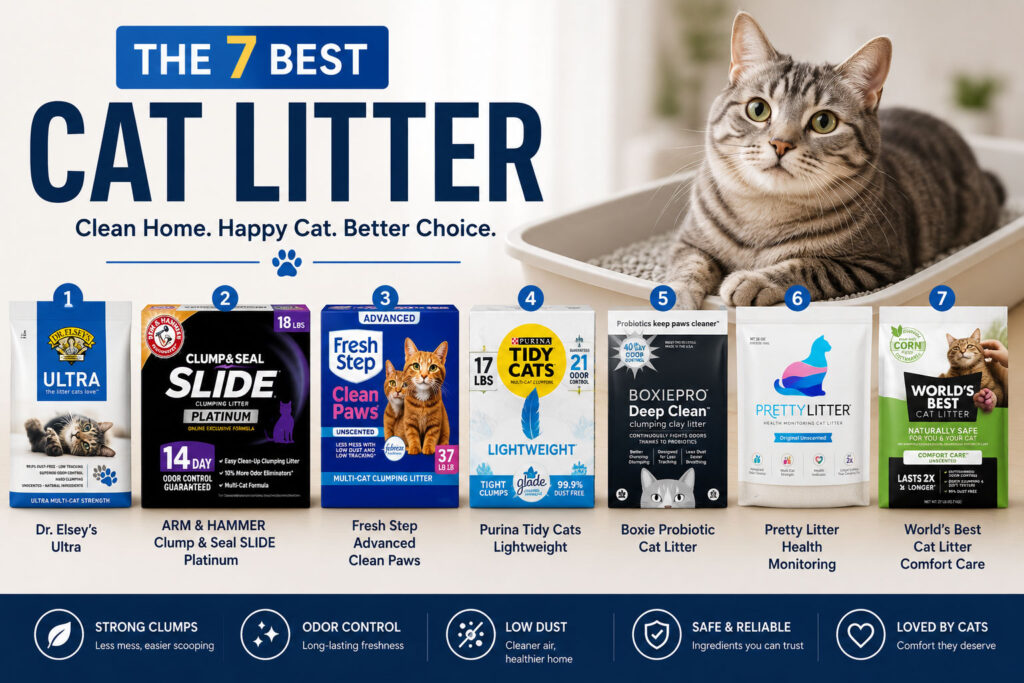
Why Choosing the Right Litter Matters
- Prevents litter box avoidance: The number 1 reason cats stop using the box is a litter they don’t like. Get this right and you skip a whole world of carpet accidents.
- Reduces odors: A litter that clumps and absorbs well means the box doesn’t smell up your apartment by day two.
- Easier cleaning: Good clumping litter scoops clean in one go instead of crumbling and leaving residue behind.
- Better hygiene: Less bacteria buildup, less mess tracked around the house, cleaner paws.
- Health monitoring: Clumping litter makes it way easier to notice changes in your cat’s pee or poop, which is often the first sign something’s off health-wise.
- More comfortable for cats: The right texture means your cat digs, covers, and uses the box normally instead of tiptoeing around it or avoiding it.
Understand the Different Types of Cat Litter
This is the section that matters most, because picking the wrong type is usually why people end up switching litters five times before finding one that sticks.
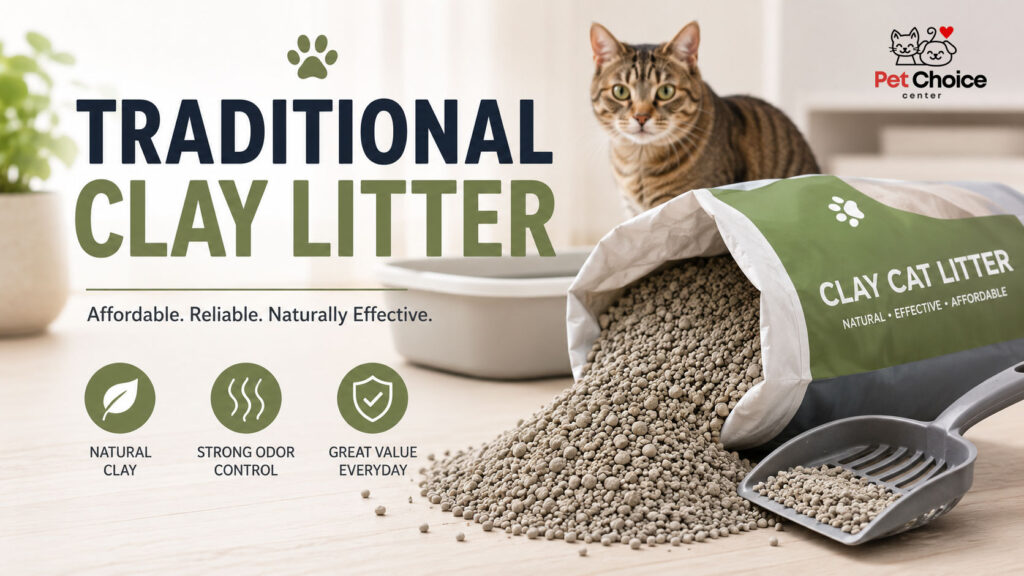
Clay Litter
Pros: Cheap, widely available, clumps decently, controls odor okay.
Cons: Heavy, dusty (bad for cats or owners with respiratory issues), not biodegradable, tracks a lot.
Best for: Budget-conscious owners who don’t mind the dust and just want something reliable from any grocery store.
Clumping Clay Litter
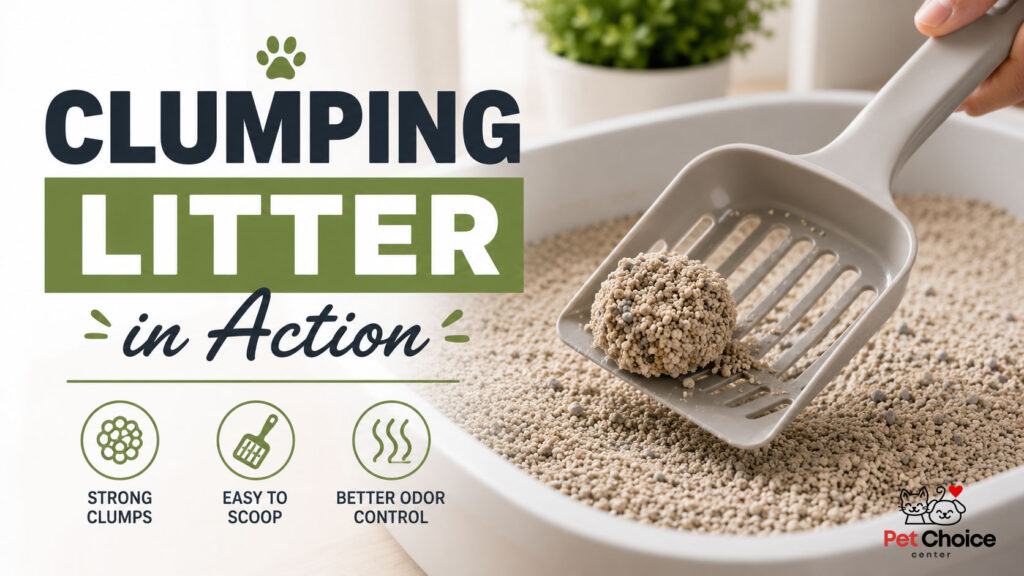
Easy scooping: Clumps form tight balls around waste, so you scoop and go instead of digging through loose litter.
Odor control: Bentonite clay (the clumping agent) absorbs moisture and locks in smell better than plain clay.
Most popular: It’s the default litter for a reason. Most cats are raised on it, so it’s usually the safest first choice.
Non-Clumping Litter
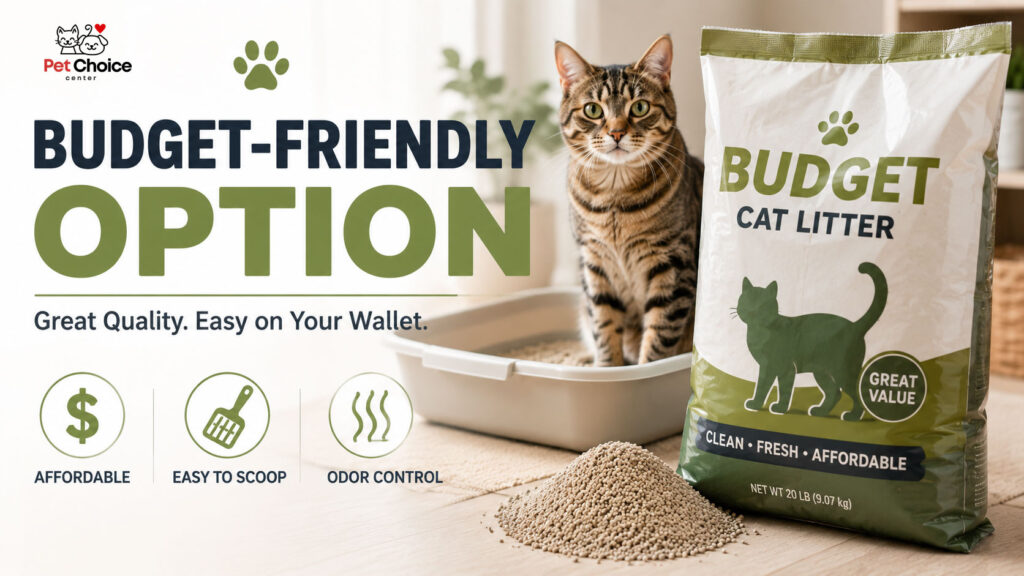
Budget option: Usually the cheapest litter on the shelf.
Absorbs moisture: Soaks up urine instead of forming clumps.
Requires complete replacement: Since it doesn’t clump, you can’t just scoop the wet parts. Expect to dump and refill the whole box every few days, which actually makes it more work long-term than it looks.
Crystal (Silica) Litter
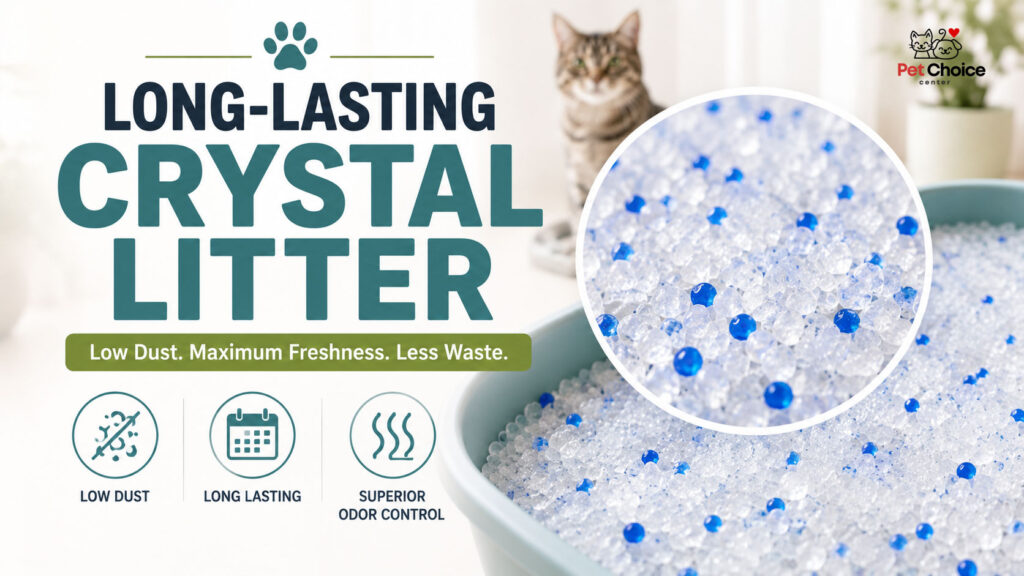
Low dust: Great option if you or your cat has allergies or asthma.
Long lasting: One bag can last 3-4 weeks in a single-cat home since it absorbs instead of clumping.
Expensive: Costs noticeably more upfront, though the “lasts longer” part offsets some of that. Some cats also dislike the sharp texture underfoot.
Pine Litter
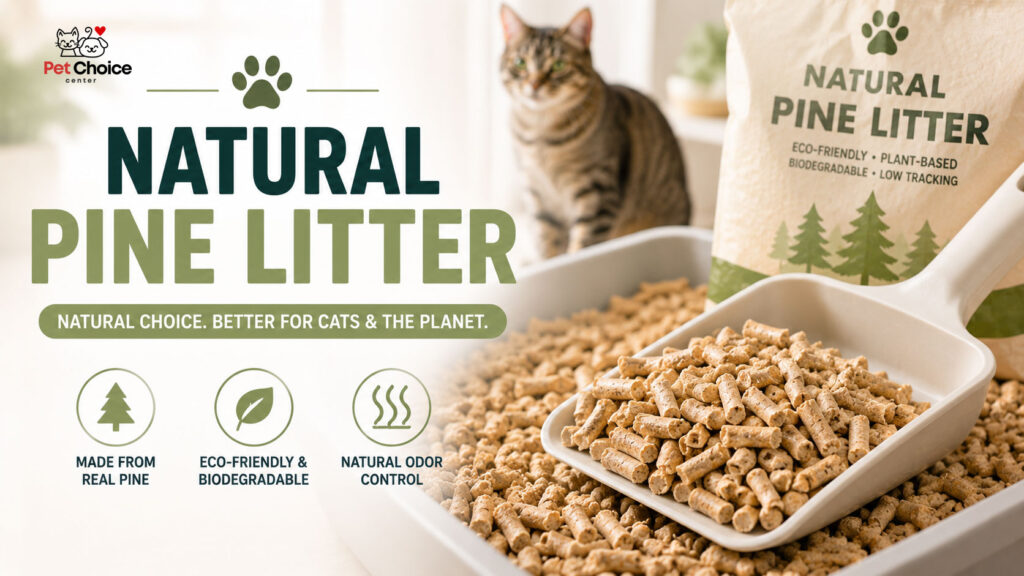
Natural: Made from compressed pine pellets, no synthetic additives.
Eco-friendly: Biodegradable and often made from reclaimed sawdust.
Wood scent: Naturally masks odor without added fragrance, though some cats are put off by the smell at first.
Paper Litter
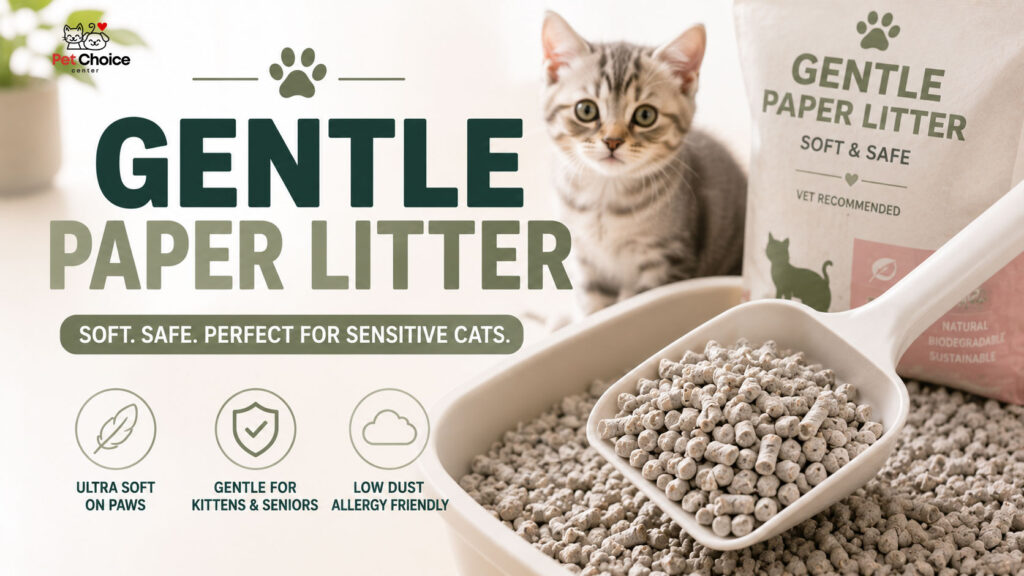
Great after surgery: Vets often recommend it after declawing or spaying since it’s soft and doesn’t get into wounds.
Soft on paws: No sharp edges or dust, gentle for sensitive or older cats.
Dust-free: One of the best options for homes with breathing issues, human or feline.
Corn Litter
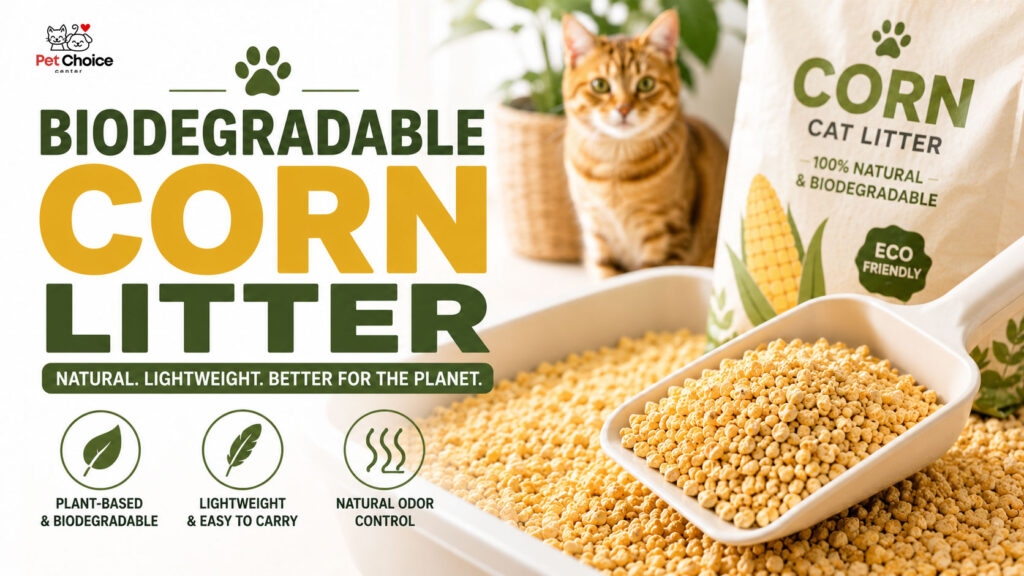
Biodegradable: Breaks down naturally, safe to compost in many cases.
Lightweight: Much easier to carry and pour than clay, which matters more than people expect once you’re hauling bags regularly.
Wheat Litter
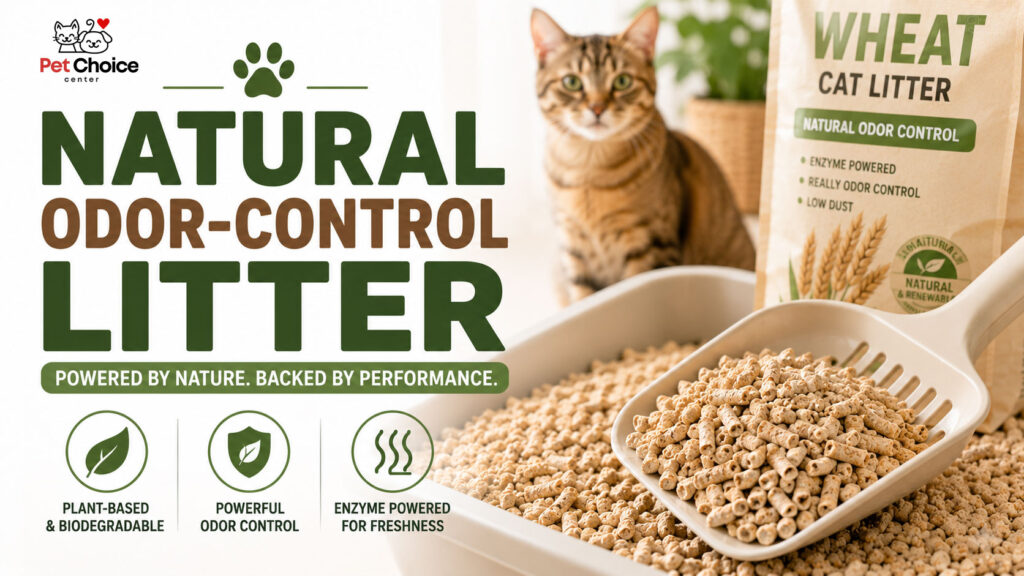
Natural: Uses enzymes in the wheat to neutralize odor instead of masking it with scent.
Good odor control: Performs closer to clumping clay than most natural litters do.
Walnut Litter
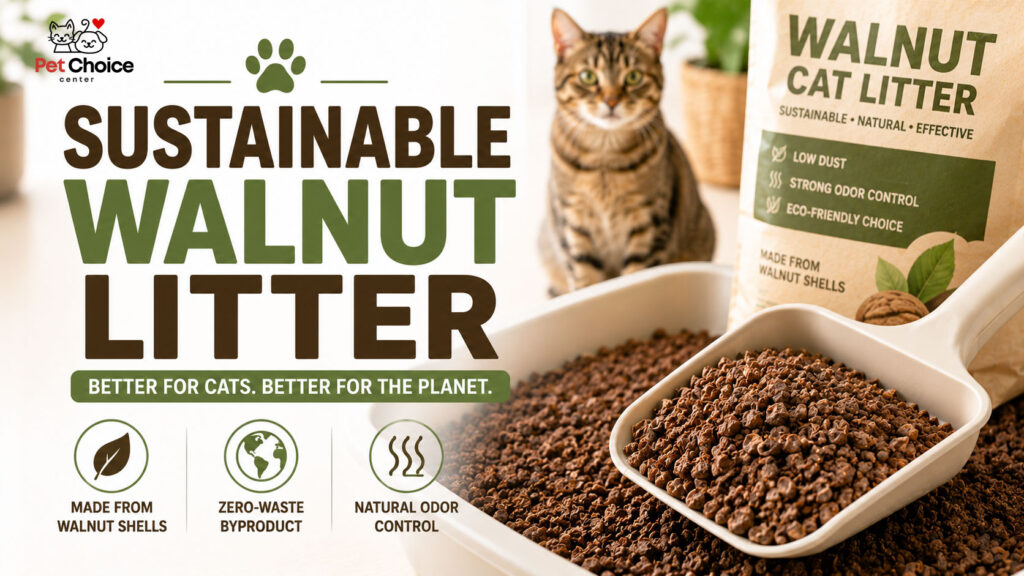
Sustainable: Made from crushed walnut shells, a byproduct that would otherwise go to waste.
Low dust: Dark in color though, which makes it harder to spot waste at a glance compared to lighter litters.
Tofu Litter
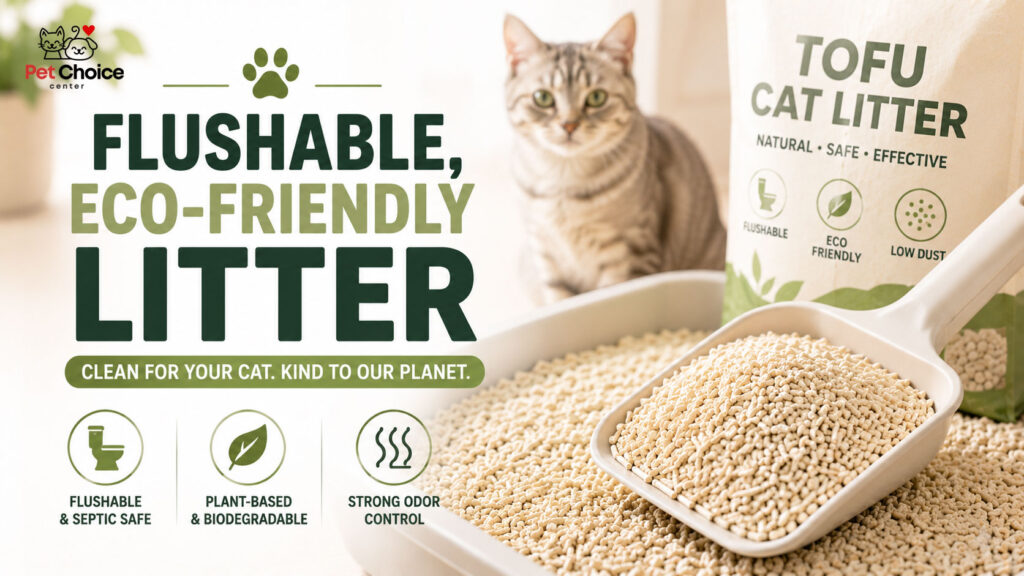
Flushable (where permitted): Made from soybean pulp, breaks down in water, though always check your local plumbing guidelines first.
Fast clumping: Clumps quickly and holds together well even when wet.
Eco-friendly: Compostable and biodegradable, popular pick for owners trying to go greener.
Match the Litter to Your Cat
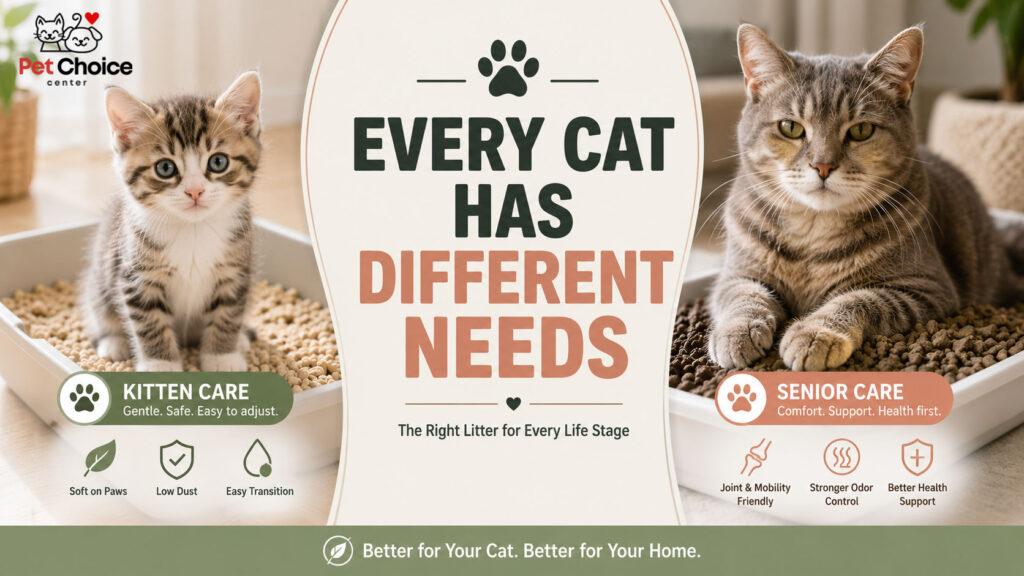
Kittens:
Low dust: Kittens are curious and often sniff or paw at litter up close, so airborne dust is more likely to irritate their tiny lungs.
Unscented: Their sense of smell is still developing, and strong fragrances can actually push them away from the box entirely.
Non-toxic: Kittens explore with their mouths, and some will nibble litter out of curiosity. Clumping clay can be a choking or blockage risk if swallowed, so paper or non-clumping options are safer until they’re a bit older.
Adult Cats:
Most litter types work well here. This is really the “figure out what your specific cat likes” stage, since a healthy adult cat with no sensitivities can usually adjust to clay, crystal, or natural litters without issue.
Senior Cats:
Soft texture: Older paws are more sensitive, and arthritis can make anything rough or sharp uncomfortable to stand on.
Low tracking: Senior cats sometimes have less precise movements getting in and out of the box, so less mess ends up outside it.
Easy digging: Litters that are lightweight and loose require less paw effort, which matters if your cat has joint stiffness.
Long-Haired Cats:
Low tracking: Litter that clings to paw fur less means less getting dragged through the house and less that ends up matted into their coat.
Minimal sticking: Some litters, especially clumping clay, can stick to longer fur around the hindquarters. A litter that doesn’t cling as easily saves you from extra grooming.
Multiple Cats:
Need:
Strong odor control: More cats means more waste in the same box, so odor builds up faster without a litter built to handle it.
Fast clumping: Quick, tight clumps make it easier to scoop often, which you’ll need to do more frequently in a multi-cat home.
Larger litter box: Not litter-related directly, but worth mentioning here: the general rule is one box per cat plus one extra, and a bigger box holds more litter depth for better clumping and odor control.
Sensitive Cats:
Recommend:
Fragrance-free: Added scents can actually cause more litter box avoidance in sensitive cats than they solve in odor control.
Dust-free: Cats with asthma or respiratory sensitivity react badly to dusty clay litters, so paper or crystal options are usually gentler.
Hypoallergenic: Natural litters like pine, wheat, or paper reduce the risk of skin or paw irritation for cats prone to allergies.
Factors to Consider Before Buying
Odor Control:
Odor control comes down to how the material interacts with ammonia (the main smell in cat urine). Clumping clay uses bentonite, which swells around moisture and traps odor inside the clump. Crystal litter absorbs liquid into its structure and dries it out, which slows down bacterial growth (the actual source of smell). Natural litters like wheat or corn often rely on enzymes that neutralize odor at a chemical level instead of masking it. Paper litter is the weakest here since it mainly just absorbs; it doesn’t neutralize much, so odor builds up faster without frequent changes.
Dust Level:
Low-dust litter matters more than people realize:
Cats: Cats bury their face in litter multiple times a day, and dusty litter (especially clay) can trigger sneezing or worsen asthma over time.
Humans: Pouring and scooping dusty litter kicks particles into the air you’re breathing right next to the box.
Air quality: In smaller apartments especially, dust settles on floors and surfaces around the box, which adds up if you’re not deep-cleaning weekly.
Tracking:
Tracking happens when litter granules stick to a cat’s paws and get carried out with every step. Smaller, lighter granules (like fine clay or crystal) track more because they cling to paw pads easily. Larger pellet-style litters like pine or paper track less since the pieces are bigger and fall off more easily at the box’s edge. A litter mat helps regardless, but the litter type itself is usually the bigger factor.
Clumping Ability:
This affects how much daily work the box takes. Strong clumping litter forms a solid, scoopable ball that lifts out clean, leaving the rest of the litter dry and reusable. Weak or non-clumping litter means waste spreads and soaks into the surrounding litter, so you end up replacing more of the box more often instead of just scooping the affected spot.
Scented vs Unscented:
Can mask odor between full litter changes, useful in small apartments. Many cats are sensitive to added fragrance and will avoid the box entirely if the smell is too strong, which defeats the purpose.
Unscented pros: Safer bet for most cats, especially multi-cat homes or cats with any history of pickiness.
Unscented cons: Relies entirely on the litter’s natural odor control, so a weak unscented litter can smell worse than a scented one.
Absorbency:
Absorbency is really the foundation everything else builds on. A litter that absorbs moisture well controls odor better, clumps tighter, and keeps the box drier, which matters for paw hygiene and bacteria growth. Low-absorbency litters end up soggy at the bottom of the box, which is where most of the smell and mess actually comes from.
Eco-Friendliness:
Biodegradable litters like corn, wheat, pine, walnut, and tofu break down naturally and are generally compostable outside the litter box use (never compost used litter for food gardens due to pathogen risk). Traditional clay litter isn’t biodegradable and is strip-mined, which is worth knowing if sustainability is a priority for you.
Price:
- Budget: Traditional clay and non-clumping litters, usually the cheapest per pound but need replacing more often.
- Mid-range: Clumping clay and most natural litters (pine, wheat, corn) land here, balancing cost with performance.
- Premium: Crystal litter and tofu litter tend to cost more upfront, though crystal’s longer lifespan can even out the cost per month.
Weight:
Heavier litters (clay, crystal) mean better clumping and density but are harder to carry and pour, especially in bulk bags. Lightweight litters (pine, paper, corn, walnut) are much easier to handle, which matters if you’re managing multiple boxes or have mobility limitations.
Disposal Method:
- Trash: The standard method for clay, crystal, and most clumping litters. None of these belong in compost or plumbing.
- Compost (where appropriate): Some natural litters like pine or wheat can be composted, but only for non-food-related use since cat waste can carry pathogens.
- Flushable products (only if manufacturer and local regulations allow): Tofu and some paper litters are marketed as flushable, but always check both the packaging and your local sewage system guidelines first, since some municipalities and septic systems can’t handle it.
How Much Cat Litter Do You Need?
Recommended Litter Depth
Most cats do best with 2 to 3 inches of litter in the box. Less than that and clumps won’t fully form since there’s not enough material for urine to absorb into, so you end up with wet spots and stuff sticks to the bottom of the box. Too much litter is wasteful and some cats over dig or kick more of it out. Crystal litter is the exception here, since it works with a shallower layer (usually around 1 to 1.5 inches) since the crystals themselves absorb rather than clump.
Refill Frequency:
Clumping litter: Scoop daily, and top off with a bit of fresh litter every few days to maintain that 2 to 3 inch depth. A full dump and clean is usually needed every 2 to 4 weeks depending on how many cats use the box.
Non-clumping litter: Since it doesn’t clump, expect a full replacement every 3 to 7 days, otherwise odor builds up fast.
Crystal litter: Scoop solid waste daily, but the crystals themselves typically last 3 to 4 weeks in a single-cat home before a full change is needed.
Monthly Usage Estimates:
For a single cat with one box, expect to go through roughly 10 to 15 pounds of clumping clay litter per month with regular scooping and topping off. Multi-cat households scale up fast. Two cats sharing well-maintained boxes usually means 20 to 30 pounds a month, and it climbs from there depending on how many boxes you’re running. Crystal litter usage looks different since you’re buying less often but each bag lasts longer, so a single cat might only need one bag every 3 to 4 weeks rather than a weekly top-off.
Signs Your Cat Doesn’t Like the Litter
Refusing the litter box:
This is the clearest sign. If your cat suddenly avoids the box entirely, even when it’s clean, texture or smell is often the culprit, especially if the avoidance started right after you switched litters. Cats associate discomfort with the box itself, so once they decide it’s unpleasant, they’ll actively look for alternatives.
Scratching outside the box:
Some cats will paw or scratch at the floor right next to the box instead of inside it. This usually means they don’t want their paws touching the litter for longer than necessary, which points to a texture issue: too rough, too sharp, or too different from what they’re used to.
Accidents:
Sudden accidents outside the box, especially in a cat with a previously solid litter box history, are one of the biggest red flags that something about the litter changed and isn’t working. It’s worth ruling out a medical issue first (a vet visit is always the safer call), but a litter switch happening around the same time is a strong clue.
Excessive digging:
A little digging is completely normal. But if your cat is digging far more than usual, seemingly trying to bury waste as fast as possible or cover it excessively, it can mean they’re uncomfortable with the smell and want it gone from sight and scent as quickly as possible.
Sneezing (dust sensitivity):
Frequent sneezing right after using the box, or noticeable dust clouds when they dig, points to a dust problem. This is common with cheaper clay litters and is worth switching away from immediately, since ongoing dust exposure can aggravate feline asthma over time.
Common Mistakes When Choosing Cat Litter
Buying only based on price:
Going for the cheapest bag every time can actually cost more in the long run. Low-quality litter often means weaker clumping, more frequent full replacements, and worse odor control, so you end up buying more of it, more often, just to keep the box usable.
Switching brands too quickly:
Cats need time to adjust to a new litter, usually a week or two of gradual mixing with the old one. Switching cold turkey, or bailing on a new litter after just a day or two because your cat seems hesitant, often means you never actually give them a fair chance to adjust.
Ignoring dust levels:
Dust is easy to overlook because you don’t always notice it until it’s already a problem: sneezing, watery eyes, or a fine layer of dust on nearby surfaces. By the time it’s obvious, your cat may have already been breathing it in for weeks.
Choosing strong fragrances:
Scented litter is marketed to appeal to human noses, not feline ones. What smells pleasant to you can be overwhelming to a cat’s far more sensitive sense of smell, and it’s one of the most common hidden reasons cats start avoiding the box.
Not considering age or health:
A litter that works fine for a healthy adult cat can be a poor or even risky choice for a kitten, senior cat, or a cat recovering from surgery. Sharp textures, dust, or ingestible clumping clay all carry different risks depending on your cat’s age and condition.
Using the wrong litter for automatic litter boxes:
Automatic and self-cleaning boxes are built for specific litter types, usually clumping clay or crystal, since the mechanism depends on how the litter clumps or absorbs. Using a loose or non-clumping litter in these systems can jam the mechanism or just fail to clean properly, which defeats the whole point of owning one.
How to Switch to a New Cat Litter
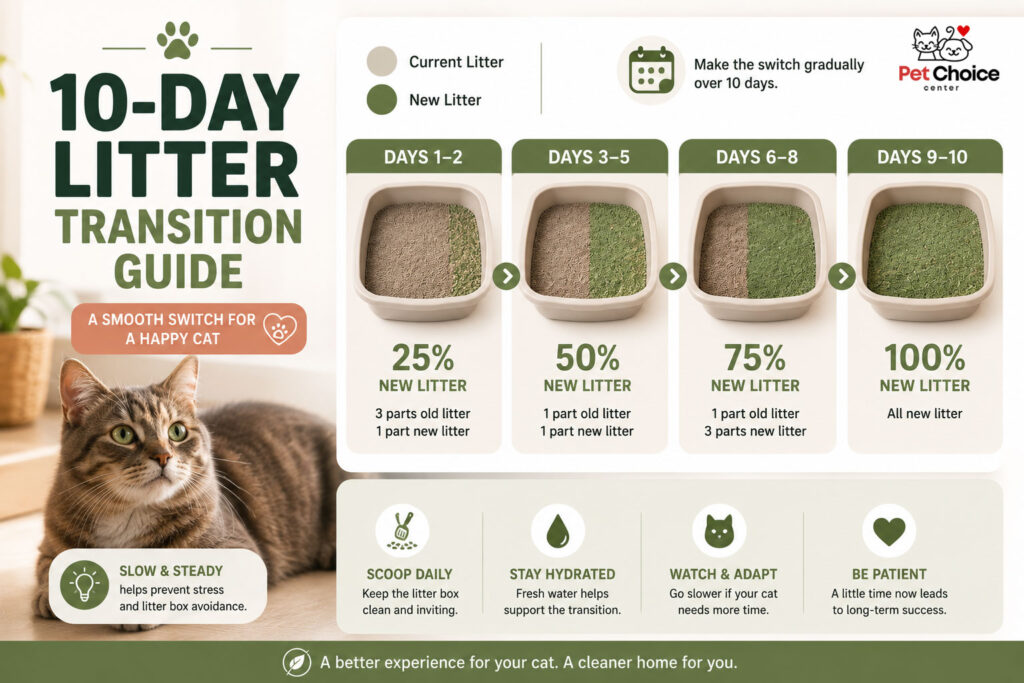
Cats are creatures of habit, and a sudden litter swap is one of the fastest ways to trigger box avoidance. A gradual transition gives your cat time to get used to the new texture and smell without associating the box with something unfamiliar or unpleasant. Here’s how to do it right:
Day 1 to 3: 25% new, 75% old
Start light. Mix a small amount of the new litter into the existing box so your cat’s paws get used to the new texture without it dominating the box. If your cat seems put off even at this ratio, slow down further before moving to the next stage.
Day 4 to 6: 50% new
Even split between old and new. By this point your cat should be walking through the new litter regularly without hesitation. Keep an eye on litter box habits during this stage, since it’s usually where you’ll notice early signs of resistance if there are going to be any.
Day 7 to 9: 75% new
The box is now mostly the new litter, with just enough of the old one left to keep the scent and texture familiar. Most cats have fully adjusted by this stage, and this ratio is really just a final buffer before the full switch.
Day 10: 100% new
Fully transitioned. At this point, keep scooping and monitoring as usual for the first week to make sure the switch stuck. If accidents or avoidance show up here, it’s usually a sign this particular litter isn’t the right fit rather than a transition issue, and it may be worth trying a different type instead.
A couple of extra tips:
- Don’t clean the box with strong-smelling cleaners during the transition; it adds another unfamiliar scent on top of the litter change.
- Keep the old litter box style and location the same during the switch. Changing too many things at once makes it harder to tell what’s actually causing any hesitation.
Frequently Asked Questions
What type of cat litter do veterinarians recommend?
Most vets recommend unscented, low-dust clumping clay or paper litter as a safe default, especially for kittens, senior cats, or cats recovering from surgery. There’s no single “vet-approved” brand, but the guidance almost always favors gentler, fragrance-free options over anything scented or heavily processed.
Is clumping litter safe?
Yes, for adult cats it’s generally safe and is actually one of the most popular choices for a reason. The main caution is with kittens, since clumping clay can pose a blockage risk if ingested in larger amounts, which is why non-clumping or paper litter is usually recommended until they’re a bit older.
Which litter controls odor the best?
Clumping clay and crystal litter tend to lead here, since clay traps moisture inside tight clumps and crystal absorbs and dries waste rather than letting it sit. Enzyme-based natural litters like wheat come close behind, since they neutralize odor at a chemical level instead of just masking it.
Is scented litter bad for cats?
It’s not inherently harmful, but it’s a common reason cats avoid the box. Cats have a much stronger sense of smell than humans, and added fragrance that seems pleasant to you can feel overwhelming to them, so unscented is usually the safer default.
How often should I replace cat litter?
For clumping litter, a full change every 2 to 4 weeks with daily scooping in between is typical. Non-clumping litter needs a full replacement every 3 to 7 days since it doesn’t isolate waste the way clumping litter does.
What is the lowest-dust cat litter?
Paper litter and crystal litter are generally the lowest-dust options, making them good picks for cats or owners with asthma or allergy sensitivities. Clay litter, especially cheaper varieties, tends to be the dustiest.
Which litter tracks the least?
Larger-granule litters like pine pellets or paper track the least, since bigger pieces don’t cling to paw fur the way fine clay or crystal granules do.
Can kittens use clumping litter?
It’s generally not recommended until kittens are around 3 to 4 months old, since younger kittens are more likely to ingest litter while exploring, and clumping clay can cause blockages if swallowed. Non-clumping or paper litter is the safer choice early on.
Is natural litter better than clay?
It depends on your priorities. Natural litters (pine, wheat, corn, walnut) are generally lower dust and more eco-friendly, but they don’t always clump as tightly as clay. Neither is objectively “better,” it’s a trade-off between environmental impact, texture, and performance.
Which litter works best for multiple cats?
Strong clumping clay or crystal litter tends to hold up best in multi-cat homes, since both handle a higher volume of waste without odor building up quickly. Pairing it with a larger box (or an extra box per cat) usually makes a bigger difference than the litter type alone.
Final Thoughts
There isn’t a single “best” cat litter out there, no matter what any one bag’s marketing claims. What works perfectly for one cat can be completely wrong for another, and that’s really the whole point of this guide.
The right choice comes down to your specific situation: your cat’s age and health, their coat length, any sensitivities they have, how much odor control your home needs, and how much time you actually want to spend on daily cleaning. A senior cat with arthritis needs something different than a kitten, and a single-cat apartment has different needs than a busy multi-cat household.
If there’s one thing to prioritize above all else, it’s your cat’s comfort. A litter that looks great on paper but that your cat refuses to use isn’t actually the right litter, no matter how many boxes it checks. And if you do decide to switch, take it slow. A gradual transition over a week or two gives your cat the best shot at accepting the change without any setbacks.
Pingback: Best Cat Litter for Automatic Litter Box: 5 Top Picks 2026
Pingback: Food for Cats with Allergies: Everyday vs Premium 2026