
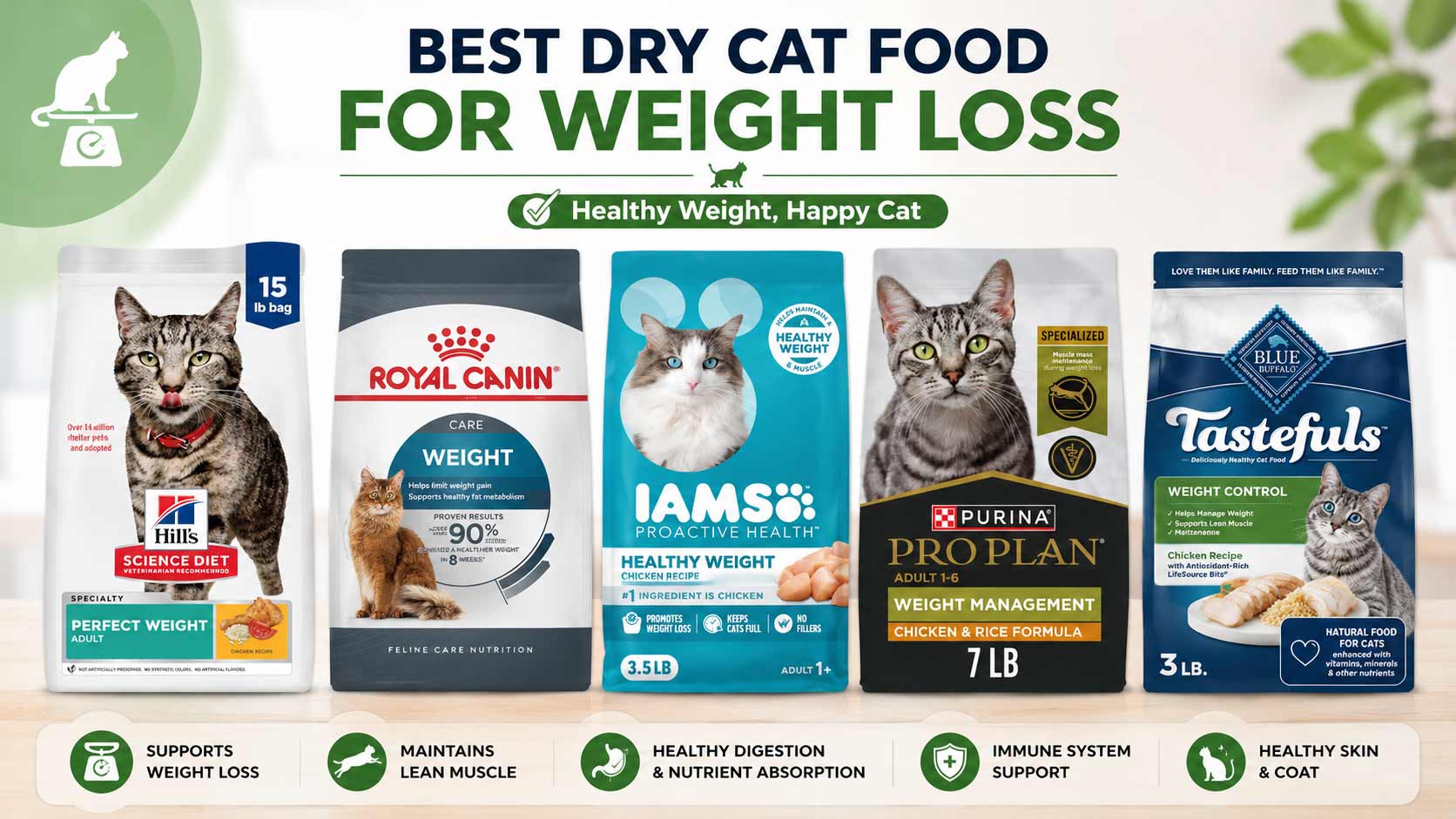

Most weight-loss cat foods just tell you what’s in the bag. A few actually tell you whether it worked. Two brands in this comparison ran their own clinical studies and published the results. That’s the kind of evidence worth paying attention to when you’re picking dry food specifically for a cat that needs to lose weight. Kibble also brings its own advantages here: it’s easy to measure precisely, it stores for months without spoiling, and it costs less per feeding than wet food, which matters if your cat needs to stay on a weight-management diet long-term.
This guide compares five real dry formulas built specifically for weight loss, all for adult cats. We checked exact calories per cup, protein and fat percentages, and whether a formula backs up its claims with actual study data. Here’s a quick look at our top picks before we break each one down:
- Royal Canin Feline Care Nutrition Weight Care Adult Dry Cat Food, 3 lb
- Hill’s Science Diet Adult Perfect Weight Dry Cat Food, Chicken, 15 lb
- IAMS Proactive Health Healthy Weight Dry Cat Food, Chicken, 3.5 lb
- Purina Pro Plan Weight Management Chicken and Rice Adult Formula
- Blue Buffalo Tastefuls Chicken Weight Control Dry Cat Food, 3 lb
Quick Verdict
Royal Canin Weight Care takes the top spot. Its internal study reported over 90% of slightly overweight cats lost weight within two months, the strongest published result in this comparison. Hill’s Perfect Weight is a close runner-up, with a published 70% success rate within 10 weeks and L-carnitine included. IAMS Healthy Weight wins on price. Purina Pro Plan delivers the highest protein percentage at 43%. Blue Buffalo Tastefuls rounds things out as the smallest, most trial-friendly bag size.
Why Trust This Guide
We looked specifically for published study results behind each formula’s weight-loss claims, not just marketing language like “supports healthy weight.” We pulled exact calorie counts per cup and guaranteed protein and fat percentages directly from each manufacturer’s own data sheet. Where a brand didn’t publish a specific figure, we noted that clearly instead of guessing. We’re not veterinarians, and any cat that’s significantly overweight should lose weight under a vet’s supervision.
At a Glance
- 20+ hours spent comparing calorie density, macronutrients, and published clinical claims
- 5 brands compared on verified guaranteed analysis data
- 5 features evaluated: calories per cup, protein percentage, fat percentage, L-carnitine inclusion, and published study results
- 5 top picks spanning budget to premium dry weight-management formulas
Our top pick: Royal Canin Weight Care
It has the strongest published result in this comparison: in the brand’s own study, over 90% of slightly overweight cats lost weight within two months. For a lower price, look at IAMS Healthy Weight. For the highest protein, look at Purina Pro Plan (43%). Calories per cup, pros and cons for all five are below.
Cat prefers wet food? Read our best wet cat food for weight loss guide.
Quick Comparison Table
Short on time? Here’s a quick side-by-side of our top picks before you dive into the full breakdowns below.
| Rank & Product | Calories Per Cup | Protein Min | Published Study Result | Best For |
| #1 Royal Canin Weight Care | 254 kcal | 34% | 90% lost weight in 2 months | Strongest published result |
| #2 Hill’s Perfect Weight | 315-319 kcal | 40%* | 70% lost weight in 10 weeks | Best overall |
| #3 IAMS Healthy Weight | Not published | Moderate | Not published | Best budget pick |
| #4 Purina Pro Plan Weight Mgmt | 353 kcal | 43% | Not published | Highest protein pick |
| #5 Blue Buffalo Tastefuls | ~89 kcal/oz | 32% | Not published | Smallest trial bag |
*Hill’s protein figure is on a dry matter basis, per the manufacturer.
Top 5 Best Dry Cat Foods for Weight Loss, Reviewed
#1 Royal Canin Feline Care Nutrition Weight Care Adult: Strongest Published Result
Overview: Chicken meal-based formula | 34% minimum protein, 8.4% minimum fat | L-carnitine at 140 mg/kg | 3 lb bag, also sold in larger sizes
Why We Recommend It: Royal Canin’s own internal study found that over 90% of slightly overweight cats lost weight within two months on this formula, the strongest published result of any product in this comparison.
Strongest Published
Royal Canin-Weight Care

Key Features: L-carnitine supports healthy fat metabolism | ideal fiber blend helps cats feel full | adapted protein content maintains lean muscle mass | 254 kilocalories per cup
Pros: Backed by the strongest published clinical result in this comparison | lowest calories per cup among the top picks | fiber blend genuinely helps with satiety, per reviewers | formulated for cats up to a body condition score of 6/9
Cons: Contains corn, wheat, and by-product meal, so it’s not grain-free | smaller starter bag sizes cost more per pound than bulk options
Best For: Owners who want a formula with real, published proof it works
Bottom Line: The pick with the most convincing evidence behind its weight-loss claims.
#2 Hill’s Science Diet Adult Perfect Weight, Chicken: Best Overall
Overview: Chicken-based formula with L-carnitine | breakthrough formula targeting cell function in overweight cats | #1 veterinarian-recommended brand | 15 lb bag
Why We Recommend It: Hill’s published a US study showing over 70% of cats lost weight within 10 weeks on this formula, and it’s backed by the broadest veterinary recommendation of any brand in this comparison.
Best Overall
Hill’s Science Diet

Key Features: L-carnitine and adapted protein support fat metabolism and muscle maintenance | prebiotic fiber supports digestive health | vitamin E and omega-6 fatty acids for skin and coat | 315 to 319 kilocalories per cup
Pros: Published clinical study backs the weight-loss claim directly | widely available and trusted by veterinarians | supports lean muscle while reducing fat | large bag size offers good value per pound
Cons: Higher calories per cup than Royal Canin, so portion control matters more | contains corn gluten meal and wheat gluten
Best For: Owners who want the most widely trusted, veterinarian-backed option
Bottom Line: The safest default pick, backed by real data and the broadest vet recommendation.
#3 IAMS Proactive Health Healthy Weight, Chicken: Best Budget Pick
Overview: Real chicken first ingredient | L-carnitine included | fiber blend with prebiotics and beet pulp | 3.5 lb bag, also sold in 22 lb
Why We Recommend It: IAMS includes L-carnitine, the same fat-metabolism ingredient found in the pricier options above, without the premium price tag or the smaller starter-size markup.
Best Budget Pick
IAMS Proactive Healthy Weight

Key Features: Real chicken as the first ingredient | L-carnitine helps burn fat and support metabolism | tailored fiber blend with prebiotics and beet pulp | available in a large 22 lb bag for better long-term value
Pros: Includes L-carnitine at the most accessible price point here | large bag size options improve cost per pound | veterinarian-recommended, well-established formula | widely available at most retailers
Cons: Doesn’t publish a specific clinical study result the way Royal Canin and Hill’s do | contains grains and by-product meal
Best For: Budget-conscious owners who still want real fat-metabolism support
Bottom Line: The most accessible way to get L-carnitine without paying premium prices.
#4 Purina Pro Plan Weight Management, Chicken and Rice: Highest Protein Pick
Overview: 43% minimum protein, 20% less fat than Purina’s standard adult formula | real chicken first ingredient | guaranteed live probiotics | standard bag sizes available
Why We Recommend It: At 43% protein, this formula packs more protein than any other pick in this comparison, which helps preserve lean muscle mass while a cat loses fat.
Weight Management
Purina Pro Plan

Key Features: 43% protein to help maintain lean muscle during weight loss | 20% less fat than Purina Pro Plan’s standard chicken and rice formula | natural prebiotic fiber for digestive health | omega-6 fatty acids for skin and coat
Pros: Highest published protein percentage in this comparison | guaranteed probiotics support digestive and immune health | real chicken as the first ingredient | 353 kilocalories per cup, moderate for the protein level
Cons: Contains poultry by-product meal, soy, and corn, and some independent nutrition reviewers rate it below average overall | doesn’t publish a specific weight-loss study result
Best For: Owners who prioritize maximum protein to protect lean muscle during weight loss
Bottom Line: The pick if protecting muscle mass matters more to you than ingredient purity.
#5 Blue Buffalo Tastefuls, Chicken Weight Control: Smallest Trial Bag
Overview: Deboned chicken first ingredient | approximately 89 calories per ounce | L-carnitine included | 3 lb bag, ideal for a trial run
Why We Recommend It: This is the smallest bag in the comparison, which makes it the lowest-commitment way to see if your cat will actually eat a weight-management formula before buying a bulk bag.
Weight Control
Blue Buffalo Tastefuls

Key Features: Deboned chicken as the first ingredient | L-carnitine supports lean muscle development | approximately 89 calories per ounce, below the category average | Life Source Bits for antioxidant support
Pros: Smallest available bag size makes it easy to trial before committing | genuinely lower calorie density than several competitors | includes L-carnitine | no chicken by-product meals, corn, wheat, or soy
Cons: Contains other grains like brown rice and barley, so it’s not grain-free | some independent nutritional analyses rate it below average overall
Best For: Owners who want to test a formula before buying a larger, pricier bag
Bottom Line: The lowest-risk way to find out if a weight-management formula works for your cat.
Pros & Cons Comparison Table
| Product | Top Pro | Top Con |
| #1 Royal Canin Weight Care | Strongest published clinical result | Contains corn, wheat, and by-product meal |
| #2 Hill’s Perfect Weight | Widely trusted, backed by a US study | Higher calories per cup than Royal Canin |
| #3 IAMS Healthy Weight | L-carnitine at the most accessible price | No published clinical study result |
| #4 Purina Pro Plan Weight Mgmt | Highest protein percentage here | Contains by-product meal, rated below average |
| #5 Blue Buffalo Tastefuls | Smallest bag, easy to trial | Rated below average, not grain-free |
Dry food is only half the story. Many vets suggest mixing in some wet food because it adds water and helps cats feel full on fewer calories. If you want to try that, our guide to the best wet cat food for weight loss shows which cans are worth your money.
Who Should Buy Which Product?
Go with #1 Royal Canin Weight Care if you want the strongest published proof behind the claim. Choose #2 Hill’s Perfect Weight if you want the most widely trusted, veterinarian-backed option. Pick #3 IAMS Healthy Weight if budget matters most but you still want L-carnitine. Go with #4 Purina Pro Plan if maximizing protein to protect muscle mass is your top priority. Choose #5 Blue Buffalo Tastefuls if you want to trial a small bag before committing to a larger purchase.
How to Choose the Best Dry Cat Food for Weight Loss
Most owners searching for the best dry cat food for weight loss already know their cat needs to slim down. What they don’t know is which formula actually delivers, versus which one just uses the word “diet” on the bag. The core problem is that weight-loss claims are easy to make and hard to verify, so a formula that publishes an actual study result, like Royal Canin’s 90% success rate or Hill’s 70% figure, gives you something concrete to compare instead of guessing.
The mistake that costs owners the most time is picking a formula based on price or brand recognition alone, without checking the calorie count per cup. Two dry foods can both say “weight management” and still differ by 100 calories per cup, which matters enormously over weeks of daily feeding. This is also a real concern for multi-cat households, where other cats may not need the same reduced-calorie diet, making portion separation part of the plan. Choosing the wrong formula, or one a cat won’t eat consistently, wastes both time and money.
Why Dry Food Specifically Works Well for Weight Management
Dry food offers real, practical advantages for a weight-loss plan: it’s simple to measure precisely with a standard cup, it doesn’t spoil sitting out during the day, and it typically costs less per feeding than wet food over a long-term diet. Compared side by side, formulas with published study data and L-carnitine tend to give owners more confidence than those relying on vague marketing claims alone. One thing worth knowing: a higher protein percentage doesn’t automatically mean a better formula for weight loss. Calorie density and fat percentage matter just as much, sometimes more, for the actual pounds coming off.
This guide serves owners of a cat with a confirmed weight problem, budget-conscious households, and anyone who wants real evidence behind a formula before committing to a full bag. By the end of this section, you’ll know exactly which best dry cat food for weight loss option fits your cat’s needs and your budget.
Not sure the problem is food alone? Indoor cats burn fewer calories, so our list of the best cat food for indoor cats is worth a look. If your cat is older, check the best cat food for senior cats too, since needs change with age.
Common Buying Mistakes to Avoid
- Trusting the word “weight management” without checking calories per cup. Two formulas with the same label can differ by 100+ calories per cup. Compare the actual number.
- Assuming higher protein always means better weight loss. Protein helps preserve muscle, but total calorie density matters just as much for actual weight loss.
- Switching to a new bag without adjusting portion size. A denser or lighter formula requires different portions than your cat’s old food to hit the same calorie target.
- Skipping the vet for a significantly overweight cat. Rapid, unsupervised weight loss carries real health risks for cats, so a vet should guide the pace for any substantial weight loss.
Practical Tips for Using Dry Cat Food for Weight Loss Effectively
- Use a real measuring cup, not a scoop or guesswork. Precise portions matter more with dry food than any other factor in a weight-loss plan.
- Check the calorie-per-cup figure before switching. Adjust your portion size to match the new formula’s calorie density, not just the same cup amount as before.
- Transition over 7 to 10 days. Mix the new food with the old gradually to avoid digestive upset.
- Weigh your cat monthly, not daily. Day-to-day weight fluctuates, so a monthly check gives a clearer picture of real progress.
Our Review Process
We evaluated every product on this list against the same criteria:
- Verified calorie count per cup from manufacturer data
- Protein and fat percentages from guaranteed analysis
- Presence of L-carnitine and other weight-management ingredients
- Whether the brand published a specific clinical study result
- Real-world value per pound
We don’t make medical claims about any product, and every figure in this guide came from verified manufacturer data. A significantly overweight cat should lose weight under veterinary supervision, since rapid or unsupervised weight loss carries real health risks specific to cats.
If your cat does better with wet or canned food, our best cat food for weight loss guide covers formulas across both formats. For a broader look at cat nutrition beyond weight management, our best cat food guide compares budget, premium, and specialty options.
Purina Pro Plan Weight Management, our #4 pick for highest protein
Want to go deeper before you buy? Read our full cat food for weight loss guide for feeding amounts and a simple plan, or compare more options in our best cat food for weight loss roundup.
Final Recommendation
If you only take one thing from this guide: look for a formula with a published result, not just a claim. Royal Canin Weight Care has the strongest published outcome in this comparison, with over 90% of cats losing weight in two months. Hill’s Perfect Weight is a close second, backed by wide veterinary trust and its own published study. IAMS Healthy Weight gets you real fat-metabolism support at the most accessible price.
This guide serves anyone whose vet has confirmed their cat needs to lose weight and wants a dry food with actual evidence behind it. Match the pick to your budget, measure portions precisely, and check in with your vet monthly on progress.
Frequently Asked Questions About Dry Cat Food for Weight Loss
Does dry food or wet food work better for cat weight loss? Both can work, but dry food offers precise portion measurement and lower cost per feeding over a long-term diet, while wet food adds moisture and often lower calorie density per volume, so the better choice depends on your cat’s preference and your specific formula comparison.
How many calories should an overweight cat eat per day to lose weight? This varies by your cat’s current weight, target weight, and activity level, so a veterinarian should calculate a specific daily calorie target rather than relying on generic feeding guidelines alone.
What does L-carnitine actually do for cat weight loss? L-carnitine is an amino acid that helps the body convert stored fat into usable energy, and it’s included in several weight-management formulas, including Royal Canin Weight Care, Hill’s Perfect Weight, and IAMS Healthy Weight.
Is a published clinical study result trustworthy, since the brand ran it themselves? Brand-funded studies do carry inherent bias, but a published, specific result like “90% of cats lost weight in two months” still gives more concrete information than a vague marketing claim with no data behind it at all.
How long should I feed a weight-loss formula before expecting results? Both Hill’s and Royal Canin’s published studies measured results at 10 weeks and two months respectively, so most owners should expect to see meaningful change within 8 to 12 weeks of consistent feeding and portion control.

By the Pet Choice Center Editorial Team– Emma
Reviewed and researched by the Pet Choice Center Editorial Team. We compare pet products using manufacturer specifications, verified customer feedback, and practical buying criteria to help pet owners make informed decisions.