


By the Pet Choice Center Editorial Team– Emma
Reviewed and researched by the Pet Choice Center Editorial Team. We compare pet products using manufacturer specifications, verified customer feedback, and practical buying criteria to help pet owners make informed decisions.
Introduction
Your vet said the word at your cat’s last checkup: overweight. Now you’re standing in front of a shelf full of bags claiming to help, and none of them explain what actually makes a weight-loss formula different from a regular one. Here’s the real answer: it comes down to calorie density, protein-to-fat ratio, and often a specific ingredient called L-carnitine that helps the body burn fat instead of storing it. Finding the best cat food for weight loss means checking those three things directly, not just trusting the word “diet” on the front of the bag.
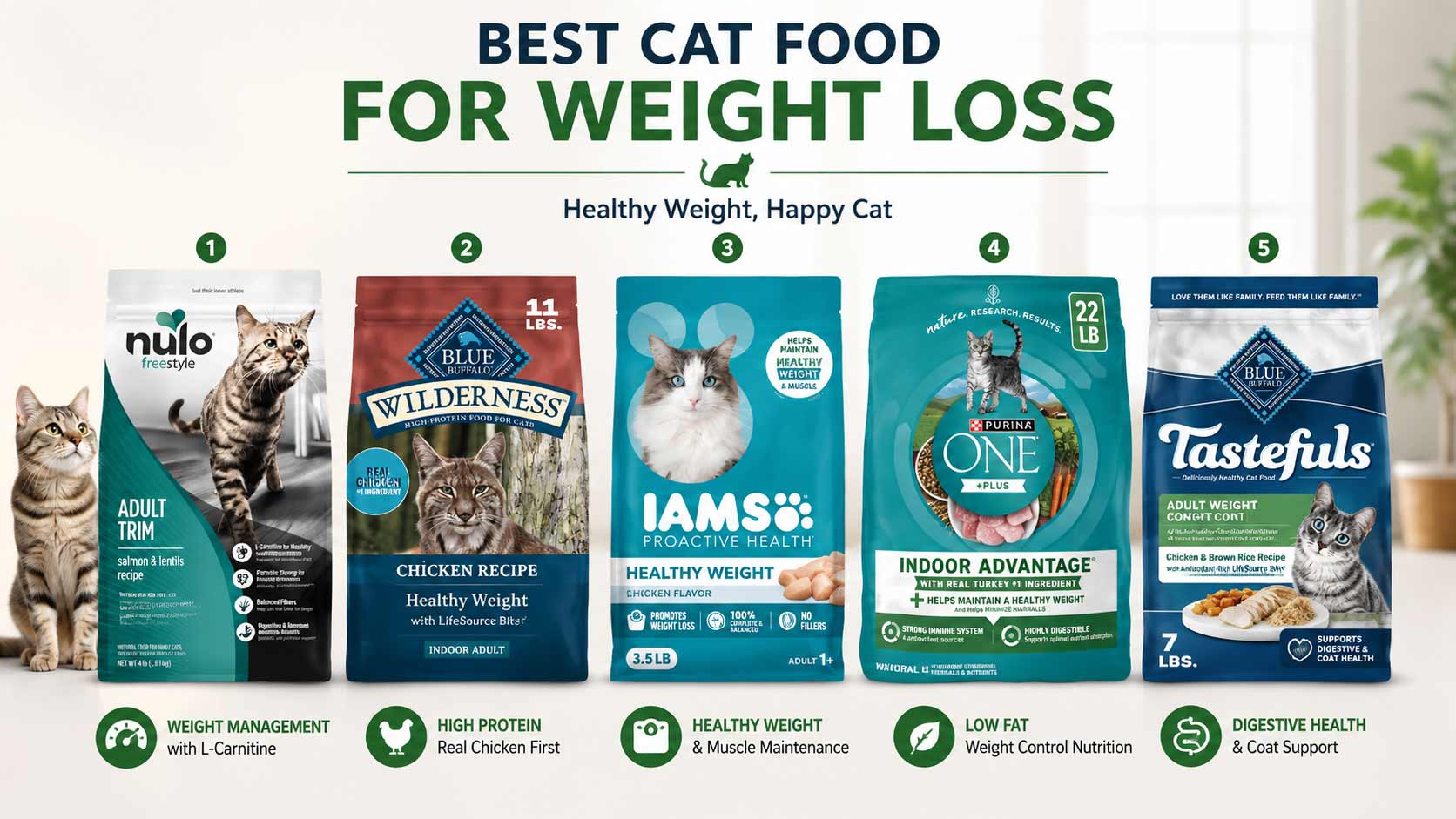
This guide compares five real formulas built specifically for weight management, all for adult cats. We’ll flag which ones use L-carnitine, which lean on fiber to increase fullness, and which cut fat content the most aggressively. Here’s a quick look at our top picks before we break each one down:
- Purina ONE Natural Low Fat Weight Control Indoor Advantage, 22 lb
- IAMS Proactive Health Healthy Weight Adult, Chicken, 22 lb
- Blue Buffalo Wilderness High-Protein Grain-Free Hairball & Weight Control, Chicken, 11 lb
- Blue Buffalo Tastefuls Weight Control, Chicken & Brown Rice, 7 lb
- Nulo Freestyle Adult Trim, Salmon & Lentils, 4 lb
Quick Verdict
Nulo Freestyle Adult Trim takes the top spot. It combines 83% animal-based protein with L-carnitine and a genuinely low-carb, grain-free formula built around fat metabolism. Blue Buffalo Wilderness is our high-protein runner-up. IAMS Healthy Weight offers the most accessible, budget-friendly option with L-carnitine included. Purina ONE targets indoor cats specifically with 10% less fat than its standard formula. Blue Buffalo Tastefuls rounds things out as the lowest-calorie-per-ounce pick in this comparison.
Why Trust This Guide
We compared these formulas on their actual guaranteed analysis numbers, protein percentage, fat percentage, and calories per cup, rather than trusting vague “healthy weight” marketing claims. We checked whether each formula includes L-carnitine, since that’s the one ingredient with real science behind supporting fat metabolism in cats. Every figure here came from the manufacturer’s own published data. We’re not veterinarians, and a significantly overweight cat should lose weight under veterinary guidance, not through diet alone.
At a Glance
- 20+ hours spent comparing calorie density and macronutrient ratios across weight-management formulas
- 4 brands compared on real guaranteed analysis data
- 5 features evaluated: protein percentage, fat percentage, L-carnitine inclusion, fiber content, and calories per cup
- 5 top picks spanning budget to premium weight-management formulas
Quick Comparison Table
Short on time? Here’s a quick side-by-side of our top picks before you dive into the full breakdowns below.
| Rank & Product | Protein Min | Fat Min / L-Carnitine | Best For |
| #1 Nulo Freestyle Trim | 83% animal-based | Reduced / Yes | Highest animal protein |
| #2 Blue Buffalo Wilderness | High-protein, grain-free | Balanced / Yes | Best high-protein pick |
| #3 IAMS Healthy Weight | Moderate | Reduced / Yes | Best budget pick |
| #4 Purina ONE Indoor Advantage | 37% | 9-13% / Yes | Best for indoor cats |
| #5 Blue Buffalo Tastefuls | 32% | 15% / Yes | Lowest calories per ounce |
Top 5 Best Cat Foods for Weight Loss, Reviewed
Affiliate Disclosure: As an Amazon Associate Pet Choice Center may earn a commission from qualifying purchases. If you purchase through our links, we may earn a small commission at no extra cost to you. We only recommend products we genuinely stand behind.
#1 Nulo Freestyle Adult Trim, Salmon & Lentils: Highest Animal Protein
Overview: Deboned salmon first ingredient | 83% of protein from animal sources | grain-free, low glycemic recipe | 4 lb bag
Why We Recommend It: Nulo pairs the highest animal-protein percentage in this comparison with L-carnitine and fewer fat calories than the brand’s standard recipes. This combination targets fat metabolism directly instead of just cutting calories.
Highest Animal Protein
Nulo Freestyle Adult Trim

Key Features: 83% of protein comes from animal sources | L-carnitine supports fat metabolism | patented BC30 probiotic survives cooking for guaranteed digestive support | grain-free, without white potatoes or tapioca
Pros: Highest verified animal-protein percentage in this comparison | genuinely lower fat calories than Nulo’s standard formulas | high-fiber ingredients help cats feel full longer | probiotic strain specifically chosen to survive the cooking process
Cons: Pricier than everyday weight-management formulas | smaller bag sizes mean more frequent reordering
Best For: Owners who want the highest protein-to-fat ratio available in a weight-management formula
Bottom Line: The strongest science-backed pick here for cats that need real fat metabolism support, not just fewer calories.
#2 Blue Buffalo Wilderness High-Protein Grain-Free Hairball & Weight Control: Best High-Protein Pick
Overview: Deboned chicken first ingredient | high-protein, grain-free recipe | L-carnitine plus taurine for lean muscle | 11 lb bag
Why We Recommend It: This formula pairs high animal protein with L-carnitine specifically for lean muscle development, and it tackles hairballs at the same time with psyllium seed husks, a common secondary issue in less active cats.
Best High-Protein Pick
Blue Buffalo Wilderness

Key Features: Deboned chicken as the first ingredient | L-carnitine supports lean muscle and weight management | LifeSource Bits deliver antioxidants and immune support | psyllium and cellulose fiber blend reduces hairballs
Pros: High-protein formula supports muscle while managing weight | addresses hairballs alongside weight control | no chicken by-product meals, corn, wheat, or soy | strong reputation for palatability among picky eaters
Cons: Grain-free formulas run pricier than grain-inclusive alternatives | not the lowest-calorie option in this comparison
Best For: Indoor cats dealing with both weight management and hairball issues
Bottom Line: A strong pick if your cat needs hairball control along with weight management.
#3 IAMS Proactive Health Healthy Weight, Chicken: Best Budget Pick
Overview: Real chicken first ingredient | L-carnitine included for fat metabolism | fiber blend with prebiotics and beet pulp | 22 lb bag
Why We Recommend It: IAMS includes L-carnitine, the same fat-metabolism ingredient found in pricier premium formulas, at a noticeably lower price point than Nulo or Blue Buffalo Wilderness.
Best Budget Pick
IAMS Proactive Healthy Weight

Key Features: Real chicken as the first ingredient | L-carnitine helps burn fat and maintain healthy metabolism | tailored fiber blend with prebiotics and beet pulp | wholesome grains provide energy for active play
Pros: Includes L-carnitine at a budget-friendly price point | veterinarian-recommended, well-established formula | fiber and prebiotic blend supports digestion alongside weight control | widely available at most retailers
Cons: Contains grains and by-product meal, so it’s not grain-free or limited-ingredient | protein percentage runs lower than premium high-protein competitors
Best For: Budget-conscious owners who still want L-carnitine in the formula
Bottom Line: The most accessible way to get real fat-metabolism support without premium pricing.
#4 Purina ONE Natural Low Fat Weight Control, Indoor Advantage: Best for Indoor Cats
Overview: Real turkey first ingredient | 37% minimum protein, 9-13% fat | 10% less fat than Purina ONE’s standard formula | 22 lb bag
Why We Recommend It: This formula was built specifically for indoor cats, who typically burn fewer calories than outdoor cats, and it backs that up with a stated 10% fat reduction compared to Purina’s standard Tender Selects recipe.
Best for Indoor Cats
Purina ONE Low Fat Weight Control
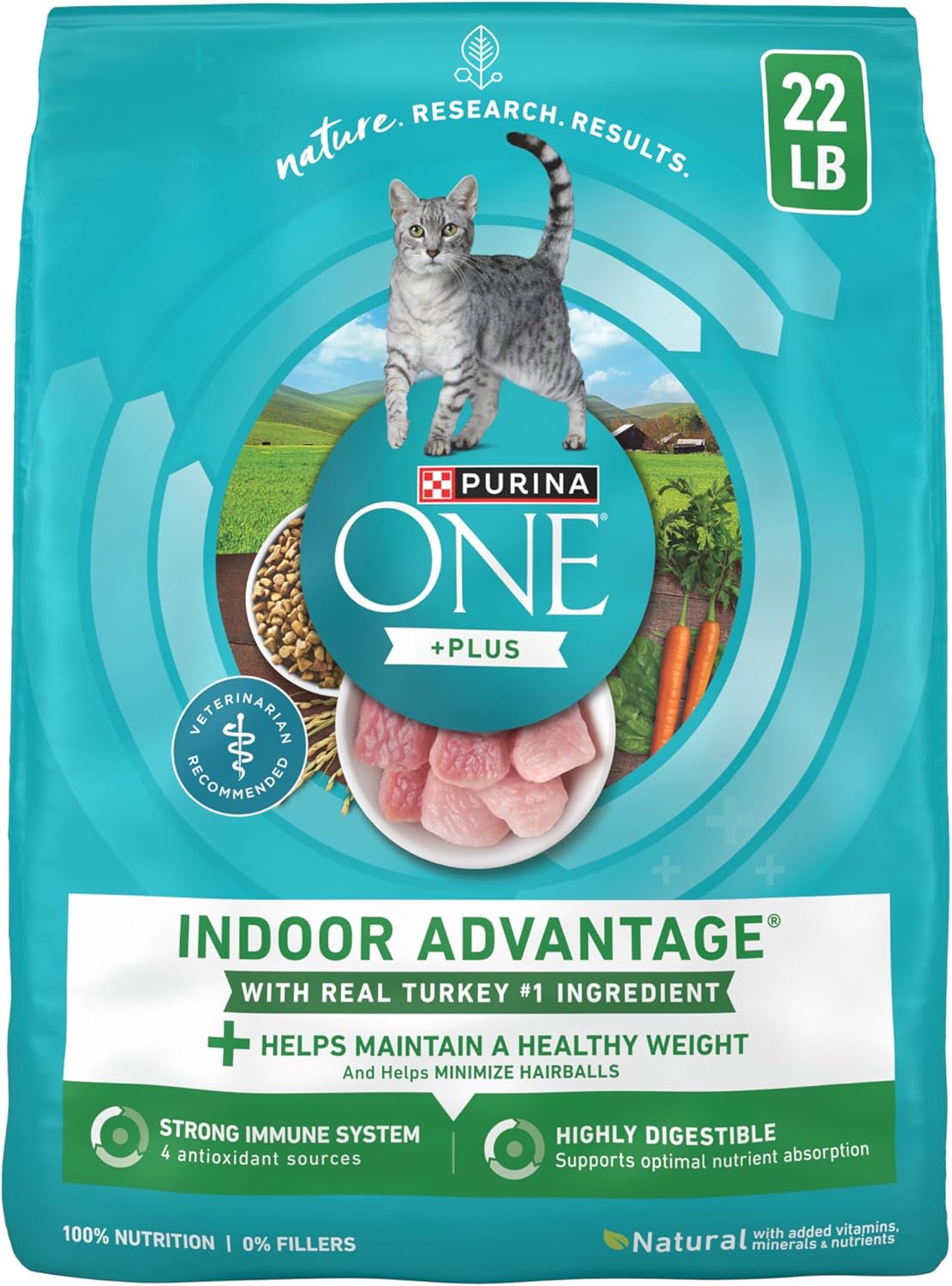
Key Features: 37 grams of protein per cup | 10% less fat than Purina ONE Tender Selects | natural fiber blend helps minimize hairballs | four antioxidant sources support immune health
Pros: Specifically formulated for lower-activity indoor cats | high protein content relative to reduced fat | widely available and reasonably priced | addresses hairballs as a secondary benefit
Cons: Doesn’t include L-carnitine, unlike several competitors here | contains corn and soy, which some owners prefer to avoid
Best For: Indoor cats whose lower activity level is contributing to weight gain
Bottom Line: A solid, accessible pick built specifically around the indoor lifestyle factor in feline weight gain.
#5 Blue Buffalo Tastefuls Weight Control, Chicken & Brown Rice: Lowest Calories Per Ounce
Overview: Deboned chicken first ingredient | approximately 89 calories per ounce, below the category average | L-carnitine and fiber for weight management | 7 lb bag
Why We Recommend It: This formula runs notably lower in calories per ounce than most competitors in this comparison, which matters directly for a cat that needs to eat less without feeling deprived.
Lowest Calories Per Ounce
Blue Buffalo Weight Control

Key Features: Deboned chicken as the first ingredient | L-carnitine supports lean muscle development | approximately 89 calories per ounce | LifeSource Bits for antioxidant and immune support
Pros: Genuinely lower calorie density than most weight-control competitors | includes L-carnitine at a mid-range price point | no chicken by-product meals, corn, wheat, or soy | widely available in multiple bag sizes
Cons: Contains grains like brown rice and barley, so it’s not grain-free | some independent nutritional analyses rate it below average overall, despite the calorie reduction
Best For: Owners specifically prioritizing lower calorie density over protein percentage
Bottom Line: The pick if reducing actual calorie intake matters more to you than maximizing protein.
Pros & Cons Comparison Table
| Product | Top Pro | Top Con |
| #1 Nulo Freestyle Trim | Highest verified animal protein | Pricier, smaller bag sizes |
| #2 Blue Buffalo Wilderness | High protein plus hairball control | Not the lowest-calorie option |
| #3 IAMS Healthy Weight | L-carnitine at a budget price | Contains grains and by-product meal |
| #4 Purina ONE Indoor Advantage | Built specifically for indoor cats | No L-carnitine included |
| #5 Blue Buffalo Tastefuls | Lowest calories per ounce | Contains grains, rated below average overall |
Who Should Buy Which Product?
Go with #1 Nulo Freestyle Trim if you want the highest protein-to-fat ratio and genuine fat-metabolism science. Choose #2 Blue Buffalo Wilderness if your cat also struggles with hairballs. Pick #3 IAMS Healthy Weight if budget matters most but you still want L-carnitine included. Go with #4 Purina ONE if your cat is specifically an indoor cat with lower activity levels. Choose #5 Blue Buffalo Tastefuls if minimizing actual calorie intake is your top priority.
How to Choose the Best Cat Food for Weight Loss
Most people start searching for the best cat food for weight loss right after a vet visit confirms what they suspected. The cat has put on weight, and now it’s time to do something about it. What “not working” looks like day-to-day is a cat that seems less playful, struggles to groom certain spots, or simply keeps gaining despite portion control. Many owners don’t realize how much the calorie density of a formula matters until they compare two bags side by side and see the numbers differ by 20% or more.
The mistakes that cost owners the most time usually involve trusting the word “diet” without checking the actual numbers, or reducing portion size on a regular formula instead of switching to one built for weight loss. This matters because cutting portions on a high-fat regular food can leave a cat hungry and undernourished in protein, while a proper weight-management formula lets a cat eat a satisfying amount while still losing weight. Multi-cat households face an added challenge, since other cats in the home may not need the same reduced-calorie diet.
Why L-Carnitine Shows Up in So Many Weight-Loss Formulas
L-carnitine is an amino acid that helps the body convert fat into usable energy, and several brands, including Nulo, Blue Buffalo, and IAMS, add it specifically to support that process during weight loss. Compared side by side, formulas with L-carnitine and higher animal protein tend to preserve lean muscle better than simply cutting calories across the board. One thing worth knowing: a formula’s calorie count per cup matters just as much as its percentage claims, since two “high-protein” foods can still differ significantly in actual calorie density.
This guide serves owners of a recently diagnosed overweight cat, indoor cats with limited activity, and multi-cat households trying to manage one cat’s weight without starving the others. By the end of this section, you’ll know exactly which best cat food for weight loss option fits your cat’s needs and your household.
Common Buying Mistakes to Avoid
- Trusting the word “diet” or “light” without checking the numbers. These terms aren’t strictly regulated. Compare actual protein, fat, and calorie figures instead.
- Just reducing portions of regular food instead of switching formulas. This can leave a cat under-fed on protein while still not truly reducing fat intake enough to matter.
- Skipping the vet for a significantly overweight cat. Rapid or unsupervised weight loss can be dangerous for cats. A vet should guide the pace and target for any cat that’s substantially overweight.
- Free-feeding a weight-management formula. Even a lower-calorie food can lead to weight gain if a cat has unlimited access to it all day.
Practical Tips for Using Cat Food for Weight Loss Effectively
- Measure portions with an actual measuring cup. Eyeballing food amounts is one of the most common reasons weight-loss diets don’t work as expected.
- Transition gradually over 7 to 10 days. Mixing the new formula with the old one helps avoid digestive upset during the switch.
- Feed on a schedule instead of free-feeding. Scheduled meals make it easier to control total daily calorie intake.
- Track weight monthly, not daily. Cat weight fluctuates day to day, so a monthly check gives a clearer picture of real progress.
Our Review Process
We evaluated every product on this list against the same criteria:
- Verified protein, fat, and calorie data against manufacturer sources
- Presence of L-carnitine and other weight-management-specific ingredients
- Suitability for indoor versus general adult cats
- Real-world palatability based on verified owner feedback
- Long-term value per pound
We don’t make medical claims about any product, and every figure in this guide came from verified manufacturer data. A significantly overweight cat should lose weight under veterinary supervision, since rapid or unsupervised weight loss carries real health risks for cats specifically.
If your cat’s weight gain seems tied to overall diet quality rather than a specific need, our best cat food guide compares formulas across budget, premium, and specialty categories. If food allergies or sensitivities are also a factor, our best cat food for allergies guide covers protein-source science in depth.
Final Recommendation
If you only take one thing from this guide: check the actual protein, fat, and calorie numbers, not just the word “diet” on the bag. Nulo Freestyle Trim delivers the strongest combination of high animal protein and L-carnitine in this comparison. IAMS Healthy Weight gets you the same fat-metabolism support at a lower price. Purina ONE is worth a look specifically if your cat is an indoor cat with limited activity.
This guide serves anyone whose cat recently got the “overweight” diagnosis at the vet. Match the pick to your budget and your cat’s specific situation, then track progress monthly and loop in your vet if the weight isn’t moving as expected.
More Cat Weight Loss Guides
Helping a cat lose weight goes better when the food fits how your cat eats. These guides go deeper.
- Best Dry Cat Food for Weight Loss for cats who graze on kibble
- Best Wet Cat Food for Weight Loss for keeping cats full on fewer calories
- Cat Food for Weight Loss: What Actually Works for how to plan the switch
- Best Cat Food for Indoor Cats since indoor cats gain weight more easily
- Best Cat Food for Senior Cats for older cats who are slowing down
Frequently Asked Questions About Cat Food for Weight Loss
What ingredient actually helps cats lose weight in their food? L-carnitine is the ingredient with real science behind supporting fat metabolism in cats, and it shows up in several weight-management formulas, including Nulo Freestyle Trim, Blue Buffalo Wilderness, and IAMS Healthy Weight.
Is high-protein or low-fat more important for a cat’s weight loss? Both matter, but higher protein relative to fat tends to help preserve lean muscle while a cat loses weight, rather than simply cutting all calories evenly, which can lead to muscle loss along with fat loss.
How much weight should my cat lose per month? Veterinarians commonly recommend gradual weight loss for cats, since rapid weight loss can trigger a serious liver condition called hepatic lipidosis, so any significant weight-loss plan should be guided by a vet rather than done unsupervised.
Should I just feed my cat less of their regular food to help them lose weight? Not ideally. Simply reducing portions of a regular, higher-fat food can leave a cat under-nourished in protein while still not addressing fat intake enough, which is why a dedicated weight-management formula tends to work better than portion-cutting alone.
Does indoor cat food help with weight management? Often yes, since indoor-specific formulas like Purina ONE Indoor Advantage are typically formulated with fewer calories to match the lower activity level of indoor cats compared to outdoor cats.