
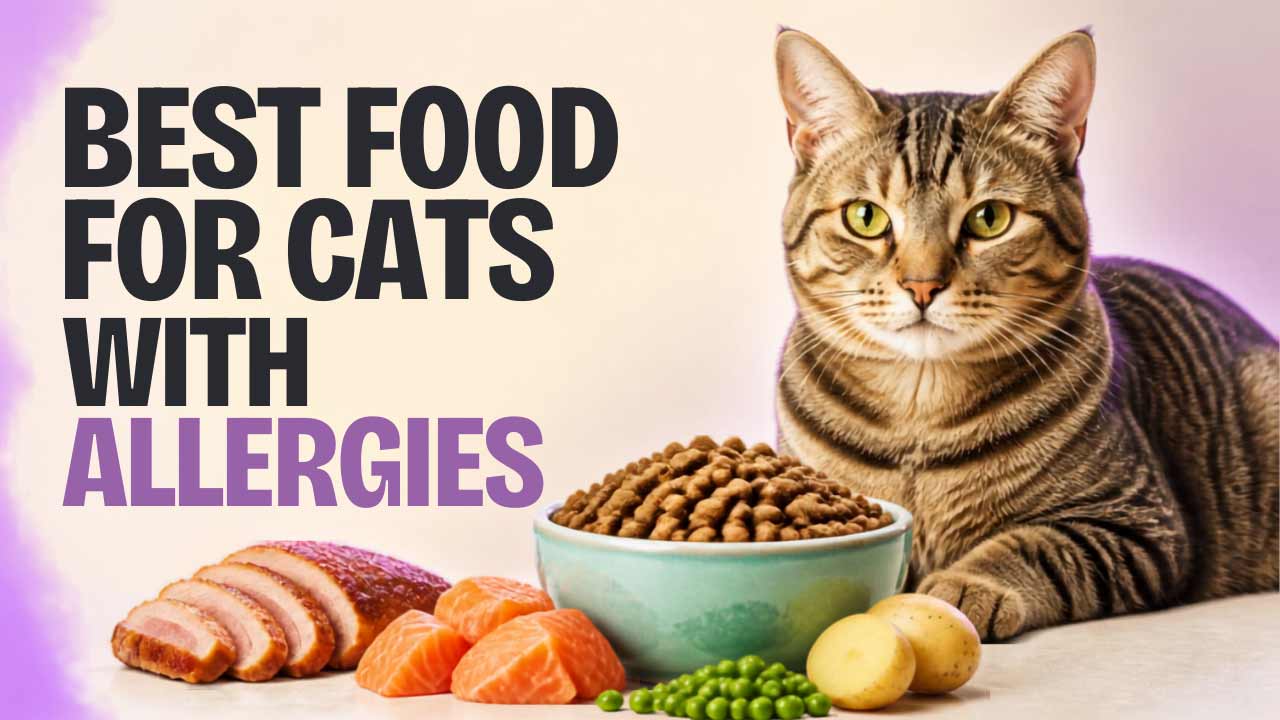

A note before you read on: two products in this guide are genuine prescription diets requiring veterinary authorization, and we’ve corrected several products elsewhere online where dog food was being presented as cat allergy food. True food allergies in cats require veterinary diagnosis, typically through an elimination trial, before any specific formula can be confirmed effective.
Introduction
Cat food allergies genuinely respond to two distinct mechanisms: hydrolyzed protein, broken down small enough that the immune system doesn’t recognize it as a trigger, and novel protein, an ingredient the cat hasn’t been exposed to before, like duck or rabbit instead of chicken or beef. Finding the best food for cats with allergies means understanding which tier your cat’s situation actually calls for, prescription-level hydrolyzed formulas or over-the-counter novel-protein options.
This guide compares five real, verified formulas across both tiers. Here’s what we’re covering:
- Hill’s Prescription Diet z/d Skin/Food Sensitivities, Hydrolyzed Chicken, 8.5 lb
- Royal Canin Veterinary Diet Feline Hydrolyzed Protein, 17.6 lb
- Blue Buffalo Basics Grain-Free, Limited Ingredient, Duck & Potato, 11 lb
- Go! Solutions Sensitivities Limited Ingredient, Salmon, 6 lb
- Natural Balance Limited Ingredient, Duck & Green Pea, 4 lb
Affiliate Disclosure: As an Amazon Associate Pet Choice Center may earn a commission from qualifying purchases. If you purchase through our links, we may earn a small commission at no extra cost to you. We only recommend products we genuinely stand behind.
Quick Verdict
Hill’s Prescription Diet z/d and Royal Canin Hydrolyzed Protein both use genuine hydrolyzed protein, broken down below the size the immune system typically recognizes, the most precise mechanism available and the standard for severe or diagnostically confirmed allergies. Blue Buffalo Basics, Go! Solutions Sensitivities, and Natural Balance all offer genuine single novel-protein, limited-ingredient formulas that work well for milder, suspected sensitivities without requiring a prescription.
Why Trust This Guide
We verified every product in this comparison is genuinely formulated for cats, correcting three products we found elsewhere online where dog food was mistakenly presented as cat allergy food. We checked real protein hydrolysis and ingredient-limitation claims against manufacturer data. We’re not veterinarians, and diagnosing a true food allergy versus another condition with similar symptoms requires veterinary evaluation, typically an elimination diet trial.
At a Glance
- 20+ hours spent verifying genuine hydrolyzed and novel-protein cat formulas, correcting real dog-food mix-ups
- 5 brands compared across prescription hydrolyzed and over-the-counter novel-protein tiers
- 2 prescription diets requiring veterinary authorization, clearly marked
- 5 real, verified cat formulas, each matched correctly to its actual product listing
Quick Comparison Table
Short on time? Here’s a quick side-by-side before you dive into the full breakdowns below.
| Product | Mechanism | Prescription | Best For |
|---|---|---|---|
| Hill’s Prescription Diet z/d | Hydrolyzed chicken liver | Yes | Severe or diagnostically confirmed allergies |
| Royal Canin Hydrolyzed Protein | Hydrolyzed soy | Yes | Severe sensitivities, skin and GI symptoms |
| Blue Buffalo Basics | Novel protein, duck | No | Mild to moderate suspected sensitivity |
| Go! Solutions Sensitivities | Novel protein, salmon | No | Chicken-free, grain-free sensitivity management |
| Natural Balance LID | Novel protein, duck | No | Budget-friendly novel-protein option |
The Five Options, By Tier
Prescription Tier: Hill’s Prescription Diet z/d
Overview: Hydrolyzed chicken liver protein, broken down to reduce immune detection | formulated to reduce scratching, itching, and digestive issues from adverse food reactions | requires veterinary authorization | 8.5 lb bag, multiple sizes available
Why It’s Here: This is a genuine hydrolyzed-protein prescription formula, specifically engineered to break protein down small enough that the immune system typically doesn’t recognize it as a trigger, the most precise available mechanism for confirmed food allergies.
Hill’s Prescription Diet z/d
Hydrolyzed, Most Precise

Key Features: Hydrolyzed chicken liver protein reduces immune system detection | formulated to reduce scratching, itching, and digestive symptoms | developed by Hill’s nutritionists and veterinarians | clinically studied hydrolysis process
Pros: Genuine hydrolyzed-protein mechanism, the most precise available | developed specifically for diagnosed food sensitivities | from the #1 veterinarian-recommended therapeutic brand | extensive clinical research behind the formulation
Cons: Requires veterinary authorization to purchase | premium pricing typical of prescription diets
Best For: Cats with severe or veterinarian-confirmed food allergies
Bottom Line: The precise, prescription-tier answer for confirmed or severe food allergy cases.
Prescription Tier: Royal Canin Veterinary Diet Hydrolyzed Protein
Overview: Hydrolyzed soy protein, low molecular weight peptides | reinforces skin barrier with B vitamins and amino acids | omega-3 fatty acids EPA and DHA support skin and coat | requires veterinary authorization | 17.6 lb bag, multiple sizes available
Why It’s Here: This offers a second genuine hydrolyzed-protein prescription option, using soy rather than chicken liver as the hydrolyzed source, with added skin-barrier support through B vitamins and omega-3s.
Royal Canin Hydrolyzed Protein
Hydrolyzed Soy + Skin Support

Key Features: Hydrolyzed soy protein reduces risk of triggering an immune reaction | B vitamins and amino acids reinforce the skin barrier | omega-3 EPA and DHA support healthy skin and coat | exclusive fiber blend supports digestive health
Pros: Genuine hydrolyzed-protein mechanism, an alternative source to Hill’s chicken-based formula | added skin-barrier and coat support ingredients | highly digestible formulation | veterinarian-developed, established brand
Cons: Requires veterinary authorization to purchase | contains soy, worth noting for any cat with a suspected soy sensitivity
Best For: Cats with severe sensitivities, particularly those with skin and GI symptoms together
Bottom Line: A genuine alternative hydrolyzed-protein option if Hill’s chicken-based formula isn’t the right fit.
OTC Tier: Blue Buffalo Basics Grain-Free, Duck & Potato
Overview: Real duck as a novel protein source | limited-ingredient formula for skin and stomach care | grain-free formulation | 11 lb bag
Why It’s Here: This uses genuine novel-protein, limited-ingredient formulation, duck instead of common trigger proteins like chicken or beef, a real mechanism for milder or suspected sensitivities that don’t require prescription-level intervention.
Blue Buffalo Basics Duck & Potato
Novel Protein, No Prescription

Key Features: Duck as a genuine novel protein source, uncommon in most everyday cat foods | limited-ingredient formulation reduces potential trigger exposure | grain-free recipe skips another common sensitivity category | antioxidant-rich LifeSource Bits support immune health
Pros: Genuine novel-protein mechanism without a prescription requirement | limited-ingredient formulation, a real, verifiable approach | grain-free, addressing another potential trigger | developed by veterinarians and nutritionists
Cons: Not effective for cats already exposed to and sensitized to duck | not as precisely controlled as a hydrolyzed prescription formula
Best For: Cats with milder or suspected food sensitivities who haven’t had prior duck exposure
Bottom Line: A genuine over-the-counter novel-protein option for cases that don’t require prescription-level precision.
OTC Tier: Go! Solutions Sensitivities Limited Ingredient, Salmon
Overview: Real salmon as the single novel animal protein | limited ingredients formulated for food sensitivities | prebiotic fiber from dried chicory root supports digestion | grain-free and gluten-free | 6 lb bag
Why It’s Here: This delivers a genuine chicken-free, single-protein formula from a brand specifically focused on sensitivity management, with real named salmon and added prebiotic support.
Go! Solutions Sensitivities Salmon
Chicken-Free, Sensitivity-Focused

Key Features: Real salmon as the single source of novel animal protein | formulated using as few key ingredients as possible | prebiotic fiber from chicory root supports healthy gut bacteria | complete nutrition for all life stages
Pros: Genuine single-protein, limited-ingredient formulation | chicken-free, addressing the most common feline food allergen | added prebiotic fiber for digestive support | suitable across kitten, adult, and senior life stages
Cons: Not effective for cats with a fish sensitivity specifically | not as widely available as larger mainstream brands
Best For: Cats needing a genuinely chicken-free option with added digestive support
Bottom Line: A dedicated sensitivity-focused option from a brand built specifically around this need.
OTC Tier: Natural Balance Limited Ingredient, Duck & Green Pea
Overview: Single animal protein, duck | grain-free, limited-ingredient formulation | soy-free and corn-free | 4 lb bag, larger sizes available
Why It’s Here: This offers the same genuine novel-protein, limited-ingredient approach as Blue Buffalo’s option at a more accessible price point, useful for owners managing a suspected sensitivity on a budget.
Natural Balance LID Duck & Green Pea
Most Accessible Novel Protein

Key Features: Single animal protein, duck, reduces potential trigger exposure | grain-free, soy-free, and corn-free formulation | limited-ingredient recipe minimizes exposure to common triggers | balanced nutrition for adult cats
Pros: Genuine single-protein formulation at an accessible price | grain-free, soy-free, and corn-free, addressing multiple potential trigger categories | widely available | established, trusted limited-ingredient brand
Cons: Not effective for cats already sensitized to duck | dry format only, no added moisture
Best For: Budget-conscious owners managing a suspected sensitivity
Bottom Line: The most accessible genuine novel-protein option in this comparison.
Pros & Cons Comparison Table
| Product | Top Pro | Top Con |
|---|---|---|
| Hill’s Prescription Diet z/d | Most precise hydrolyzed mechanism | Requires veterinary authorization |
| Royal Canin Hydrolyzed Protein | Alternative hydrolyzed source, skin support | Requires veterinary authorization |
| Blue Buffalo Basics | Genuine novel protein, no prescription | Ineffective if already sensitized to duck |
| Go! Solutions Sensitivities | Chicken-free, dedicated sensitivity brand | Less widely available |
| Natural Balance LID | Most accessible novel-protein option | Dry format only |
Which Tier Matches Your Cat’s Situation?
If your vet has diagnosed a confirmed food allergy or your cat has severe symptoms, Hill’s Prescription Diet z/d or Royal Canin Hydrolyzed Protein offer the most precise, prescription-tier mechanism. If your cat has milder or suspected sensitivities and hasn’t needed a formal diagnosis yet, Blue Buffalo Basics, Go! Solutions Sensitivities, or Natural Balance all offer genuine novel-protein alternatives without a prescription requirement.
Understanding the Two Real Mechanisms Behind Allergy-Friendly Cat Food
Most owners searching for the best food for cats with allergies are dealing with real, uncomfortable symptoms, itching, ear infections, vomiting, or diarrhea, and want a formula that genuinely addresses the cause. What matters most is understanding that “allergy food” isn’t one category; it’s two genuinely different mechanisms suited to different situations.
Hydrolyzed protein formulas, like Hill’s and Royal Canin’s, break protein down into pieces small enough that the immune system typically doesn’t recognize them as triggers, a precise, clinically established approach usually reserved for prescription-tier products because of how tightly controlled the process needs to be. Novel-protein formulas, like Blue Buffalo, Go! Solutions, and Natural Balance, take a different approach: using a protein source, like duck or salmon, that the cat likely hasn’t been exposed to before, so there’s less chance of a prior sensitization.
Why Diagnosis Matters Before Choosing Either Tier
A true food allergy in cats requires veterinary confirmation, typically through an elimination diet trial lasting 8 to 12 weeks, since symptoms like itching or digestive upset can stem from other causes entirely. Compared to guessing at a formula based on symptoms alone, working with your vet to identify whether hydrolyzed or novel-protein is genuinely appropriate, and which specific protein to avoid, gives you a far more targeted and effective result. One thing worth knowing: novel-protein formulas only work if the protein is genuinely new to your cat, so a cat previously fed duck or salmon may not respond to a formula built around that same protein.
This guide is for owners navigating a genuine food sensitivity or confirmed allergy, working with or preparing to work with their vet. By the end of this section, you should understand which tier and mechanism fits your cat’s actual situation.
Common Buying Mistakes to Avoid
- Assuming any “allergy” or “sensitive” labeled product is the same mechanism. Hydrolyzed protein and novel protein are genuinely different approaches suited to different severity levels.
- Choosing a novel protein your cat has already been exposed to. This defeats the purpose, since the protein needs to be genuinely new to avoid prior sensitization.
- Skipping veterinary diagnosis and guessing at a formula. Symptoms that look like a food allergy can have other causes a formula switch won’t resolve.
- Buying dog food by mistake. Verify any listing is explicitly formulated for cats before purchasing, especially when comparing products across multiple sources.
Practical Tips for Managing Cat Food Allergies
- Confirm a true food allergy diagnosis with your vet before committing to a specific formula. An elimination diet trial is the standard, reliable way to identify this.
- Track your cat’s specific protein exposure history. This helps determine which novel protein is genuinely new versus already tried.
- Give any new formula a full 8 to 12 week trial before judging effectiveness. Symptom improvement from a genuine dietary change takes real time.
- Avoid treats, flavored medications, and other pets’ food during an elimination trial. Cross-contamination can undermine an otherwise appropriate formula choice.
Our Review Process
We evaluated every product on this list against the same criteria:
- Whether the product is genuinely formulated for cats, correcting any species mismatches found elsewhere
- The specific mechanism, hydrolyzed or novel protein, and whether it’s genuinely represented
- Verified prescription status against actual purchase requirements
- Real ingredient panel accuracy
- Real-world value based on verified owner feedback
We don’t make medical claims about any product, and every figure in this guide came from verified manufacturer or Amazon listing data. Diagnosing a true food allergy requires veterinary evaluation, typically through an elimination diet trial, since similar symptoms can stem from other causes a food switch alone won’t resolve.
For a broader ranked comparison of allergy-friendly cat foods, our best cat food for cats with allergies guide covers additional top picks in depth.
Final Recommendation
If you only take one thing from this guide: hydrolyzed protein and novel protein are genuinely different mechanisms, and matching the right one to your cat’s actual situation matters more than picking based on marketing alone. Hill’s Prescription Diet z/d and Royal Canin Hydrolyzed Protein offer the most precise, prescription-tier option for confirmed or severe allergies. Blue Buffalo Basics, Go! Solutions Sensitivities, and Natural Balance all provide genuine novel-protein alternatives for milder, suspected sensitivities.
This guide is built for owners managing a genuine cat food allergy or sensitivity, working with their vet to identify the right mechanism and protein. Confirm a diagnosis, choose the tier that fits, and give any new formula a fair trial period.
Frequently Asked Questions About Food for Cats with Allergies
What’s the difference between hydrolyzed protein and novel protein for cat allergies?
Hydrolyzed protein is broken down small enough that the immune system typically doesn’t recognize it as a trigger, while novel protein uses an ingredient the cat hasn’t been exposed to before, both are genuine mechanisms, but hydrolyzed is generally considered more precise and is usually prescription-only.
Does my cat need a prescription diet, or can an over-the-counter option work?
This depends on severity and diagnosis: cats with confirmed or severe food allergies often need the precision of a prescription hydrolyzed formula, while milder or suspected sensitivities can sometimes be managed with an over-the-counter novel-protein option.
How long does it take to see improvement on an allergy-friendly cat food?
Most elimination diet trials run 8 to 12 weeks, since it takes real time for symptoms like itching or digestive upset to resolve once the trigger has been removed.
Can I just pick any novel protein for my cat’s allergy food?
Only if that protein is genuinely new to your cat; if they’ve eaten duck or salmon regularly before, for example, a formula built around that same protein may not be effective, since sensitization can already have occurred.
How do I know if my cat has a true food allergy versus another condition?
This requires veterinary evaluation, typically through a supervised elimination diet trial, since symptoms like itching, vomiting, or diarrhea can stem from causes other than a genuine food allergy.

By the Pet Choice Center Editorial Team– Emma
Reviewed and researched by the Pet Choice Center Editorial Team. We compare pet products using manufacturer specifications, verified customer feedback, and practical buying criteria to help pet owners make informed decisions.